

















Decide between Claude Sonnet vs Opus for your team. Compare API token rates, rate limits, effort controls, and EU GDPR terms for web and API plans.
Choosing between Claude Sonnet vs Opus comes down to balancing raw analytical reasoning against operational speed and API costs. If you need a versatile model for daily software development and high-volume text generation, Sonnet delivers near-frontier quality at a fraction of the cost. If your work involves multi-layered document synthesis or high-stakes policy analysis, Opus provides a higher reasoning ceiling. You can also read our ChatGPT vs Claude comparison to see how Anthropic stacks up against OpenAI.
TL;DR
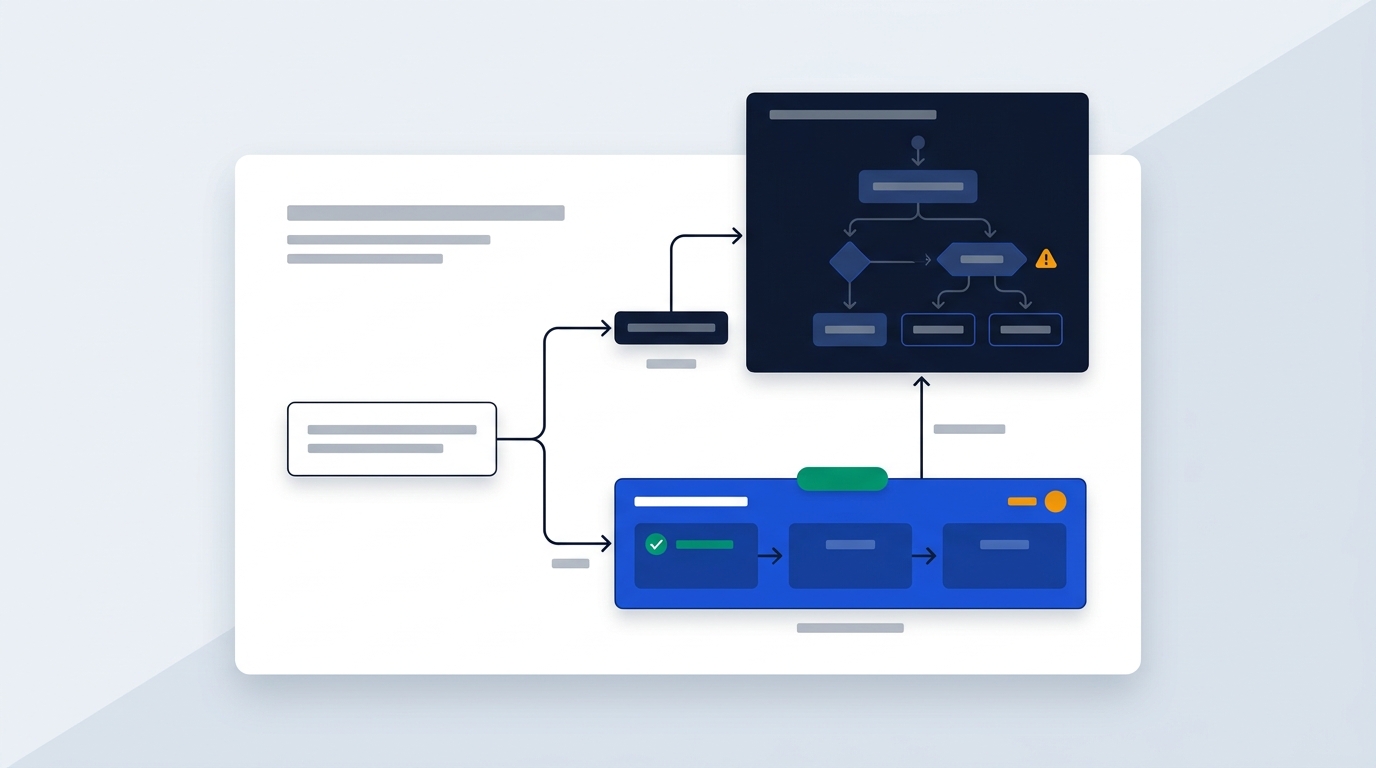
Claude Sonnet suits teams that need a fast daily workhorse for coding, general content creation, routine analysis, and automated API workflows. It handles most business tasks efficiently without consuming excessive plan limits. Claude Opus suits researchers, legal analysts, and engineers handling complex multi-step reasoning, extended document synthesis, or underspecified prompts. Opus costs more per token and burns through rate limits quickly, so routine operations should run on Sonnet while escalating edge cases to Opus.
Each option also has people it does not suit. Here is the short version.
- Sonnet is a weaker fit when a silently inferred assumption could be costly, such as legal drafting, regulatory analysis or strategy work. It is also a weaker fit for very long analytical chains across many documents.
- Opus is a weaker fit for quick lookups, high-volume API calls and real-time iteration, where its higher price and slightly slower responses add cost without adding value.
- Free-plan users cannot choose Opus at all. The Free plan on claude.ai includes Sonnet and Haiku, and Opus arrives with a paid plan.
If you are unsure, start on Sonnet. Move up only when a task you have already tried on Sonnet falls short.
Anthropic's Claude Academy guide adds a habit that saves tokens on either model. Know what a useful answer looks like before you send the prompt, then check the result in proportion to what is riding on it. A quick lookup needs a glance. Analysis that will shape a decision deserves a closer read.
The same guide makes a blunt point about waste. Running Opus on a task Haiku could handle costs tokens for no gain and slows you down. So the real question is sometimes not Sonnet or Opus, but whether the task needs either one.
Claude Sonnet vs Opus: Quick Comparison
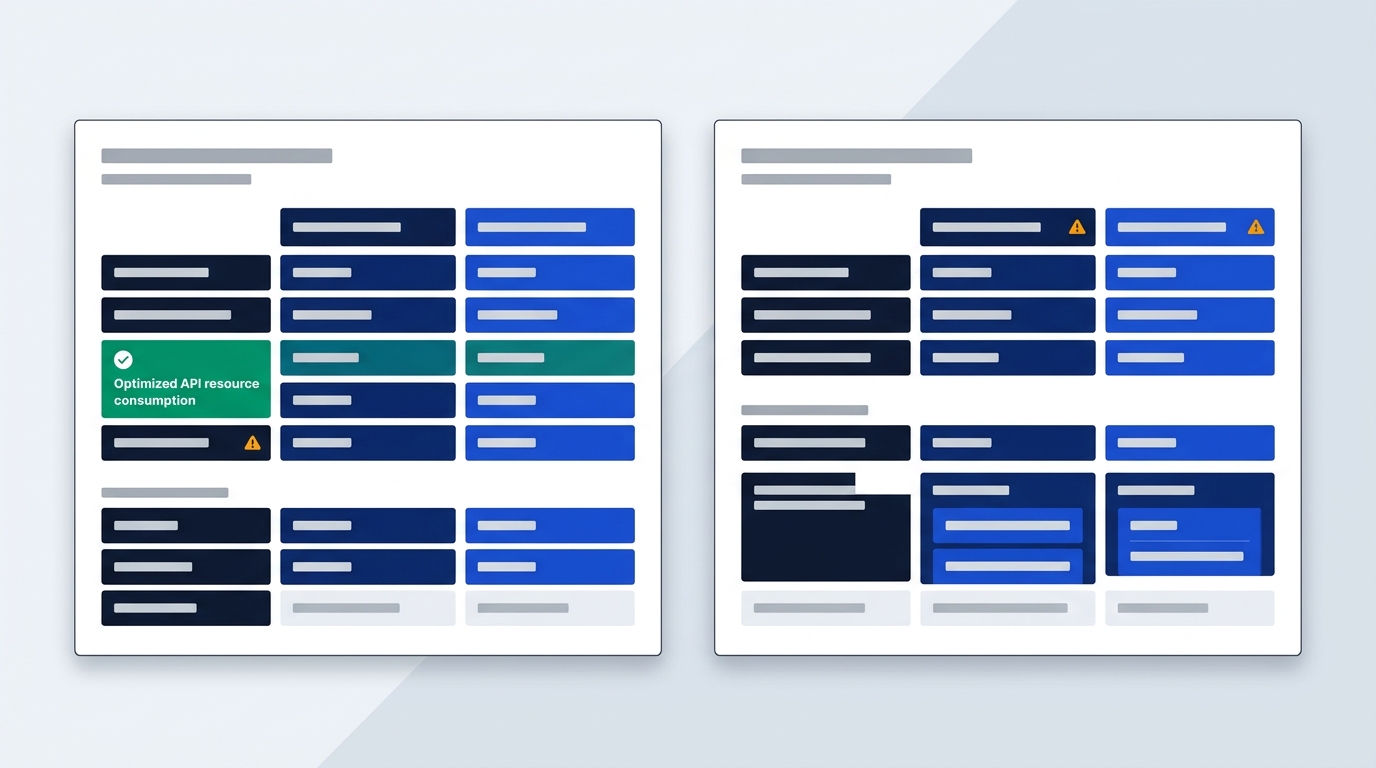
The table below summarizes verified pricing, rate limit consumption, and baseline capabilities for both models, according to Anthropic documentation and SaaSEuro verified notes as of October 2026.
| Parameter | Claude Sonnet 4.6 | Claude Opus (4.6 / 4.7 / 4.8) |
|---|---|---|
| API Input Cost (per 1M tokens) | US$3 | US$5 |
| API Output Cost (per 1M tokens) | US$15 | US$25 |
| Rate Limit Consumption | Moderate | Heavy |
| Ambiguity Handling | Assertive, proceeds with inferred assumptions | Cautious, surfaces assumptions or requests clarification |
| Best Workloads | Daily coding, structured writing, API automation | Deep research, multi-layered synthesis, legal analysis |
Reading the table row by row
The two price rows move together. Opus costs US$5 per 1M input tokens against US$3 for Sonnet, and US$25 per 1M output tokens against US$15. Output costs five times input on both models, so the premium holds whatever mix of reading and writing your workload has.
Take a job that sends 1M input tokens and receives 1M output tokens. This is simple arithmetic on the figures above, not a measured bill, but it shows why the choice matters once volume grows.
On Opus it comes to US$30, which is US$5 plus US$25.
The rate limit row matters even if you never touch the API. Anthropic's Claude Academy guide rates Sonnet as a moderate user of your limit and Opus as a heavy one. On a subscription plan, a heavy model means you hit your cap sooner.
The ambiguity row is the one people overlook. It describes behaviour, not power. Sonnet keeps moving when a prompt is vague, while Opus stops to name the assumptions it is making or asks you to clarify. Which of those you want depends on what a wrong guess costs you.
What the table leaves out
The table covers price and behaviour.
- Latency: Opus is slightly slower and Sonnet responds faster, which favours Sonnet for rapid iteration.
- Cost efficiency: Opus sits in a premium pricing tier, while Sonnet is the more cost-effective choice for high-volume use.
- Cross-file analysis: Opus is more stable across large systems, and Sonnet is strong within typical scopes.
- Agentic and multi-step tasks: Opus handles deeper chained reasoning, and Sonnet handles multi-step tasks efficiently.
- Everyday workloads: Opus is often overpowered for simple tasks, while Sonnet is optimised for balanced workloads.
Source: Emergent, "Claude Sonnet vs Opus (2026)". Its own summary is that for many teams Sonnet becomes the default model and Opus becomes the escalation layer for complexity. All prices in this article are in US$, as Anthropic lists them, before VAT, and we have not converted them to euros or pounds.
Strengths and downsides of each
Both models operate at frontier level, so the trade-offs are about fit and cost, not about one being broken.
Claude Sonnet
- Lower token rates: US$3 input and US$15 output per 1M tokens.
- Moderate use of your rate limit, so heavy daily use stays inside plan caps for longer.
- Faster responses, which suits rapid iteration in coding and drafting.
- Anthropic's guide calls it the daily driver for coding, writing, analysis and multi-step workflows.
- Downside: it compresses intermediate reasoning steps unless you ask it to expand them.
- Downside: it is more willing to proceed on inferred assumptions, which can hide a wrong guess in sensitive work.
- Downside: its ceiling is lower on extreme input lengths and very long analytical chains.
Claude Opus
- Higher reasoning ceiling on layered, multi-document and high-stakes analysis.
- Surfaces assumptions and constraints explicitly, which helps in legal, regulatory and strategy work.
- More stable across large systems and extreme input lengths.
- Downside: US$5 input and US$25 output per 1M tokens, a premium of about 66 percent over Sonnet.
- Downside: heavy use of your rate limit, so a few long sessions can exhaust a plan allowance.
- Downside: slightly slower responses, and on simple tasks it is often more model than you need.
- Downside: not available on the Free plan.
Where Haiku and Fable fit
Anthropic's lineup has four models, not two. Haiku is the lightest on your rate limit and suits quick answers, simple summaries and extraction. Fable sits above Opus and uses the most of your limit, and Anthropic describes it for long, complex tasks that it works through with fewer check-ins.
That framing is useful. If your real question is how to stop wasting tokens, the answer is often Haiku for the simple jobs, not just Sonnet. And if Opus struggles on something long and connected, Anthropic points to Fable as the next step. Fable is available on paid plans.
The guide effectively describes a ladder. Start with Haiku or Sonnet. Move to Opus for problems where you have tested Sonnet and it struggled. Move to Fable for problems where you have tested Opus and it struggled.
Fable works differently from the others. You describe the outcome you want, and it plans the steps and checks its own work along the way. It takes time to think before answering, so responses are slower, and it uses the most of your rate limit. You select it from the model picker only when a task needs it.
Which model for which task
Anthropic's Claude Academy guide gives a short mapping of tasks to models. The table repeats it, with one added column on what each pick avoids.
| Task | Pick | Why |
|---|---|---|
| Summarizing articles | Haiku | Straightforward extraction with no complex reasoning |
| Debugging code | Sonnet | Strong coding, fast feedback, clear bug identification |
| Analyzing complex research papers | Opus | Deep analysis across long specialised documents, including methodology critique |
| Building a working project from a rough idea | Fable | Plans the steps, checks its own work, works through long tasks with fewer check-ins |
Source: Anthropic Claude Academy, "Choosing the right Claude model".
SaaSEuro picks
These editorial picks rest on one set of criteria: API price per token, rate limit use, ambiguity handling and plan access. They are not test results.
- Best value for small teams: Claude Sonnet, for its lower token rates and moderate rate limit use.
- Best for high-stakes analysis: Claude Opus, for its cautious handling of ambiguity and its higher reasoning ceiling.
Reasoning and Analytical Performance Compared
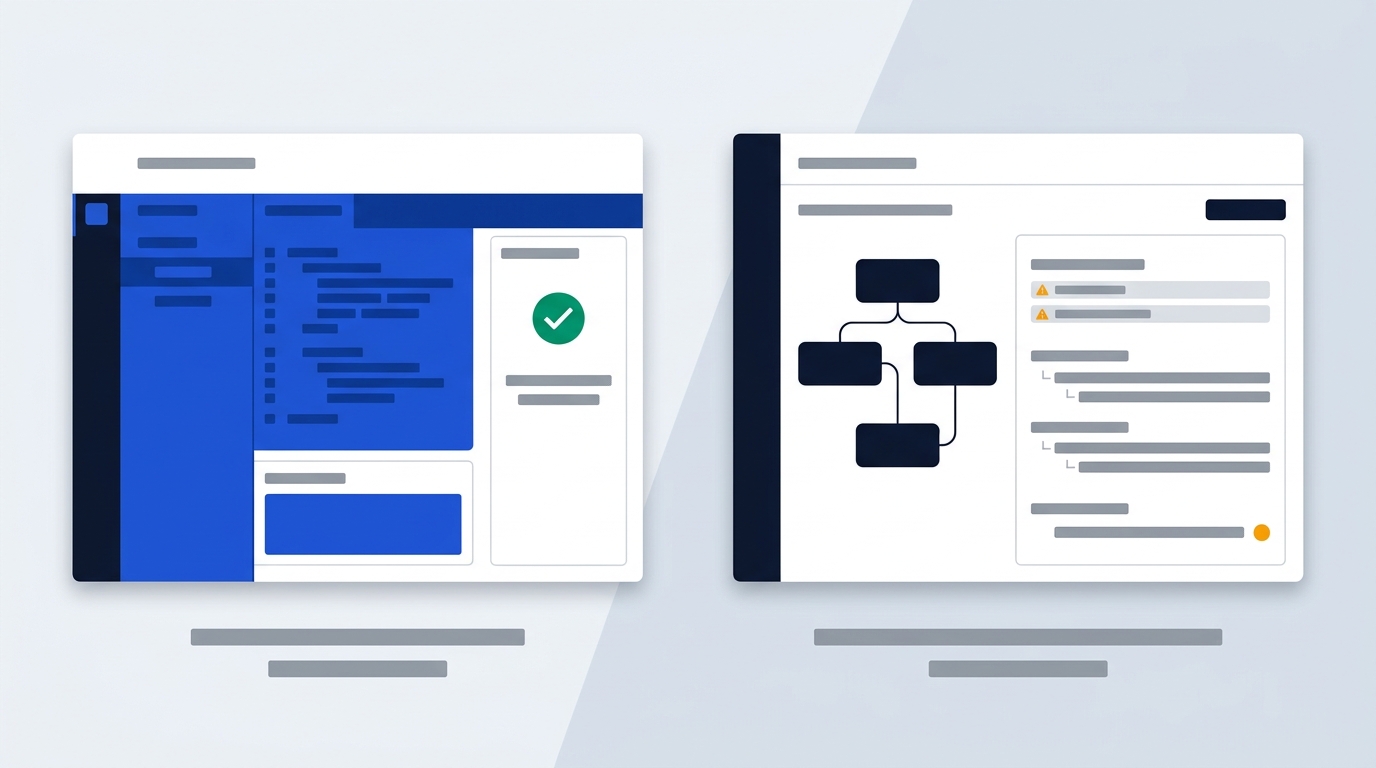
Both models operate at frontier intelligence, but their separation becomes clear under heavy cognitive load. Claude Opus excels at multi-step logical decomposition. It explicitly surfaces assumptions, clarifies constraints, and maintains structural discipline across multi-layered arguments. When analyzing complex legal policies or engineering blueprints, this caution reduces subtle logical errors.
Claude Sonnet handles everyday reasoning efficiently by compressing intermediate steps. This approach delivers faster responses, which works well for fast-iterating development teams. When given ambiguous prompts, Sonnet is slightly more assertive, making reasonable assumptions to keep work moving. Opus takes a more conservative posture by highlighting ambiguity before committing to an answer.
For software development, Sonnet is often the practical choice. It provides quick feedback when writing new functions, refactoring code, or debugging errors. Opus offers stronger architectural oversight when analyzing entire codebase repositories, but its slower latency can impede real-time iteration. For most content and coding workflows, Sonnet serves as the ideal daily driver.
Where the gap actually shows
On simple summarization, structured Q&A and moderately complex logic, the difference between the two models is often negligible. The gap appears when tasks stress consistency under cognitive load, not when they test basic correctness.
That has a practical consequence. If you judge the two models on an easy prompt, you will conclude they are the same. You need a task with layered dependencies to see any separation.
Multi-step decomposition
Given layered problems, both models produce coherent output. Opus tends to keep more explicit structural breakdowns, moving through reasoning stages with visible discipline. This shows up in policy analysis, system design planning and mathematical proofs with several intermediate states.
Sonnet sometimes compresses those intermediate steps. For many users the cleaner, faster output is a benefit. For high-stakes work, Opus's added transparency can reduce the risk of subtle logical drift. If you prefer Sonnet's speed, you can ask it to expand its reasoning.
Ambiguity and assumptions
This is the clearest behavioural difference. On underspecified prompts, Opus is generally more cautious. It often lists possible interpretations and either asks for clarification or states the assumptions it is using.
Sonnet handles ambiguity well but is slightly more willing to proceed on inferred assumptions. In a fast-moving workflow that assertiveness saves time. In legal drafting, regulatory analysis or strategy formulation, an unstated assumption can shift a conclusion, so Opus's conservative posture can feel safer.
Long chains and dense synthesis
As reasoning stretches across several conceptual layers, coherence gets harder to hold. Opus shows stronger thematic continuity across long analytical threads and is less likely to contradict an earlier section or shift its framing. Sonnet also performs strongly, especially with structured prompts, but in extremely extended analyses Opus keeps slightly higher stability.
The same pattern appears with dense inputs such as multi-document research sets or layered financial analyses. Opus connects themes across documents and surfaces latent contradictions more consistently. Sonnet is quicker at summarization and structured extraction, with slightly less depth in cross-linking themes. For executive summaries and operational reporting, that trade is often exactly right.
Long context and whole repositories
Sonnet is described as very strong but with a lower ceiling. If you routinely feed in a whole repository or a very large document set, that is the case for paying the Opus premium.
For typical project scopes, Sonnet is described as strong within normal limits. Most day-to-day work never reaches the range where the difference appears.
Coding day to day
Anthropic's guide lists debugging, writing new code and refactoring under Sonnet. It also suggests Opus for problems where you have tried Sonnet and it struggled. That gives you a clear rule: let Sonnet take the first pass, and escalate only the stubborn problems.
Structured output reliability is described as comparable on both models when constraints are set properly. So if your pipeline depends on predictable formats, you do not need Opus just for that.
Writing and voice
A content marketer's published head-to-head, updated in June 2026, ran one newsletter prompt through Opus 4.8, 4.7, 4.6 and Sonnet 4.6. Her conclusion was that no single model pulled ahead. This is her report, not our test.
- The warmest, most on-brand writing came from Opus 4.6, an older model.
- Sonnet 4.6 wrote fluently and quickly, but needed the most editing for her voice rules.
- Opus 4.8 was strongest on strategic analysis and synthesis, though Opus 4.7 at higher effort produced the sharpest synthesis section in that issue.
- None of the four was publish-ready in her voice, and formatting was clean on all of them.
The lesson for you is limited but real. The model at the top of an intelligence ranking is not automatically your best copywriter, and your own voice rules decide how much editing each draft needs.
She graded in a fixed order: accuracy first, then voice, then strategic judgment, then formatting. Her final issue did not come from one model. She took the hot takes and tool writeups from Opus 4.6, the title and the number from Opus 4.8 at higher effort, the strategic argument from Opus 4.7 at higher effort, and used Sonnet 4.6 as the dependable all-rounder.
Accuracy and fact-checking
The same writer reported that all four models held up on facts she could verify. The one real slip came from the most capable model. Asked to summarize an article it could not open, Opus 4.8 assumed she had written it, while the other models said they could not fetch the article.
Neither source suggests you can skip checking. Anything that rests on a source the model could not open stays your call.
She also ran the drafts through a second AI to fact-check them, then a third to check that. The three did not agree. One invented the byline, one read the blocked article correctly, and one could not reach the source and doubted the model that was right. Her takeaway was that a second AI helps for checkable facts, but the final call on anything about you stays with you.
Real situations and the pick
A five-person development team shipping daily. Most of the work is writing functions, refactoring and debugging. Sonnet gives fast feedback at the lower token rate, and you keep Opus for the occasional architecture question across a large codebase.
A platform team reviewing a large system. Cross-file analysis is where Opus is described as more stable across large systems, while Sonnet is strong within typical scopes. Run the daily tickets on Sonnet and send only the full-repository review to Opus, so the premium applies to the one job that needs it.
A legal or policy analyst with vague briefs. The instructions are often underspecified, and a wrong assumption is expensive. Opus's habit of listing assumptions or asking for clarification fits this work, even at the higher price.
A support team building a chatbot. Anthropic's guide lists customer support chatbots with context and nuance under Sonnet. Volume is high and speed matters, so the lower rates and quicker replies decide it.
A marketer producing a weekly newsletter. Based on the published head-to-head, the best results came from mixing models by section, not from one winner. A practical setup is Sonnet for dependable drafting and Opus for the strategic argument.
A researcher working through dense papers. Anthropic's guide pairs complex research papers with Opus, for deep analysis across long specialised documents, including methodology critique. It also lists live back-and-forth sessions among Opus uses, where you question, redirect and build on each answer and want the next one sooner.
An analyst with charts and technical diagrams. The guide sends outputs from dense source material, such as long documents, charts and technical diagrams, to Fable. If Opus struggles on that kind of input, test Fable on the same work before you assume the task is out of reach.
A freelancer on the Free plan. Opus is not on the table, so Sonnet is your top option and Haiku covers the simple jobs. Anthropic's guide says upgrading gives access to all models and a higher rate limit, which is worth weighing only if your tasks have outgrown Sonnet.
API Pricing, Rate Limits and Effort Settings
Token rates
Anthropic charges for API usage on a pay-as-you-go basis per million tokens. Billed rates stand at US$3 for input and US$15 for output per 1M tokens on Claude Sonnet 4.6. Claude Opus (versions 4.6, 4.7, and 4.8) costs US$5 for input and US$25 for output per 1M tokens. According to Anthropic pricing pages checked in October 2026, Opus runs at a 66 percent premium over Sonnet.
Opus 4.6, 4.7 and 4.8 share one price. So moving to a newer Opus version does not change your token bill at the listed rates. Anthropic releases new versions often, and the content marketer's report notes that Opus 4.8 arrived only weeks after 4.7, so check the rate for the exact model you select before you commit a budget.
A larger example shows how the gap scales. That is arithmetic on the listed rates, not a measured bill, and it leaves out anything beyond token pricing. The difference grows in step with volume, which is why high-volume automation is where Sonnet's rates matter most.
Run 100M input tokens and 100M output tokens through each model.
The content marketer's cost table lists the same per-million rates, billed on input and output. Opus 4.8, 4.7 and 4.6 are each US$5 and US$25, and Sonnet 4.6 is US$3 and US$15. Two independent write-ups agreeing on the figures is a useful cross-check.
Web plans
For web interface users on claude.ai, a Free plan offers access to Sonnet and Haiku with dynamic message caps. Upgrading to the Pro plan at US$20 per month provides five times the usage capacity, priority access, and adds Opus model availability. Team plans cost US$30 per seat per month with a five-seat minimum, providing higher shared limits and administrative controls. Check verified Claude subscription plans for enterprise setup details.
Anthropic's guide says Pro, Max and Ultra add Opus, Fable and more headroom. If you only need Sonnet for daily work, the Free plan covers the model but with dynamic caps. If Opus is on your shortlist, plan for a paid tier from day one. Which models you can pick and how high your limit sits both depend on your account plan.
Seat arithmetic helps a five-person team. That gap pays for the higher shared limits and administrative controls, so decide whether you need those before you pick the cheaper line.
One behaviour is worth knowing before you standardise on a model. On some biology and security topics, Claude may switch to a different model than the one you picked, and it tells you when it does. Do not read a model switch as a fault in your setup.
Rate limits
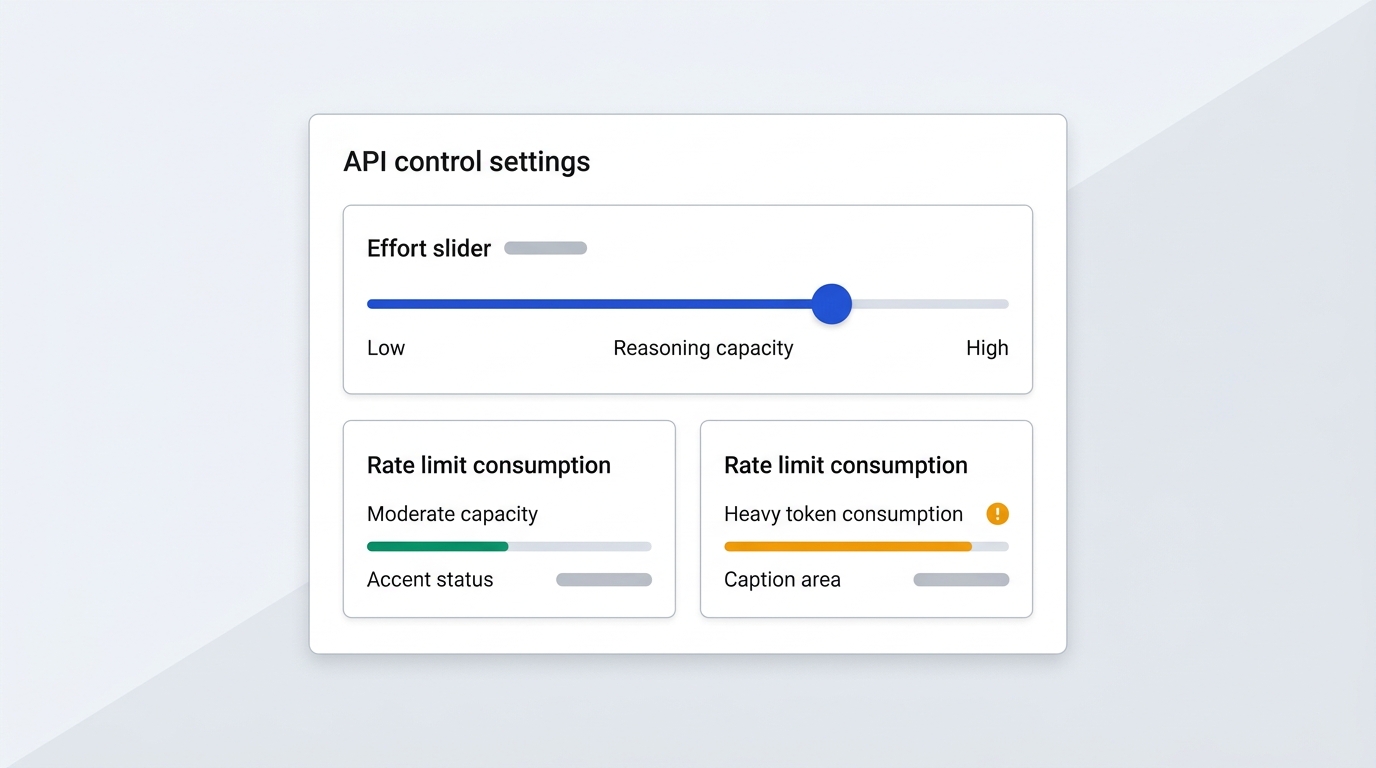
Rate limits govern how quickly your account consumes allowed token capacity over time. Haiku is the lightest on your limit, Sonnet is moderate, Opus is heavy, and Fable is the heaviest. Running simple lookup tasks on Opus exhausts your rate limit quickly without providing measurable benefits over Sonnet or Haiku.
Anthropic's guide makes the cost explicit. Using Opus on a task Haiku could handle spends tokens for no gain and slows you down. It also notes that Opus and Fable use more tokens because they do more reasoning.
The guide defines the limit as a cap on how many tokens you can use in a given time window. Because Haiku and Sonnet are more efficient with it, you can ask more questions inside the same window. That is the practical case for keeping routine work off the heavier models.
For a team, that turns model choice into a shared resource question. If one person runs long Opus sessions on routine jobs, everyone on the plan feels the cap sooner.
The effort slider
The Effort slider in the interface and API directly influences token usage. Set to High by default, this control adjusts how deeply the model thinks before returning a response. Lower settings yield faster, cheaper output for routine summaries. Turning the dial up to Extra or Max instructs the model to reason through edge cases, which improves accuracy on dense research papers but increases token consumption and response times.
Anthropic describes the default as the right balance for most work. Its advice is to lower it for quicker answers that use less of your limit, and to save the highest setting for your hardest problems. Effort is the second lever alongside model choice, and it changes both time and token use.
The content marketer's report gives a concrete pattern. High handled most drafting. She raised it to Extra for voice-sensitive or reasoning-heavy pieces, and treated Max as overkill for prose, keeping it for heavy analysis. For quick or high-volume jobs, Low or Medium did the work without the wait. That is one writer's habit, not a rule, but it is a sensible starting point.
Her report also says where to find the control. It sits next to the model picker in the Claude app and in Cowork, on every plan including Free, and in the API it is a setting called effort. The dial runs from low to max with high as the default, and the two settings above high are usually shown as extra and max.
She describes the control as a change that arrived with Opus 4.8. If your habits were formed on earlier versions, look for the dial next to the model picker before you assume a heavier model is the only way to get deeper answers.
The trade is simple. More effort means more thinking, stronger results on genuinely hard problems, but more time and more tokens. Less effort is quick and cheap, with less depth. Because it sits on every plan, you can test it on Sonnet before you pay for Opus.
Controlling cost in practice
- List your recurring tasks and mark each as simple, everyday or genuinely hard.
- Send simple tasks, such as short summaries and extraction, to Haiku.
- Make Sonnet the default for everyday coding, writing and analysis.
- Escalate to Opus only for tasks where Sonnet has already fallen short, or where cautious handling of ambiguity is worth the premium.
- Raise effort for the few pieces that matter and leave it at the default for the rest.
European Data Privacy and Compliance Terms
European organizations using Anthropic services must review data processing terms and tax rules before deployment. Anthropic provides a commercial Data Processing Addendum (DPA) that incorporates EU Standard Contractual Clauses (SCCs). Learn how these safeguards function in our detailed GDPR Data Processing Addendum overview.
All primary model processing and hosting infrastructure is situated in the United States, utilizing AWS and Google Cloud environments. Anthropic explicit policy states that commercial API inputs and customer conversations are not used to train proprietary foundation models. Your submitted prompt data remains private to your organization.
Tax handling follows standard cross-border B2B digital service regulations. For EU VAT-registered business buyers, invoicing applies the EU VAT reverse charge rules, shifting tax reporting to the buyer's local return. UK business buyers handle purchases under the UK reverse charge mechanism in accordance with HMRC VAT Notice 741A.
What this means for your decision
The terms above apply to the Anthropic service as a whole, and the supplied sources do not describe different data terms for Sonnet and Opus. So the data question is a decision about using Claude at all, not about which model to pick. Settle it first, then choose the model on price and reasoning needs.
The real downside for some European buyers is data location. Processing and hosting sit in the United States, so if your policy requires data to stay inside the EU, you should weigh that before deployment. The DPA with SCCs addresses transfers contractually, but it does not move the infrastructure.
Think about who in your organisation this touches. A legal team that wants Opus for client documents has the strongest reason to resolve the DPA and data location question before anyone opens a session. A development team using Sonnet on internal code faces the same question, just with different material. In both cases the model choice comes second.
Keep the VAT side separate from the EU side. The EU reverse charge and the UK reverse charge are different mechanisms, so a UK business should follow HMRC VAT Notice 741A and not the EU rules. Remember too that the US$ figures in this article are before VAT.
A short checklist before rollout
- Sign the commercial DPA and confirm it incorporates the EU Standard Contractual Clauses.
- Check that processing in the United States on AWS and Google Cloud fits your internal data policy.
- Note that commercial API inputs and customer conversations are not used to train Anthropic's foundation models, and record that in your data register.
- If you are VAT-registered in the EU, expect invoices under the reverse charge. If you are a UK business, the UK reverse charge applies under HMRC VAT Notice 741A.
- Record which model each team uses and why, so the rate limit and data decisions can be reviewed together when plans or versions change.
Frequently asked questions
How much do Claude Sonnet and Opus cost on the API?
Claude Sonnet 4.6 costs US$3 per 1M input tokens and US$15 per 1M output tokens. Claude Opus (4.6, 4.7 and 4.8) costs US$5 for input and US$25 for output per 1M tokens. These figures come from Anthropic pricing pages checked in October 2026.
When is Opus worth the higher price over Sonnet?
Opus suits high-stakes analytical work such as dense multi-document datasets, complex policy documents and long architectural chains. For daily coding, content and automated API workflows, Sonnet is the better default, with edge cases escalated to Opus.
What does the Effort setting do?
Effort adjusts how deeply the model thinks before it responds, and it is set to High by default. Lower settings give faster, cheaper output for routine summaries. Extra or Max can improve accuracy on dense research papers but increases token consumption and response times.
Can I use Opus on the free claude.ai plan?
No. The Free plan gives access to Sonnet and Haiku with dynamic message caps. Opus is added with the Pro plan at US$20 per month.
Where is data processed, and is API data used for training?
Primary model processing and hosting are in the United States, on AWS and Google Cloud. Anthropic offers a commercial DPA that incorporates EU Standard Contractual Clauses, and its policy states that commercial API inputs and customer conversations are not used to train its foundation models.
Which model is better for writing?
There is no single winner. In one content marketer's published comparison, Opus 4.6 produced the warmest, most on-brand writing and Sonnet 4.6 was fluent but needed the most editing for her voice rules. Every draft still needed a voice pass.
Does Opus make fewer mistakes than Sonnet?
Neither model removes the need to check facts. In the marketer's report, the one clear error was Opus 4.8 assuming it knew who wrote an article it could not open.
Should I use Haiku instead of Sonnet?
For simple questions, short summaries and extraction, yes. Haiku is the lightest on your rate limit. Anthropic suggests a quick test: run the same task on Haiku first, then Sonnet, and see whether the lighter answer misses anything you would have caught.
What is Fable, and do I need it?
Fable is the fourth model in Anthropic's lineup and the most capable, built for long, complex tasks. It plans the steps, checks its own work, and uses the most of your rate limit. You only need it for work you have already tested on Opus without success, and it is available on paid plans.
Does the newest Opus always write best?
Not according to the one hands-on report we have. The content marketer found the warmest writing came from the older Opus 4.6, while Opus 4.8 led on strategic analysis and Opus 4.7 at higher effort produced the sharpest synthesis in her issue. Choose by the job, not by the version number.
Sources and how this was compiled
Compiled by the SaaSEuro team from the vendors' official documentation; we have not hands-on tested these products. Facts last checked in November 2026.
Bottom Line: Which Model Should You Choose?
Claude Sonnet delivers the best balance of speed, cost, and analytical strength for daily business operations. It handles software development, marketing output, customer support flows, and automated API processing effectively while controlling budget expenditure. Most organizations should establish Sonnet as their default model tier.
Claude Opus justifies its higher token pricing for high-stakes, analytical projects that require cautious reasoning and deep structural context. Escalate tasks to Opus when working with dense multi-document datasets, complex policy documents, or long architectural chains. Using Sonnet for standard execution alongside Opus for heavy analysis gives your team maximum intelligence at optimal cost.
How to run your own check
Anthropic's guide suggests a simple method. Pick a task you already know well, such as summarizing a report you have read yourself. Run it on one model, start a new chat with the other, and run the same prompt again.
Compare where the answers differ, not how long they are. Because you know the material, you can judge whether the lighter answer missed something that matters. If it did not, the task is Sonnet-shaped, or even Haiku-shaped.
Use a prompt that asks for a judgment, not just a summary. Anthropic's own example asks for five bullet points and then the one claim most in need of a second source. That second part exposes differences that a plain summary hides.
Moving a team from Opus to Sonnet
- Audit a week of requests and group them by complexity, using the simple, everyday and hard split above.
- Switch the everyday group to Sonnet and compare outputs on a handful of tasks you know well.
- Define escalation rules in writing. A sensible trigger, taken from Anthropic's guidance, is a problem you have already tested on Sonnet and it struggled with.
- Keep Opus for work where cautious assumption handling matters, such as legal drafting and regulatory analysis.
- Watch your rate limit usage after the change. Moderate use on Sonnet against heavy use on Opus is the saving you are looking for.
If writing quality is your worry, plan for it. The marketer found Sonnet 4.6 needed the most editing for her voice rules, because it favoured constructions she tends to cut. A short style guide for your team, plus a human pass on every draft, covers most of that gap.
Anthropic also suggests spending a few minutes running your go-to tasks across models whenever a new one is released. Build that into the review so the rules you wrote down do not go stale.
Moving the other way, from Sonnet to Opus
Do this when you notice a pattern, not a single miss. Typical signs are contradictions across a long analysis, hidden assumptions in sensitive documents, or whole-repository questions that lose track of files. Try a higher effort setting on Sonnet first, since it changes depth without changing the model.
If the problem persists, move that workload to Opus and leave everything else where it is. Review the choice when a new model version is released, because Anthropic notes that tasks which once hit a ceiling may now be worth trying again.
