

















European businesses: Compare Claude vs Gemini pricing, features, EU data compliance, and VAT insights. Choose your AI assistant.
For European businesses weighing their AI options, the choice between Claude and Gemini depends on your core needs. Claude excels in deep, structured content generation, complex reasoning, and handling extensive documents. Gemini, on the other hand, is built for speed, real-time research, and integrates easily within the Google Workspace ecosystem, making it ideal for dynamic, multimodal tasks. Many teams find value in deploying both for different aspects of their workflow.
TL;DR

Claude suits businesses needing deep writing, complex reasoning, and long-form content with structured output. This AI assistant is particularly strong when you need nuanced analysis from large documents, such as legal contracts, research papers, or detailed reports. Gemini is ideal for real-time research, Google Workspace integration, multimodal tasks, and quick factual queries. It works best when you need fast, current information and a tool that fits into your existing Google-centric processes, for example, drafting emails or analyzing spreadsheets directly within Google applications. Many businesses find value in using both tools for different aspects of their workflow, leveraging their distinct strengths for different tasks.
| Feature | Claude | Gemini |
|---|---|---|
| Free Plan | Yes, limited usage every 5 hours/week. | Yes, ₫0 VND/month. |
| Lowest Paid Individual Plan | Pro: US$20/month (US$17 annually). | AI Plus: ₫132.000 VND/month. |
| Context Window | Up to 1M tokens (Opus, Sonnet, Haiku). | Up to 1M tokens (4 Argon, 3.1 Pro models). |
| Real-Time Web Search | Available, but more conservative; relies on knowledge cutoff unless enabled. | Native, leverages live Google Search. |
| Multimodal Capabilities | Text/image input. No native image/video generation. | Native text, image, audio, video inputs/outputs, including image/video generation. |
| Core Integrations | Connectors for Chrome, Microsoft 365/Outlook. | Deep, native integration with Google Workspace (Gmail, Docs, Sheets, Vids). |
| EU DPA / Data Location | US data storage. Commercial DPA includes EU Standard Contractual Clauses (EU SCCs). | US data storage. Enterprise plans mention 'sovereign data boundaries,' but non-Enterprise DPA details not explicitly published. |
Which AI Suits Your European Business?
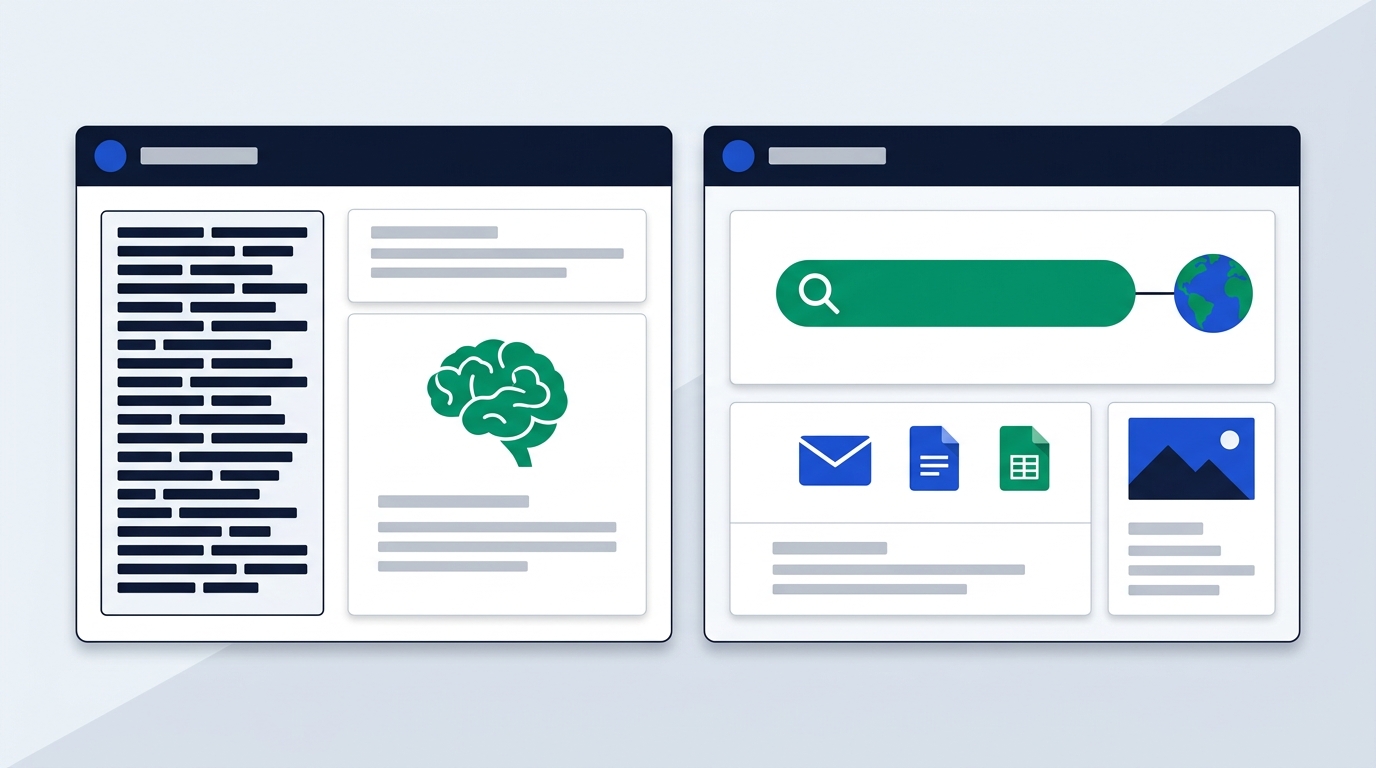
Choosing the right AI for your European business involves understanding what each tool prioritizes. Claude, developed by Anthropic, excels in thoughtful, reliable AI output. It is strong in structured reasoning and handles long documents with an impressive context window of up to 1 million tokens. This makes it suitable for tasks requiring deep understanding and synthesis of extensive text, such as analyzing customer feedback, reviewing business plans, or preparing for exams by turning notes into study guides. For a content marketing agency, this means generating comprehensive blog posts or detailed whitepapers that require a consistent tone and deep factual grounding.
Gemini, by Google, is built for speed and real-time data access. Its integration with Google Search allows it to pull current information, making it invaluable for market analysis, competitive intelligence, or staying updated on rapidly evolving topics. This AI assistant also integrates deeply within the Google ecosystem, which is a significant advantage for teams already using Google Workspace. Gemini is designed for dynamic, multimodal tasks that might involve text, images, or even video, such as creating cinematic storyboards or generating interactive worlds for educational purposes. For a sales team, this could mean quickly drafting personalized emails within Gmail or generating compelling presentations in Google Slides based on current market trends.
Both tools offer Free tiers to get you started. Claude Pro begins at US$20/month. Claude's top models include Opus, Sonnet, and Haiku, each offering different performance profiles tailored for various computational demands and cost efficiencies. Gemini's lineup features Flash, Pro, Advanced, and various 4.x models (Hydrogen, Argon, Carbon), catering to different levels of capability and speed, from basic assistance to high-level creative and analytical tasks. The availability of these models varies by plan, allowing businesses to scale their AI capabilities as needed.
Choosing the Right AI for Your Needs
The choice between them largely depends on your primary need. If your business focuses on deep content generation, detailed analysis, and careful instruction following—for example, a research firm compiling comprehensive reports—Claude might be a better fit. Its ability to process and reason over vast amounts of text with nuance and structure is a significant advantage. If your workflow demands dynamic, integrated information retrieval, real-time data, and multimodal tasks—such as a creative agency producing diverse digital assets—Gemini's capabilities are more aligned. Its direct connection with Google's ecosystem and its native multimodal support simplify complex creative and informational tasks.
Understanding the Core Philosophy
Claude's design emphasizes careful instruction-following and nuanced reasoning, aiming for thorough and responsible output. It processes complex tasks deliberately, structures responses clearly, and addresses ambiguities. This approach often results in longer, more detailed answers that acknowledge uncertainty and handle edge cases. For a business, this translates into AI-generated content that feels more considered and less prone to "hallucinations" or oversimplifications. Its large context window ensures it can maintain coherence over extensive documents and conversation histories, making it a reliable partner for tasks like legal document review or synthesizing academic research. This philosophy is particularly beneficial for tasks where precision, depth, and reliability are paramount, such as preparing detailed competitive analyses or drafting sensitive internal communications.
Gemini's philosophy centers on speed, breadth, and native integration. Its default access to real-time search data means it can provide up-to-date information on current events and recent publications, which is crucial for businesses operating in fast-moving industries. Furthermore, Gemini was designed from the ground up to be natively multimodal, processing text, images, audio, and video as core capabilities rather than add-ons. This allows for smooth changes between different media types, enhancing creative workflows. Its embedded nature within Google Workspace streamlines workflows for users already reliant on Google's suite of products, enabling actions like summarizing a long email thread in Gmail or generating a presentation outline in Slides with minimal effort. This focus on speed and integration makes Gemini an ideal tool for dynamic teams that need quick answers, real-time insights, and versatile content creation capabilities across various formats.
Claude vs Gemini: Plans and Pricing
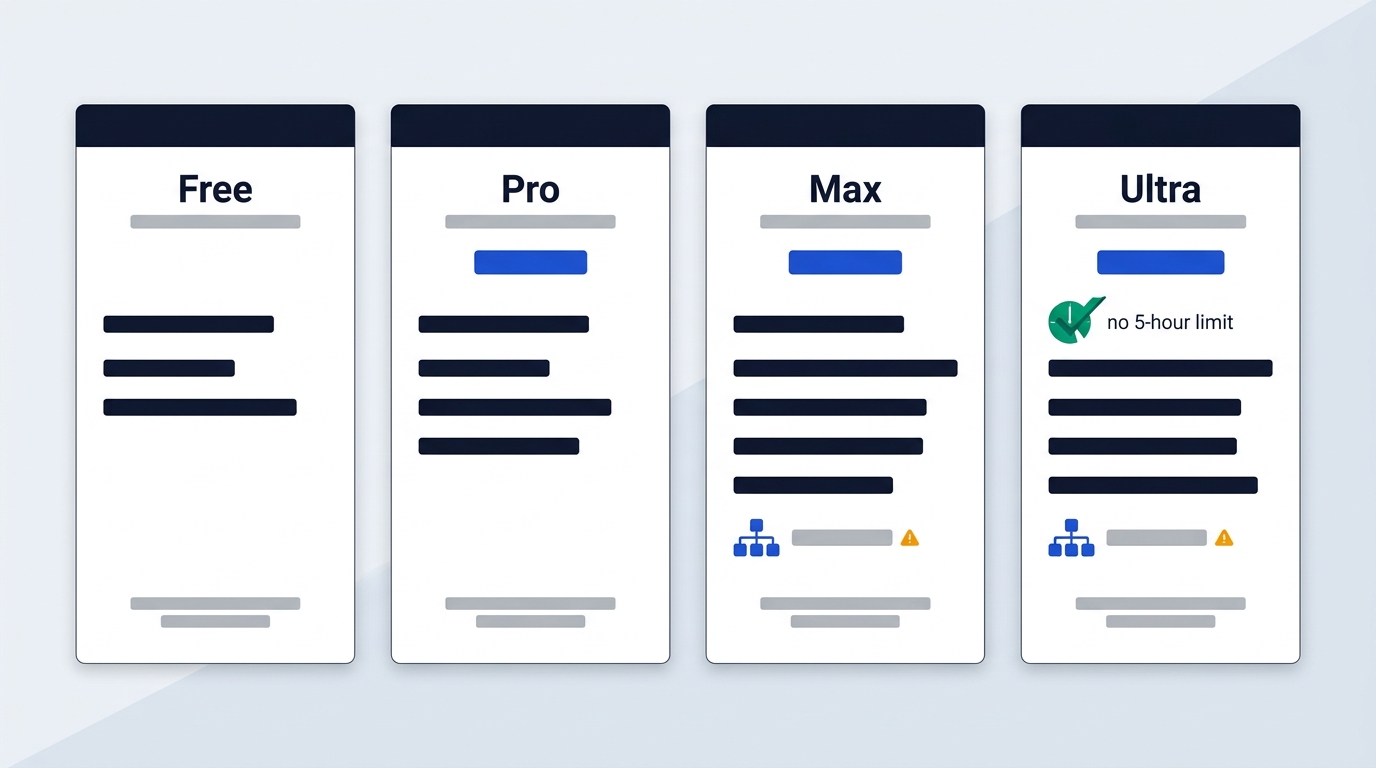
When evaluating Claude vs Gemini for your European business, understanding their pricing structures and usage limits is crucial. Prices are before any applicable taxes. The specific features and usage limits vary significantly across plans, impacting which tool offers the best value for different business needs.
Claude offers several plans tailored for individuals and teams, all listed in US dollars. The Free plan allows you to try Claude with limited usage every 5 hours and every week. This plan includes chat on web, desktop, and mobile, web search, file creation, code execution, memory across conversations, app and tool connections, and artifact creation with Claude Design, Slides, and Docs. This is suitable for individuals or very small teams testing the waters or with minimal AI needs. For more regular use, the Pro plan costs US$20 per month, or US$17 per month if billed annually (US$200 upfront).
This plan provides more usage than the Free tier, also subject to 5-hour and weekly limits. It adds features like Fable (paid with usage credits), task scheduling, Claude Data, Sheets, Whiteboards (beta), Claude Code, Claude Science, Projects (up to 5), and integrations with Chrome and Microsoft 365. This tier is suitable for everyday work for individual professionals or small teams with consistent, but not intensive, AI requirements.
The Max plan is US$100 per month, offering 5x the Pro usage every 5 hours and weekly. It includes Fable (up to half your weekly limit), US$100 a month in API credits, and early access to advanced Claude features and priority access during high traffic times. This plan is designed for all-day work by power users or small development teams. For your longest tasks, the Ultra plan is US$200 per month, featuring no 5-hour limit for verified accounts and 10x the Pro usage weekly.
Claude's API Limits and Plan Options
It also increases API credits to US$200 a month. This is for users with the most demanding AI workloads, requiring maximum availability and high usage capacity. Understanding these usage limits is crucial; exceeding them can halt workflows, so choosing a plan that aligns with expected usage is vital for uninterrupted operations. For instance, a small content team producing a few articles a week might find Pro sufficient, but a data analysis team running daily complex queries would quickly need Max or Ultra.
For teams, Claude provides Standard seats at US$25 per seat per month (or US$20 per seat per month if billed annually) and Premium seats at US$125 per seat per month (or US$100 per seat per month annually). These Team plans support 2 to 150 users and include all Claude features, more usage than Pro (Standard seats) or 5x more usage than standard seats (Premium seats), Claude Code and Cowork, Claude Data (plus Motion, Sheets, Whiteboards beta), Claude Science, Microsoft 365 integrations, enterprise search, central billing, SSO, admin controls, and up to US$500 per month in pooled API credits.
The Enterprise plan, for large businesses, is US$20 per seat per month, billed annually, with a 20-seat minimum, plus usage costs at API rates. Enterprise adds features like spend limits, role-based access, SCIM, audit logs, compliance API, custom data retention, and HIPAA-ready offerings. Claude also offers an Education plan for universities, providing comprehensive access for students, faculty, and staff at discounted rates, with dedicated API credits and educational features. Usage limits vary by plan, model, chat length, and file size. See more Claude pricing details on SaaSEuro.com. Source: Claude pricing page, checked November 2026.
Gemini's Individual Plans and Pricing
Gemini’s individual plans are listed in Vietnamese Dong (VND), which can introduce currency conversion complexities for European buyers. The Free plan costs ₫0 VND/month and includes access to the Flash-Lite model, image creation, Deep Research, Gemini Live, Canvas, Skills, Google Flow (limited use of Nano Banana Pro), Gemini Notebook, and 15 GB of shared cloud storage. This is a good starting point for individuals to explore Gemini's capabilities. The AI Plus plan is ₫132.000 VND/month, offering 2x the usage data access compared to the free plan, along with video creation, access to Gemini 4 Hydrogen, 200 Google Flow credits, wider access to Nano Banana in Search, more audio overviews and notebooks in Gemini Notebook, Gemini in Gmail/Vids, and 400 GB of shared cloud storage.
This plan suits individuals seeking enhanced productivity and creative features.
This tier is for advanced individual users and creators. The top-tier AI Ultra plan starts from ₫2.250.000 VND/month, with options for 5x or 20x the AI Pro usage, offering the highest access to Google's best AI models (Gemini 4 Carbon, Argon, Hydrogen) and exclusive features like early access to Gemini Tasks. It includes 10,000 or 25,000 Google Flow credits, highest access to Nano Banana and AI agent capabilities, higher or highest limits in Google Antigravity, highest limits for Gemini Notebook and Gemini in Google apps, Project Genie (real-time interactive world creation), and 20 TB or more of shared cloud storage. This plan is for professionals and enterprises requiring the utmost in AI power and integration.
Gemini's Business Plans and Offerings
For businesses, Gemini offers plans in US dollars. This version is designed for businesses and small teams, offering Gemini as a powerful and proactive personal AI assistant, Gemini Notebook for large enterprises, secure connection to productivity tools like Microsoft 365, Google Workspace, HubSpot, Jira, and more, a connector library for diverse data sources, no-code Workflow Builder for custom agents, Google-created agents for workflow automation, centralized agent management, and built-in security and governance. It includes 25 GiB of storage and data indexing per license (pooled) and supports up to 300 licenses.
For organizations needing enterprise-grade control, the Gemini Enterprise Standard/Plus plans begin at US$30/license/month. These plans include all Business features, plus higher Gemini usage limits, integration with custom agents built using Google's Agent Development Kit or third-party agents, advanced security and governance features like VPC-SC and Customer-Managed Encryption Keys, and compliance for data residency with enterprise-grade cloud compliance and sovereign data boundaries. These plans are designed for organizations requiring comprehensive technical control and advanced compliance features.
VAT and Currency Considerations for European Businesses
For VAT-registered businesses in the EU and the UK, the reverse charge mechanism generally applies. This means the vendor does not charge VAT at the point of sale. Instead, the buyer accounts for the VAT themselves, which can simplify cross-border transactions and ensure compliance with local tax regulations. For UK VAT-registered buyers, HMRC VAT Notice 741A outlines the specific rules for the UK reverse charge. Businesses should ensure their VAT registration details are correctly provided to the vendor to benefit from this mechanism. Failure to do so might result in being charged VAT unnecessarily, which then needs to be reclaimed, adding administrative burden. You can learn more about the VAT Reverse Charge Mechanism on SaaSEuro.com.
The currency discrepancy for Gemini's individual plans, listed in Vietnamese Dong, means European buyers must consider not only fluctuating exchange rates but also potential foreign transaction fees from their banks. This can make budgeting and expense tracking more complex compared to services priced directly in EUR or GBP. Businesses should factor in these additional costs when comparing total expenditure. Claude's pricing in US dollars is a standard approach for many global SaaS providers, but still requires currency conversion for European businesses. While more common, it still means businesses need to monitor exchange rates or use financial tools that offer favorable conversion rates. For larger organizations, the ability to negotiate contracts in a preferred currency or through a local reseller might mitigate some of these issues, but this is typically reserved for Enterprise-level agreements.
Data Residency and GDPR Compliance
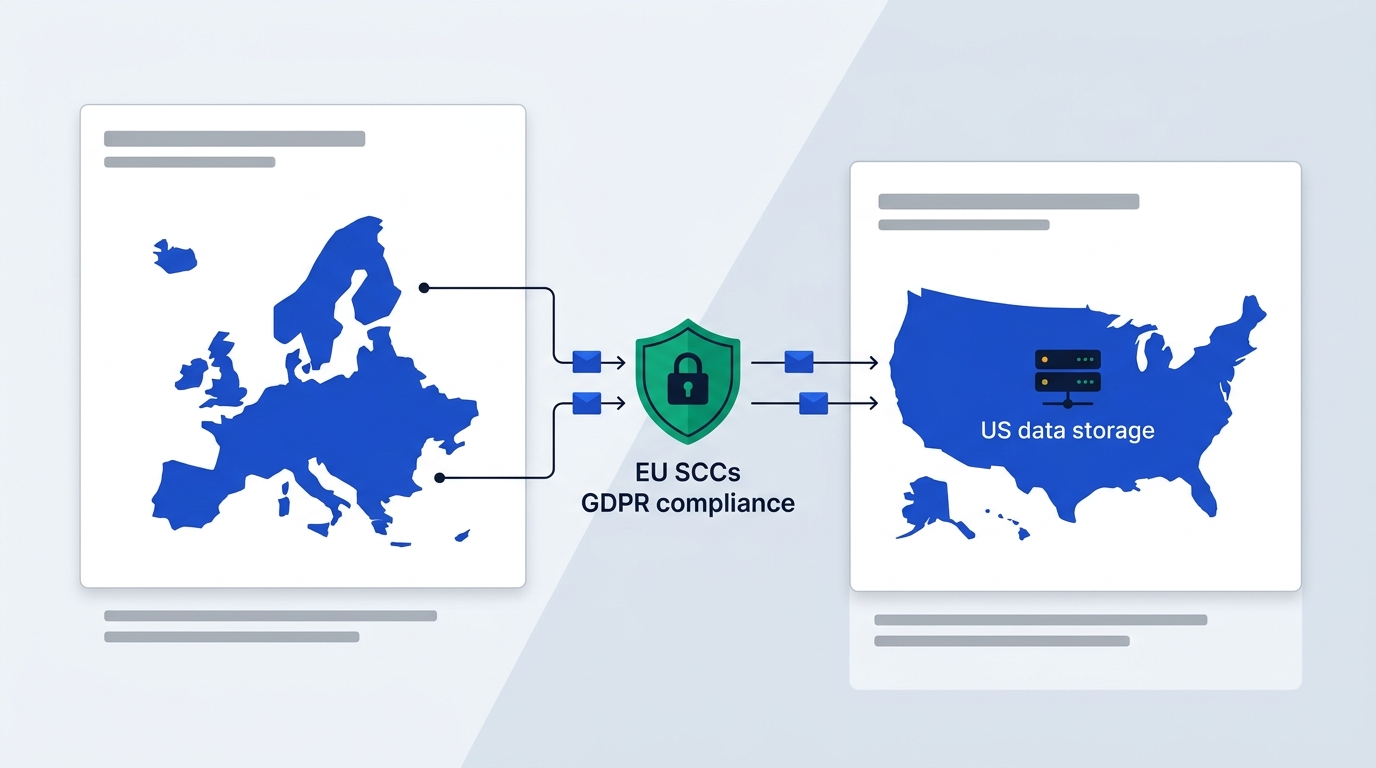
For European businesses, data residency and GDPR compliance are critical factors when choosing an AI tool. Understanding where your data is processed and stored, and the vendor’s commitment to data protection, is essential for maintaining legal compliance and protecting sensitive information. The implications of data being stored outside the EU can be significant, requiring careful review of contractual terms and additional safeguards.
Claude, by Anthropic PBC, processes data primarily in the United States. This is done through its infrastructure, which utilizes both AWS and Google Cloud services. Anthropic is transparent about its data processing locations, stating that data is handled within US infrastructure.. This means that any personal data transferred to Claude from the European Economic Area (EEA) will cross international borders, necessitating specific legal mechanisms to ensure compliance with GDPR.
To address GDPR requirements for data transfers outside the EU, Anthropic offers a Commercial Data Processing Addendum (DPA) that includes EU Standard Contractual Clauses (EU SCCs) for its commercial and API customers. This DPA aims to provide the necessary legal safeguards for personal data transferred from the European Economic Area to the United States. The inclusion of EU SCCs is a crucial step in legitimizing these data transfers under GDPR, as they impose contractual obligations on the data importer (Anthropic) to protect personal data to European standards. Businesses should review this DPA thoroughly to ensure it meets their specific compliance needs and internal policies, especially concerning the types of data they intend to process using Claude.
Gemini Data Storage and Due Diligence
Google Gemini, developed by Google DeepMind, also stores data primarily in the United States.. While Gemini's Enterprise plans mention "Enterprise-grade cloud compliance and sovereign data boundaries," specific DPA terms and detailed data location information for individual and business-tier plans are not explicitly published on their pricing page. This lack of readily available detail for non-Enterprise plans means businesses need to be proactive in their due diligence.. For organizations considering Gemini's individual or standard business plans, it is imperative to directly inquire with Google about their DPA, data processing practices, and any available safeguards for international data transfers. This step is crucial to avoid potential GDPR non-compliance issues, particularly if personal data of EU citizens is involved in their AI workflows.
Ensuring GDPR Compliance for US-Based Data
For European businesses, the fact that both tools primarily store data in the US necessitates reliance on strong DPAs. These agreements, particularly those incorporating EU Standard Contractual Clauses, are designed to ensure that data transfers comply with GDPR Article 28 and other relevant regulations. A strong DPA outlines the responsibilities of both the data controller (your business) and the data processor (Claude or Gemini) regarding the protection of personal data. It should specify security measures, data breach notification procedures, and audit rights, providing a framework for accountability. You can find more information on GDPR Data Processing Agreement rules on SaaSEuro.com.
When reviewing a DPA, European businesses should pay close attention to several key aspects:
- Scope of Data Processing: Clearly understand what types of data are processed and for what purposes.
- Security Measures: Verify the technical and organizational security measures in place to protect data from unauthorized access, loss, or disclosure.
- Sub-processors: Identify any third-party sub-processors used by the AI vendor and ensure they also adhere to GDPR standards.
- Data Subject Rights: Confirm how the vendor will assist your business in responding to data subject requests (e.g., access, rectification, erasure).
- Data Breach Notification: Understand the procedures and timelines for notifying your business in the event of a data breach.
- Audit Rights: Ensure your business has the right to audit the vendor's compliance with the DPA, either directly or through independent third-party audits.
Confirming Gemini Data Protection Compliance
It is important for users to verify the Data Processing Addendum and specific data processing terms directly with Gemini, especially for non-Enterprise plans, to ensure their organization's specific compliance needs are met. This step is vital to confirm that any personal data processed through these AI tools is handled in a manner consistent with European data protection laws. While Claude provides explicit EU SCCs for its commercial offerings, Gemini's terms for lower tiers may require direct inquiry to fully understand the data protection posture. Businesses should integrate this due diligence into their procurement process for any AI tool, treating it as a non-negotiable step for cross-border data processing.
Capabilities: Writing, Coding, and Research
Claude and Gemini offer distinct strengths in writing, coding, and research, catering to different business needs and workflows. Understanding these differences can help European businesses select the tool that best aligns with their operational requirements.
For writing, Claude excels in producing structured, nuanced, and well-organized long-form content. It often includes self-correction and contextual explanations, leading to more refined and thoughtful output. This makes it ideal for generating detailed reports, articles, creative content, or even entire blog posts where depth, clarity, and a consistent narrative flow are paramount. For example, a marketing team could use Claude to draft comprehensive whitepapers or detailed case studies that require careful argumentation and factual accuracy.
Gemini, by contrast, provides faster, more practical output for workplace content. It integrates well with existing Google tools, streamlining content creation within the Google ecosystem, which is beneficial for quick drafts, routine communications, and generating content like social media captions or website pages. For a small business, this could mean quickly generating product descriptions or email marketing copy directly within their Google Workspace environment..
In coding, Claude offers deep explanations and handles complex debugging with context-aware fixes. It is capable of reasoning over large codebases, processing up to 30,000 lines of code. This makes it a powerful assistant for developers tackling intricate programming challenges, such as developing complete code blocks, creating unit tests, automating repetitive coding tasks, debugging complex native codebases, optimizing performance changes at scale, and explaining how different parts of the code work. For a software development team, Claude can help accelerate development cycles by providing insightful code suggestions and debugging support..
Gemini for Code, Claude for Research
Gemini is solid for standard code tasks and can also analyze code repositories up to 30,000 lines. It can help develop complete code blocks, create unit tests, and automate repetitive coding tasks. However, its explanations are generally less verbose compared to Claude, focusing more on direct solutions. For developers primarily needing quick code snippets or assistance with routine programming challenges, Gemini offers efficient support..
Advanced Research and Context Handling
Claude's research capability focuses on deep synthesis. It connects ideas across multiple sources and flags nuances within provided documents, making it excellent for in-depth analysis of specific texts or datasets. For a research institution, this means Claude can help prepare for exams by turning notes and slides into study guides or practice tests, or aid in refining academic writing by generating first drafts and developing arguments. Its ability to analyze vast amounts of customer feedback or business plans and extract critical insights is invaluable for strategic planning..
Gemini's Deep Research feature leverages real-time Google Search to analyze hundreds of sources. It generates comprehensive reports quickly, offering broad and fast information retrieval for a wide range of topics, from in-depth competitor analysis to industry overviews. This is particularly useful for businesses needing up-to-the-minute market intelligence. Gemini Notebook, a research and writing assistant, further enhances this by providing more audio overviews and notebooks, helping users quickly grasp key insights from their data..
Both Claude and Gemini offer extensive context windows, allowing them to process and remember substantial amounts of information. Claude's Opus, Sonnet, and Haiku models, as well as Gemini's 4 Argon and 3.1 Pro, provide context windows up to 1 million tokens. This capacity is equivalent to hundreds of pages of text, enabling both AI tools to handle very large documents or prolonged conversations without losing context. This feature is particularly valuable for tasks involving extensive document review, summarization of lengthy legal or technical texts, or complex multi-turn interactions where the AI needs to remember previous parts of the conversation. For businesses, this means the AI can maintain a consistent understanding across entire projects, reducing the need for constant re-contextualization and improving the efficiency of long-form tasks. For example, a consulting firm could feed an entire client brief into the AI and expect coherent, context-aware responses throughout the engagement.
Real-Time Information and Integrations
The ability to access real-time information and integrate with existing business tools is a key differentiator between Claude and Gemini, significantly impacting their utility for various European business workflows.
Gemini's native real-time data access is a significant advantage. It grounds its responses in live Google Search results, ensuring that the information it provides is current and up-to-date. This is crucial for tasks requiring the latest market data, news, competitive intelligence, or factual checks on rapidly evolving topics. For a financial analyst, this means getting real-time stock market data or economic news to inform decisions. For a marketing team, it allows for immediate insights into trending topics for content creation.. Claude's web search is available, but it is generally more conservative. It tends to pull fewer and more authoritative sources and relies on its knowledge cutoff (June 2026 for its top models) unless explicitly enabled for real-time browsing. This makes Claude better suited for tasks where deep analysis of provided documents or a more curated set of web sources is preferred, rather than broad, instantaneous web queries..
Gemini is inherently multimodal, designed from the ground up to process and generate across various input and output types, including text, image, audio, and video. This includes image and video generation capabilities via Google's media models, making it a versatile tool for creative content creation. For example, with Google Flow credits, users can create cinematic scenes and stories, or with Project Genie, they can build and explore interactive real-time worlds. This makes Gemini invaluable for creative agencies, educational content developers, or anyone needing to produce diverse media assets.. Claude primarily handles text and image understanding as inputs. It does not offer native image or video generation capabilities, focusing instead on its strong textual and reasoning abilities. While it can process images you provide, it won't generate new ones. This means businesses with a strong need for visual or video content generation might find Claude less suitable for those specific tasks..
Integration with Business Ecosystems
Gemini offers deep integration with Google Workspace applications such as Gmail, Docs, and Sheets. This allows users to leverage Gemini directly within the tools they already use daily, simplifying workflows for those embedded in the Google ecosystem. For example, you can ask Gemini to draft an email in Gmail, summarize a long document in Docs, or analyze data and create charts in Sheets. This easy connection significantly reduces context switching and boosts productivity for teams heavily reliant on Google's suite of products. The ability to open Gemini right within these applications means less friction and a more natural workflow for Google Workspace users..
Claude provides connectors and extensions for tools like Chrome and Microsoft 365/Outlook. These integrations allow it to fit into various productivity environments, offering flexibility for businesses that use a mix of software. For instance, Claude in Chrome can assist with web-based research and content creation, while its Microsoft 365/Outlook integration can help with drafting emails or summarizing documents within Microsoft's ecosystem. While not as deeply embedded as Gemini within a single ecosystem, Claude's connectors enable it to extend its capabilities to common business applications, providing assistance across different platforms. This makes Claude a good choice for organizations that utilize a hybrid software environment..
Both platforms also feature agentic capabilities. Claude's Fable model is designed for long-running agents, allowing for complex, multi-step tasks to be handed off and scheduled. Gemini offers custom agents built with its no-code Workflow Builder and ready-made agents created by Google, along with access to agent models in Google Antigravity. These agentic features enable automation of repetitive tasks, deeper analysis, and more sophisticated interactions with data and applications, enhancing productivity for both platforms..
The Good and The Bad: A Fact-Based Look
When comparing Claude vs Gemini, it's helpful to look at their verifiable strengths and weaknesses based on the available facts from their official pricing and documentation pages. This objective analysis helps European businesses make an informed decision based on their specific needs and priorities.
Claude
The Good:
- Massive Context Window: Claude offers a substantial context window of up to 1 million tokens (on Opus, Sonnet, and Haiku models). This allows it to process and reason over very long documents and complex conversations without losing context, equivalent to hundreds of pages of text. This is crucial for tasks like legal document review or in-depth research..
- Strong for Complex Reasoning and Structured Output: It excels at nuanced, multi-step reasoning, careful instruction following, and producing structured, thoughtful outputs. This makes it highly suitable for deep analysis, detailed content creation, and tasks requiring thorough explanations..
- Explicit EU Standard Contractual Clauses (EU SCCs): Anthropic provides a Commercial Data Processing Addendum (DPA) that explicitly includes EU Standard Contractual Clauses (EU SCCs) for its commercial and API customers. This is an important compliance safeguard for European businesses handling personal data, providing a legal basis for data transfers to the US..
- Dedicated Coding Features: Claude Code offers advanced features for developers, including generating complete code blocks, creating unit tests, automating repetitive coding tasks, debugging complex native codebases, and optimizing performance changes at scale..
- Artifact Creation: The ability to create 'Artifacts' (Claude Design, Slides, Docs, Sheets, Whiteboards beta) allows users to generate and edit files directly within the Claude interface, streamlining creative and documentation workflows..
The Bad:
- US Data Storage: Claude's data is primarily stored in the United States (using AWS and Google Cloud infrastructure). For businesses with strict EU data residency requirements, this necessitates reliance on strong legal frameworks like EU SCCs and careful review of their DPA.
- Usage Limits on Lower Tiers: Lower-tier plans, such as Free and Pro, have explicit usage limits that refresh every 5 hours and weekly. For heavy users, this can interrupt workflows and lead to frustration if caps are hit frequently, potentially requiring an upgrade to Max or Ultra..
- No Native Image/Video Generation: Claude primarily processes text and image inputs but does not offer native capabilities for generating images or videos. This might be a limitation for creative teams or businesses requiring multimodal content creation directly from the AI..
- Conservative Web Search: While web search is available, Claude's approach tends to be more conservative, pulling fewer and often more authoritative sources. It relies on a knowledge cutoff unless web search is explicitly enabled, which may not always provide the fastest or broadest real-time information..
Gemini
The Good:
- Native Real-Time Web Search: Gemini features native real-time web search, grounding its responses in the latest information from Google Search. This is highly beneficial for current events, dynamic market data, and factual checks where up-to-the-minute information is crucial..
- Solid Multimodal Capabilities: It supports text, image, audio, and video inputs and outputs, including native image and video generation via Google's media models. This makes it a versatile tool for diverse content creation, such as generating cinematic scenes with Google Flow or interactive worlds with Project Genie..
- Deep Google Workspace Integration: Gemini integrates deeply and smoothly with Google Workspace applications like Gmail, Docs, Sheets, and Vids. This offers a highly efficient and integrated experience for businesses already embedded in the Google ecosystem, reducing context switching and streamlining workflows..
- Agentic Capabilities: Gemini allows for the creation of custom agents using a no-code Workflow Builder and provides access to Google-created agents and agent models in Google Antigravity, enabling automation of complex, multi-step tasks..
- Extensive Cloud Storage: Higher-tier plans like AI Pro and AI Ultra include significant shared cloud storage (5 TB and 20 TB+ respectively) for Gmail, Drive, and Photos, which is a valuable added benefit for Google users..
The Bad:
- VND Pricing for Individual Plans: Individual plan pricing is listed in Vietnamese Dong, creating currency conversion complexities and potential foreign transaction fees for European buyers. This makes budgeting and expense tracking more challenging compared to USD or EUR pricing..
- Less Explicit DPA/Data Location for Non-Enterprise: While Enterprise plans mention 'sovereign data boundaries,' explicit DPA and detailed data location information for individual and business-tier plans are not readily published. This requires additional inquiry for compliance-sensitive businesses to ensure GDPR alignment..
- US Data Storage for Most Plans: Data for most Gemini plans is primarily stored in the United States, similar to Claude. European businesses must ensure their DPA, once obtained, adequately covers this for GDPR compliance, especially for non-Enterprise tiers..
- Potentially More Templated Output for Writing: While fast and practical, Gemini's content creation quality can sometimes be more templated compared to Claude's nuanced and structured output, which might require more editing for unique or highly expressive content..
SaaSEuro's Verdict: Best for European Teams
Choosing between Claude and Gemini for your European team requires a clear understanding of your specific operational needs, budget, and compliance priorities. Both are powerful AI tools, but their distinct philosophies and feature sets make them suitable for different scenarios. Our verdict is based on a practical evaluation of their pricing, features, integrations, and data handling practices relevant to businesses in Europe.
For European teams prioritizing deep textual analysis, long-form content generation, and complex coding tasks, Claude often presents better value. Its strength in nuanced reasoning, extensive context handling, and explicit GDPR safeguards via EU SCCs offers a strong foundation for compliance-conscious businesses, particularly those handling sensitive text-based data. Consider Claude Pro at US$20/month for individual professionals or small teams focused on writing, research, or coding tasks that demand precision and depth. For larger teams, Claude Team's Standard seats at US$20/seat/month (annually billed) offer shared workspaces and higher usage, ideal for collaborative content creation or development projects. Visit the dedicated page for Claude on SaaSEuro.com for more details.
Businesses heavily invested in the Google Workspace ecosystem and requiring real-time information, multimodal content creation, or quick factual queries will find Gemini's integration and capabilities more beneficial. Its native access to Google Search and ability to generate diverse media types (images, videos) can significantly enhance productivity for dynamic workflows in marketing, creative, or sales teams. For individual power users needing the highest multimodal capabilities and cloud storage, Gemini AI Ultra offers unparalleled access, though its VND pricing requires careful currency conversion planning.
EU Data Residency and Compliance
When EU data residency is a critical factor, neither tool offers default EU-based data storage for all plans. Both primarily store data in the United States. Claude's explicit EU SCCs are a compliance safeguard, providing a clear legal basis for data transfers, which makes it a more straightforward choice for GDPR compliance when US data storage is unavoidable. Gemini's Enterprise plans do offer 'sovereign data boundaries,' which might address specific residency needs but would require further inquiry for clarity on implementation and scope. For businesses where absolute EU data residency is a non-negotiable requirement, a direct consultation with Google's sales team for Enterprise solutions would be essential to understand if and how this can be achieved.
The choice should weigh your specific use case, budget, existing technology stack, and your organization's data privacy requirements against the verifiable facts presented for each tool. For example, if your team relies heavily on drafting content within Google Docs and needs to pull current information frequently, Gemini's deep integration could be a workflow accelerator. If your work involves in-depth research, legal document analysis, or complex software development, Claude's reasoning and context handling might offer a greater advantage.
When to Consider Using Both
Many advanced users and businesses find value in a dual-tool strategy. You might use Claude for tasks requiring extensive text analysis, such as summarizing long legal documents, drafting detailed research reports, or deep code debugging. Concurrently, you could leverage Gemini for real-time market research, generating quick social media visuals, or streamlining communications within Google Workspace. This approach allows you to harness the specific strengths of each AI, optimizing different parts of your workflow for maximum efficiency and quality.
Key Considerations Before Switching or Adopting
- Workflow Integration: How well does the AI fit into your existing tools (Google Workspace, Microsoft 365, etc.)? Easy connection reduces friction and increases adoption.
- Team Training: Will your team require significant training to effectively use the new AI tool? Consider the learning curve for each platform.
- Scalability: Does the chosen plan allow for future growth in terms of users, usage, and advanced features? Review the upgrade paths carefully.
- Cost vs. Value: Beyond the monthly fee, consider the total cost of ownership, including potential currency conversion fees, and weigh it against the tangible benefits and productivity gains.
- Data Governance: Have you thoroughly reviewed the DPA and data storage policies to ensure compliance with GDPR and your internal security standards?
Frequently Asked Questions about Claude and Gemini
What is the main difference between Claude and Gemini?
The main difference lies in their core strengths. Claude excels at deep, structured, and long-form text generation with a focus on nuanced reasoning and detailed analysis. Gemini is optimized for speed, real-time information access through Google Search, and extensive multimodal capabilities, including native image and video generation, with deep integration into Google Workspace applications.
Which AI offers better value for money for small businesses in Europe?
For small businesses in Europe, the value depends on your primary use case. If you need extensive text analysis, complex content creation, or deep code debugging, Claude Pro (US$20/month) might offer better value due to its strong reasoning and context handling.
Can Claude or Gemini generate images and videos natively?
Gemini can generate images and videos natively through its integration with Google's media models, supporting a full range of multimodal inputs and outputs. This includes features like Google Flow for cinematic scenes and Project Genie for interactive worlds. Claude, on the other hand, primarily handles text and image understanding as inputs and does not offer native image or video generation capabilities.
How do Claude and Gemini integrate with other business tools?
Gemini offers deep, native integration with Google Workspace applications like Gmail, Docs, Sheets, and Vids, allowing users to leverage AI directly within these tools. Claude provides connectors and extensions for tools such as Chrome and Microsoft 365/Outlook, enabling integration into various productivity environments, although not as deeply embedded within a single ecosystem as Gemini.
What are the typical usage limits on their free and basic plans?
Claude's Free plan has limited usage that refreshes every 5 hours and weekly. The Pro plan offers more usage but is still subject to these 5-hour and weekly limits. Gemini's Free plan also has usage limits. Its AI Plus plan offers 2x the usage of the free plan, and AI Pro offers 4x the usage. Limits vary based on the model used, chat length, and file size, and are designed to accommodate different levels of user activity.
Is data for either Claude or Gemini stored within the EU?
No, both Claude (Anthropic PBC) and Google Gemini (Google DeepMind) primarily store and process data in the United States. For European businesses, this means relying on strong Data Processing Addendums (DPAs) with EU Standard Contractual Clauses (EU SCCs) to ensure GDPR compliance for data transfers. Claude explicitly offers a Commercial DPA with EU SCCs. Gemini's Enterprise plans mention 'sovereign data boundaries,' which might offer specific data residency options, but this requires direct inquiry.
How does VAT apply to Claude and Gemini subscriptions for European businesses?
For VAT-registered businesses in the EU and UK, the reverse charge mechanism typically applies to subscriptions. This means the vendor does not charge VAT at the point of sale. Instead, the buyer is responsible for accounting for the VAT themselves, which simplifies cross-border transactions. UK VAT-registered buyers follow HMRC VAT Notice 741A for the UK reverse charge. Businesses should ensure their VAT details are correctly provided to the vendor.
Can these AI tools help with coding and software development tasks?
Yes, both tools offer significant coding capabilities. Claude Code is known for deep explanations, debugging complex native codebases, generating complete code blocks, and optimizing performance changes. Gemini also helps with developing code blocks, creating unit tests, automating repetitive coding tasks, and analyzing code repositories. Both can handle large amounts of code (up to 30,000 lines) for analysis and problem-solving.
What is the benefit of a large context window, and do both offer it?
A large context window allows the AI to process and "remember" a substantial amount of text (up to 1 million tokens, or hundreds of pages) within a single conversation or document analysis. This prevents the AI from losing context over long interactions or when working with extensive documents. Both Claude (Opus, Sonnet, Haiku models) and Gemini (4 Argon, 3.1 Pro models) offer context windows of up to 1 million tokens, which is highly beneficial for tasks like detailed research, summarization, and complex document review.
Sources and how this was compiled
Compiled by the SaaSEuro team from the vendors' official documentation; we have not hands-on tested these products. Facts last checked in October 2026.
Source: official vendor pages, checked October 2026.
Bottom Line
Choosing between Claude and Gemini for your European business hinges on your core AI needs: deep, structured content and code analysis, or dynamic, integrated real-time information and multimodal capabilities. Claude’s strengths in nuanced reasoning, extensive context handling, and explicit GDPR safeguards via EU SCCs make it ideal for businesses prioritizing precision and compliance in text-heavy tasks. Gemini’s easy connection with Google Workspace, real-time web access, and native multimodal generation capabilities position it as a powerful tool for dynamic creative and data-driven workflows.
Carefully review their pricing structures, usage limits, and especially their data protection terms and storage locations to ensure alignment with your GDPR compliance obligations. For a definitive decision tailored to your workflow and budget, explore the detailed plan features and consider how each tool's strengths integrate with your existing operations. Visit the dedicated page for Claude on SaaSEuro.com for more information and direct access to their offerings.
