















Compare GoHighLevel vs HubSpot for your European business. See flat-rate vs per-seat pricing, white-label options, and EU data compliance.
Deciding between GoHighLevel and HubSpot for your European business means weighing a flat monthly rate against per-seat and contact-tier costs. This guide compares their pricing, CRM depth, agency tools, and crucial EU data and VAT rules. You will learn which platform offers better value for your team size and specific marketing needs, ensuring your chosen platform aligns with both your operational goals and budgetary constraints.
TL;DR: Who Suits Which?
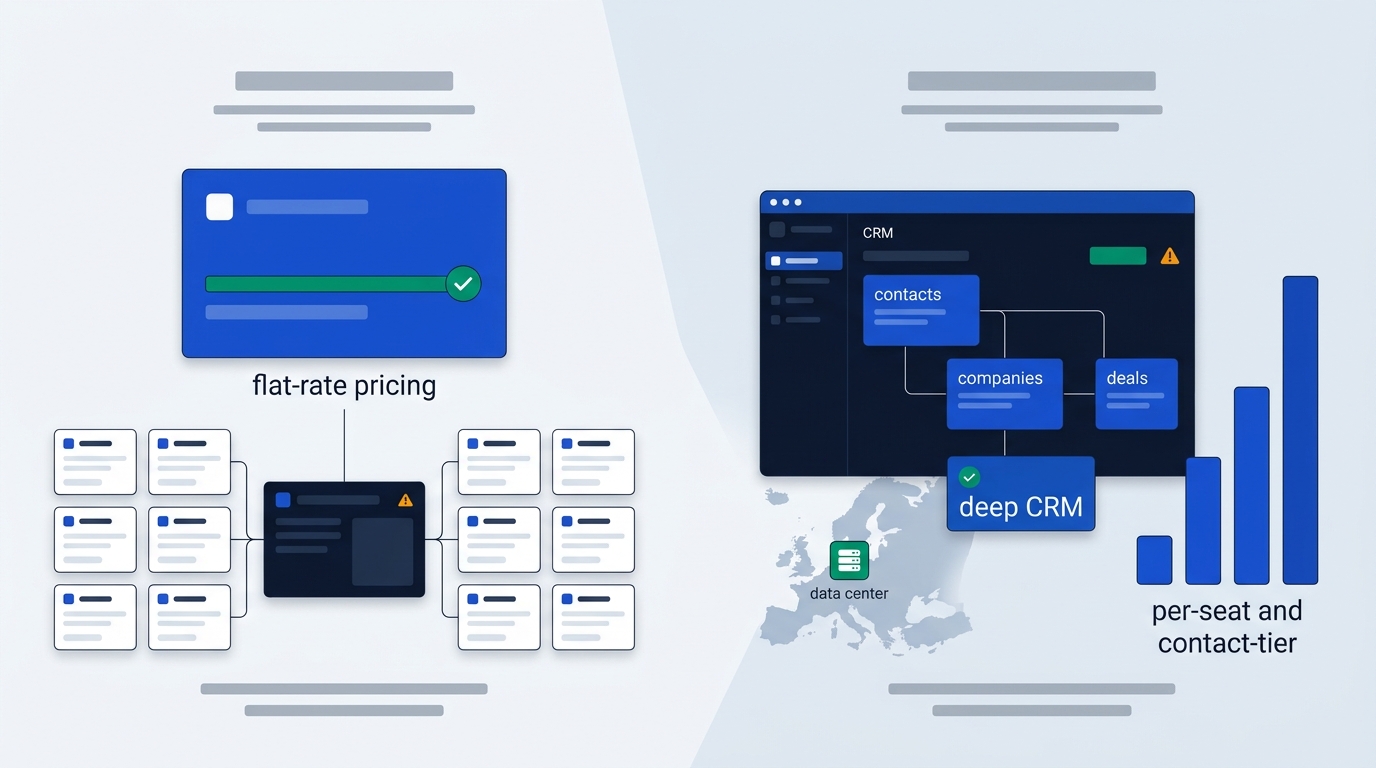
GoHighLevel suits agencies and small service businesses needing an all-in-one marketing suite with predictable flat-rate pricing, unlimited contacts, and users. It offers significant cost savings for teams under 20 people and managing multiple client accounts, especially for white-labeling. If you prioritize predictable costs and agency-specific features like unlimited sub-accounts and the ability to resell the platform under your own brand, GoHighLevel is a strong contender. It may not suit single-brand enterprises that require deep CRM customization or extensive third-party integrations beyond its 500+ marketplace offerings, or those needing comprehensive enterprise-grade compliance features.
HubSpot suits mid-market to enterprise companies requiring deep CRM functionality, advanced analytics, extensive integrations, and enterprise-grade compliance. It offers superior data model depth, cross-object automation, and a dedicated EU data center for GDPR compliance, but at a much higher per-seat and contact-tier cost. Choose HubSpot if your business demands reliable, scalable CRM for a single organization, comprehensive data governance, and a vast ecosystem of integrations. Its sophisticated reporting and AI capabilities are ideal for businesses focused on detailed customer journey analysis and content marketing at scale. It may not be the best fit for agencies looking to white-label or those on a tight budget with rapidly scaling contact lists, due to its escalating costs.
GoHighLevel vs HubSpot: Quick Look
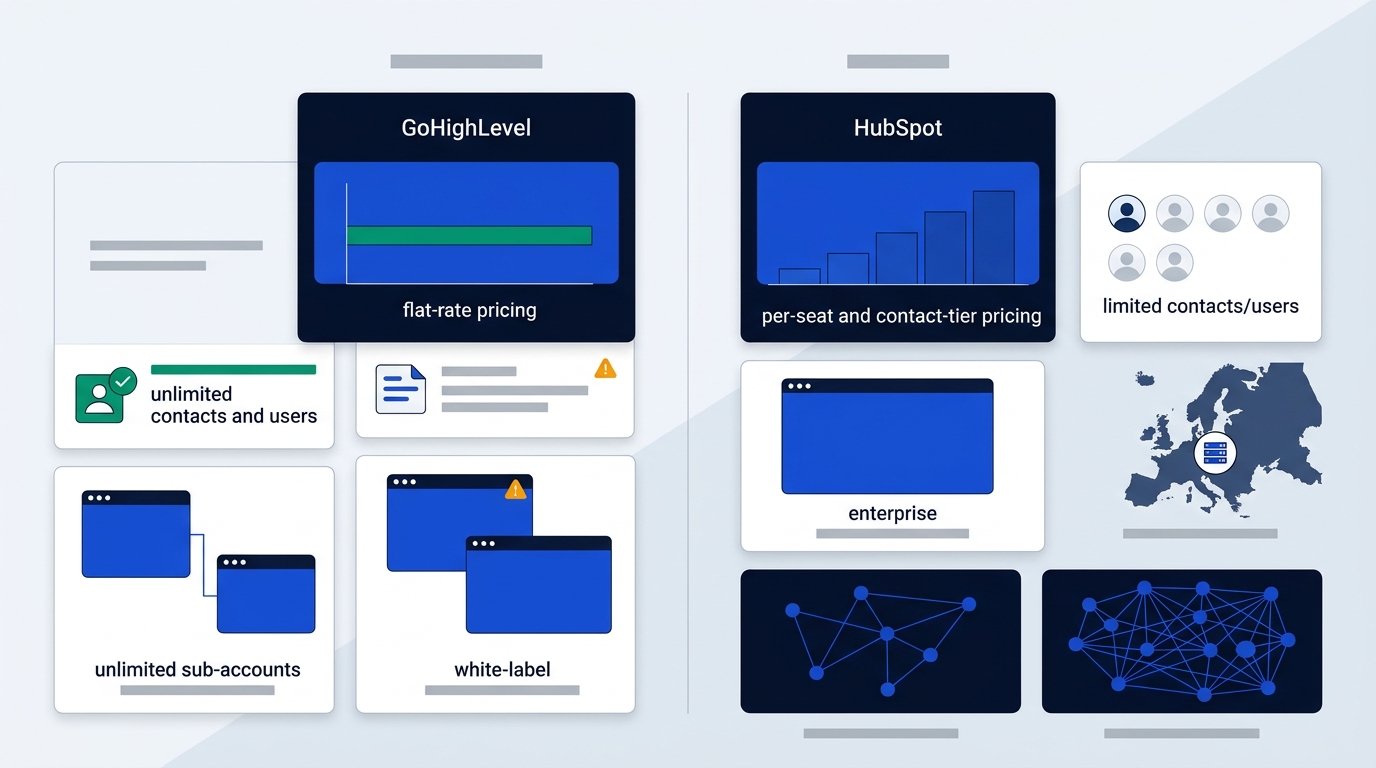
Here's a quick comparison of the two platforms' key features and pricing models.com.
| Feature | GoHighLevel | HubSpot |
|---|---|---|
| Best For | Marketing agencies managing multiple client accounts with white label branding. | SMBs and enterprises scaling a single brand; comprehensive marketing, sales, and service features. |
| Starting Price | $97/month | €20/month (Marketing Hub Starter) |
| Pricing Model | Flat-rate (unlimited contacts/users) | Per-seat + contact-tier |
| Contacts/Users | Unlimited contacts, unlimited users | Limited (e.g., 1,000 marketing contacts, 1 seat for Starter) |
| Sub-accounts | Unlimited (Unlimited plan) | None |
| White-label | Yes (Agency Pro plan) | No |
| Native Integrations | ~500+ | ~2,000+ |
| EU Data Center | US-based (implied) | Yes (Frankfurt, Germany) |
| GDPR DPA | Needs direct confirmation with vendor | Yes (Article 28, SCCs) |
GoHighLevel is an all-in-one sales and marketing solution designed for agencies. It helps them manage and automate client campaigns. The platform combines CRM, email marketing, SMS, funnel building, automations, and reporting into a central platform. Its core strength lies in its multi-tenant architecture, which allows agencies to deploy, white-label, and resell services across client sub-accounts, Providing a consistent experience while keeping costs stable. For more details on its offerings, visit the GoHighLevel pricing page on SaaSEuro.
HubSpot is a complete customer platform built for SMBs and enterprises scaling a single brand. It provides comprehensive marketing, sales, and service features, starting from a free tier. HubSpot offers a cleaner, more beginner-friendly interface with an integrated AI assistant, while GoHighLevel has a steeper learning curve but deep functionality, Providing a deeply customizable enterprise CRM for a single organization, Such as contacts, companies, and deals. You can find more information about its plans on the HubSpot pricing page.
How do features and integrations compare?
For automation, GoHighLevel includes basic workflows on all plans. HubSpot offers sophisticated automated workflows and AI agents primarily on Professional+ tiers.
Pricing: Flat Rate vs Per-Seat Costs
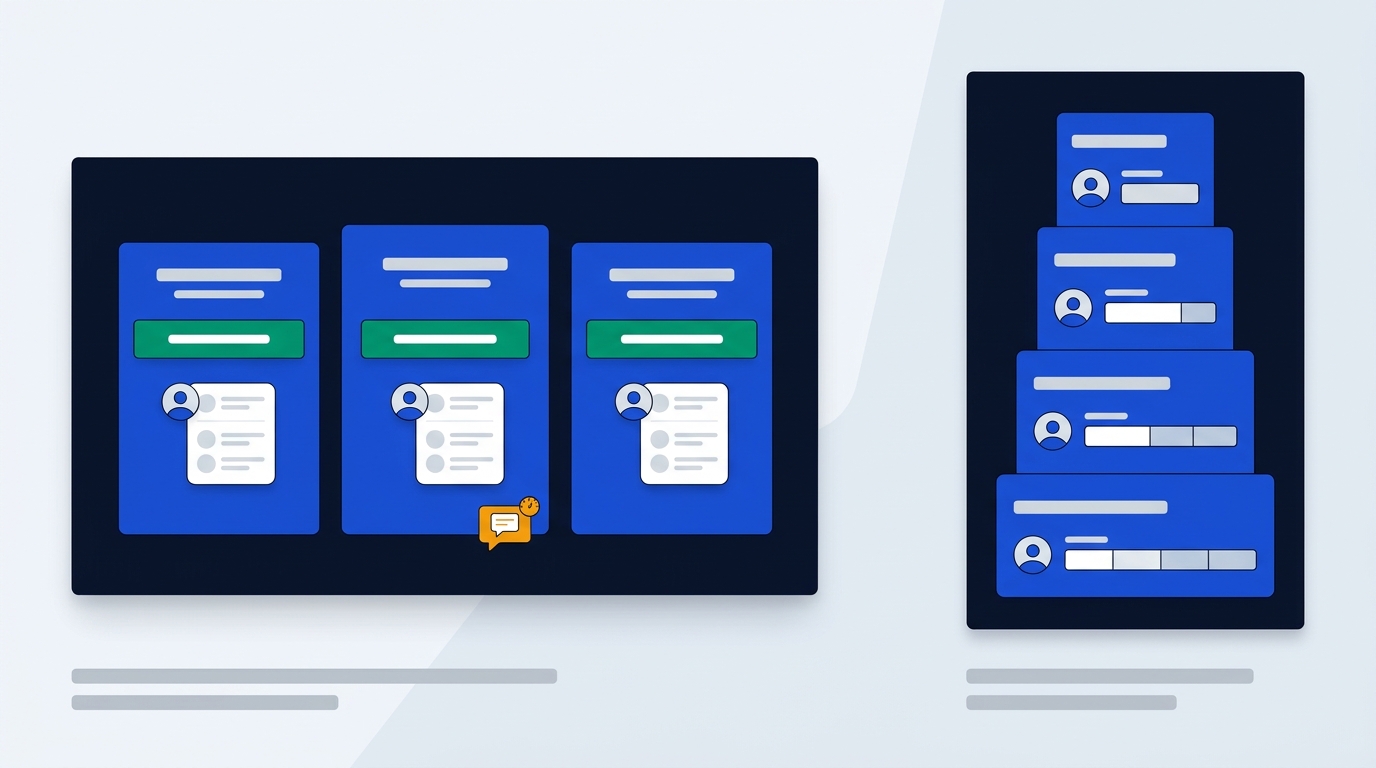
GoHighLevel uses flat-rate pricing across its plans, making your monthly costs predictable regardless of team or contact growth. This can be a major advantage for scaling businesses that want to avoid unexpected increases as their operations expand. The pricing model is designed to support growth without penalizing success, ensuring that your software costs remain stable even as your client base or lead volume increases. This predictability is particularly valuable for agencies managing numerous clients, as it allows for clear budgeting and profit forecasting.
Here's how GoHighLevel's plans are structured, according to GoHighLevel.com pricing, checked October 2026:
- Starter: $97/month for 3 sub-accounts. This plan is ideal for freelancers and solo marketers, offering all core features.
- Unlimited: $297/month for unlimited sub-accounts. Built for growing agencies, it includes user/agent reporting and basic API access.
- Agency Pro: $497/month, which includes SaaS Mode and white-labeling. This tier is for SaaSPRENEURs and agencies aiming to offer a fully branded platform to their clients.
All GoHighLevel plans include unlimited contacts and unlimited users. Usage-based costs for SMS and calls are billed separately at carrier rate, as stated in their FAQ section. This means while the platform subscription is flat, communication costs will vary based on actual usage, which is an important detail for high-volume communicators.
HubSpot's pricing is structured across individual Hubs, such as Marketing, Sales, or Service. It uses a per-seat plus contact-tier model, meaning your costs increase with both your team size and the number of contacts you manage. This model can make budgeting more complex, especially for growing teams or businesses with fluctuating contact lists, as exceeding limits triggers higher fees. The modular approach allows you to pick and choose the tools you need, but each addition contributes to the overall cost.
How much does HubSpot Marketing Hub cost?
For example, HubSpot Marketing Hub Starter begins at €20/month per seat for 1,000 marketing contacts. HubSpot's contact tiers increase costs with volume; for instance, 5,000 contacts adds approximately $100/month, and 10,000 contacts adds around $250/month, Forms, and email marketing, limited to 2,000 sends/month, according to HubSpot's pricing page. This free tier is a good starting point but quickly becomes limiting for businesses needing advanced features or higher volumes, pushing them towards paid plans.
Understanding the Cost Differences
The core difference lies in their scaling models. GoHighLevel offers a predictable fixed cost, allowing you to add unlimited users and contacts without a price increase. This is highly beneficial for agencies or businesses with fluctuating client numbers or rapidly growing contact lists, providing clear financial foresight. For a small agency, this means you can onboard new clients and expand your team without worrying about a sudden spike in your software bill, making it easier to forecast profits. This model makes it a solid choice for businesses prioritizing cost stability and predictable overheads, allowing them to focus resources on growth rather than managing escalating software expenses.
HubSpot's model, while offering a free entry point, quickly scales up. If you need advanced features, you'll need Professional or Enterprise Hubs, which come with significant base costs, plus additional charges for every extra seat and for exceeding contact limits. This can make budgeting more complex, especially for growing teams, as the cost can become a "tax on growth," as described by GoHighLevel.com. For instance, a business initially managing 2,000 contacts might find costs jump significantly if their list grows to 10,000, in addition to adding sales or service team members.
While more expensive, HubSpot's pricing reflects its deeper feature set, enterprise-grade reporting, compliance capabilities, and extensive integration ecosystem, which can justify the investment for larger organizations with complex needs. For businesses with stable, large teams and contact bases, the per-seat model offers strong, tailored functionality that aligns with their operational scale. You can compare more SaaS prices side-by-side at SaaSEuro's comparison tool.
Total Cost of Ownership for European Teams
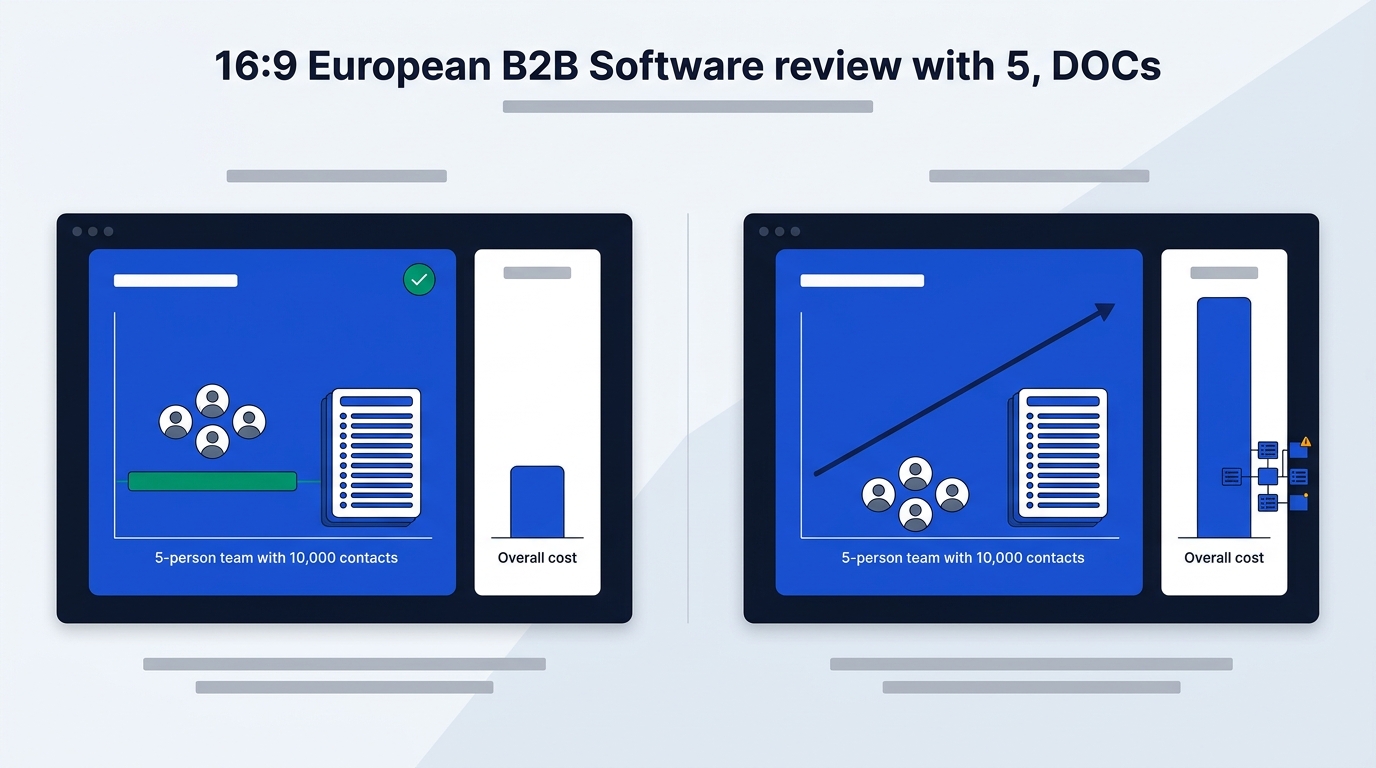
When evaluating the total cost of ownership, especially for European teams, the pricing models of GoHighLevel and HubSpot diverge significantly. This difference becomes more pronounced as your team and contact list grow, directly impacting your budget and ROI projections. It is crucial to consider not just the base subscription fees but also the scaling costs associated with users, contacts, and additional usage-based services.
Consider a 5-person team managing 10,000 contacts. With GoHighLevel Unlimited, the base subscription is $297/month. This allows them to scale their client base or marketing efforts without concern for rising platform fees, which is a major draw for growth-oriented operations.
The same 5-person team on HubSpot Marketing Hub Professional with 10,000 contacts would face a much higher bill. This represents a 3.2x difference in annual cost for a team of this size, with the gap widening considerably for larger teams or higher contact volumes. This substantial difference highlights how HubSpot's per-seat and contact-tier pricing can quickly escalate costs, requiring careful budget planning as your business scales. For companies with substantial growth projections, understanding these scaling costs upfront is critical to avoid unexpected financial burdens.
When is HubSpot Enterprise worth the cost?
For businesses where these advanced capabilities are critical, such as those in regulated industries or with extensive multi-channel campaigns, the higher investment in HubSpot may be justified by the enhanced functionality and operational efficiency it provides. These features are designed to support complex, large-scale operations and offer a depth of insight and control that simpler platforms cannot match.
Core Features: CRM, Sales, Marketing
Both GoHighLevel and HubSpot offer a suite of tools for CRM, sales, and marketing, but their underlying architectures and feature depths cater to different needs, impacting how businesses manage their customer interactions and growth strategies. Understanding these architectural nuances is key to selecting the platform that best aligns with your business model.
HubSpot's CRM offers a relational data model with Contacts, Companies, Deals, Tickets, and custom objects (on Enterprise plans). These are connected through typed associations, supporting complex B2B data modeling, Such as associating multiple contacts and deals to a single company, which is crucial for detailed customer journey mapping and sophisticated segmentation. Custom association labels, like "Decision Maker" or "Technical Evaluator," define the nature of these relationships, enabling precise targeting and reporting. Workflows can enroll records based on associated record properties, such as enrolling contacts based on their associated company's industry, providing deep cross-object automation, Multiple stakeholders, or complex product offerings, where understanding every interaction point is vital for conversion.
GoHighLevel provides a Contact-centric CRM with Opportunities inside Pipelines. It is suitable for standard pipeline management, where the contact is the primary unit of focus, but lacks HubSpot's association depth and cross-object reporting, Their integration across the platform is not as deep as HubSpot's. There are limitations in areas like email campaigns, bulk SMS, conversations UI, calendars, payments, and dynamic use in funnels, meaning custom objects do not fully integrate into all core functionalities.
How does HubSpot handle contact data and workflows?
If the same contact appears in multiple pipelines, pipeline-specific data cannot be stored at the opportunity level using custom fields, as values are shared across all opportunities for that contact, High-volume lead generation, or those where the individual customer journey is more linear, such as local service providers or e-commerce businesses.
Marketing Automation Capabilities
HubSpot's Marketing Hub includes a visual workflow builder with conditional branching, delays, and goal-based exit criteria. It allows for sophisticated email automation with A/B testing, smart content personalization, and send-time optimization to maximize engagement. Cross-object triggers enable highly targeted campaigns.
GoHighLevel bundles email, SMS, and voice into a single workflow builder with native Twilio-powered messaging. Its workflow engine focuses on speed for multi-channel campaigns, supporting if/then branching, wait steps, and webhook triggers. All workflows are contact-centric, making it highly effective for rapid deployment of lead follow-up and nurture sequences across various communication channels, Multi-channel communication for lead engagement, GoHighLevel's native SMS and voice integration offers a streamlined and cost-effective solution, eliminating the need for separate tools.
Sales Tools and Functionality
HubSpot's Sales Hub offers Sequences for automated email/task cadences, a native dialer with call recording (Sales Hub Pro+), conversation intelligence to analyze call data, and a capable meeting scheduler. Its forecasting on Enterprise plans is particularly useful for structured sales teams, providing weighted forecasting and cross-object reporting to predict revenue accurately, Offering deep insights into sales activities and pipeline health. For large sales organizations with multiple teams and complex reporting needs, HubSpot's advanced sales tools are invaluable for strategic planning and performance optimization.
GoHighLevel includes appointment booking calendars, which can replace tools like Calendly, and a built-in dialer via LC Phone for no extra per-seat cost. However, it lacks native conversation intelligence or advanced deal forecasting capabilities. For appointment-based businesses, freelancers, or solo marketers who need efficient booking and follow-up without the overhead of enterprise-grade sales tools, GoHighLevel provides an adequate and more cost-effective solution. Its focus is on enabling quick and efficient communication and scheduling, which is perfect for service-based businesses or agencies managing client appointments at scale.
Website, Funnel, CMS Capabilities
When it comes to building your online presence, both platforms offer tools, but they cater to different needs and scales, influencing your choice based on your content strategy and marketing goals. The decision often hinges on whether your priority is extensive content publishing or rapid conversion-focused funnels.
HubSpot's CMS Hub provides a full content management system with HubDB (dynamic database-driven content), personalization tokens, SEO recommendations, and staging environments. For a company that relies heavily on blogging, producing diverse content, and optimizing for search engines, HubSpot's CMS offers the depth and flexibility needed to manage and personalize content effectively. It also provides stronger SEO tools and content strategy features, Which are critical for businesses aiming for organic growth and thought leadership.
GoHighLevel includes a drag-and-drop funnel builder, website builder, and landing page builder on all plans. This makes it a strong choice for lead generation, rapid campaign deployment, and businesses that prioritize quick setup of conversion-focused pages over extensive content libraries. For agencies, this allows for fast deployment of client campaigns. However, GoHighLevel's website builder is proprietary, meaning there is no supported 1:1 export for managing sites outside the platform, which could be a limitation if you ever wish to migrate your site content elsewhere.
What unique tools does GoHighLevel offer?
If your business model relies on membership content or actively managing online reviews and local services, GoHighLevel might offer a more integrated solution out-of-the-box. For example, a local business might use GoHighLevel's tools to automate review requests and manage customer feedback directly within the platform, streamlining operations that might otherwise require multiple separate tools. This integrated approach can save both time and money for specific business models.
Agency Focus: White-Label and SaaS Mode
GoHighLevel was built specifically for agencies, and its architecture reflects this core focus. This means you can manage multiple client campaigns, pipelines, and communications from a single login, without increasing your monthly bill when adding new clients, according to GoHighLevel.com's FAQ. This design is a fundamental advantage for agencies, enabling them to scale their operations efficiently and cost-effectively. It removes the "tax on growth" often associated with per-client or per-user pricing models, allowing agencies to onboard new clients with confidence in their overheads.
On the Agency Pro plan ($497/month), GoHighLevel enables full white-labeling. This allows agencies to rebrand the entire platform with custom domains, logos, and branding, and then resell it as their own SaaS product. This unique feature positions GoHighLevel as a powerful tool for agencies looking to offer a branded, all-in-one solution to their clients, increasing client stickiness and opening new recurring revenue streams. Agencies can effectively become software providers themselves, enhancing their brand value and competitive edge by offering a proprietary platform. This capability offers a significant advantage for agencies aiming to build a stronger brand identity and diversify their revenue streams beyond service fees.
Which platform supports agencies better?
HubSpot does not offer a sub-account structure, white-labeling, or any direct agency reselling model. While HubSpot has an extensive partner ecosystem and offers resources for agencies, it doesn't allow for the same level of white-label rebranding and direct reselling that GoHighLevel provides. The core architectural difference is that HubSpot is designed for depth within a single organization, whereas GoHighLevel is built for breadth across client environments, All-in-one platform to their clients, GoHighLevel provides a distinct and unparalleled advantage, directly supporting their business model in a way HubSpot does not. If you are looking for alternatives, you can explore HubSpot alternatives for European teams.
Data Location, GDPR, and EU/UK VAT
For European businesses, data residency and GDPR compliance are critical considerations when choosing a SaaS platform, directly impacting legal obligations and customer trust. Understanding where your data is stored and how it is protected is not just a compliance issue, but a cornerstone of building client confidence and mitigating legal risks.
HubSpot maintains a dedicated European Data Centre in Frankfurt, Germany (AWS) under Irish corporate data protection oversight, according to HubSpot's official documentation (checked October 2026). This is crucial for European businesses concerned with data sovereignty and minimizing data transfers outside the EU. By having data stored within the EU, HubSpot helps its European customers meet stringent GDPR requirements, such as those for data localization. HubSpot ensures full compliance with European GDPR Article 28, uses Standard Contractual Clauses (SCCs) for data transfers where necessary, and is certified SOC 2 Type II. This comprehensive approach to data protection provides strong assurance for businesses operating under strict GDPR regulations, demonstrating a clear commitment to European data privacy standards, which is especially important for industries handling sensitive personal data. For more information on Article 28, see our Data Processing Addendum GDPR guide.
GoHighLevel is a US company, and its core data architecture is primarily US-based, according to its Privacy Policy (checked October 2026). For European businesses, processing data in the US involves specific considerations under GDPR, particularly regarding data transfers. While GoHighLevel states it supports GDPR compliance, businesses in Europe considering GoHighLevel should assess their specific data residency requirements and directly confirm DPA terms and data processing locations with the vendor. This due diligence is vital to understand how your customer data will be handled and to ensure compliance with GDPR, which requires appropriate safeguards for international data transfers. It is essential to have a solid Data Processing Agreement (DPA) in place and to understand the mechanisms for data transfer, such as Standard Contractual Clauses, to ensure legal compliance.
VAT Rules for European and UK Businesses
For EU-based, VAT-registered businesses purchasing HubSpot, the reverse charge mechanism (VAT Directive 2006/112/EC) means HubSpot Ireland Limited issues invoices without VAT, according to HubSpot's official documentation (checked October 2026). The buyer then self-accounts for it in their local VAT return, effectively shifting the responsibility for VAT declaration from the supplier to the recipient. This streamlines the VAT process for many European companies, improving cash flow by avoiding upfront VAT payments and simplifying administrative compliance with local tax authorities. This mechanism is a standard practice for B2B services within the EU, making transactions smoother for VAT-registered businesses. You can learn more about this in our VAT Reverse Charge Mechanism Guide.
For UK-based, VAT-registered businesses, services from non-UK providers like HubSpot or GoHighLevel fall under HMRC VAT Notice 741A. This requires the buyer to apply the reverse charge mechanism for VAT, declaring both input and output VAT on their return, according to HMRC VAT Notice 741A guidelines. This ensures compliance with UK tax regulations for services received from outside the UK, similar to the EU mechanism. When purchasing from GoHighLevel, a US company, European and UK VAT-registered businesses should confirm their specific VAT obligations with GoHighLevel directly or consult their tax advisor, as the treatment may differ from a vendor with an explicit EU entity like HubSpot Ireland Limited. Always verify the VAT treatment with your local tax authority or a qualified accountant to ensure full compliance.
Switching Platforms: Migration Reality
Migrating between platforms can seem daunting, but both GoHighLevel and HubSpot offer tools and support to ease the transition, though the complexity varies depending on the data and workflows involved. A successful migration requires careful planning and an understanding of the limitations of automated transfer processes.
GoHighLevel provides a HubSpot Importer tool that directly connects to your HubSpot account. This allows you to transfer core CRM data such as contacts, companies, deals, pipelines, stages, and custom fields, as described in GoHighLevel.com's "Migrate from HubSpot" section. The HubSpot Importer preserves supported CRM structure and provides a detailed import report upon completion, flagging any errors or warnings, according to GoHighLevel.com. This helps ensure that your essential CRM data moves over accurately, reducing manual data entry and potential errors. After the initial import, it's advisable to review the report carefully for any discrepancies and perform a spot check of key records.
However, objects like complex workflows, tickets, and custom object associations typically do not transfer cleanly between platforms. These often need to be rebuilt manually in the destination platform.com's FAQ. This is a common challenge in platform migrations due to differing architectural designs and proprietary features. For instance, HubSpot's deeply integrated custom objects and cross-object workflows are fundamentally different from GoHighLevel's contact-centric approach, making direct migration of these elements difficult or impossible. This rebuilding phase can be an opportunity to streamline and optimize old processes that may have become inefficient over time, rather than simply replicating them.
How GoHighLevel assists with platform migration?
GoHighLevel's concierge migration team assists with setup and onboarding. They handle the transfer of contact records, CRM data, email templates, and pipeline stages at no additional cost, according to GoHighLevel.com's FAQ. This dedicated support can be invaluable for ensuring a smooth transition, especially for agencies with multiple client accounts. Migrating from HubSpot to GoHighLevel usually takes one to two weeks, with teams often using the opportunity to improve automation workflows and landing pages during the rebuild process, rather than just replicating old setups, as stated in GoHighLevel.com's FAQ. This rebuild phase can be a strategic moment to optimize processes and streamline your marketing and sales funnels, adapting them to the new platform's strengths.
Frequently Asked Questions
Many businesses have specific questions when comparing GoHighLevel and HubSpot, especially regarding core features and ease of use, as these often drive the ultimate decision. Here are some common inquiries:
GoHighLevel provides a full CRM with contact records, deal pipelines, tagging, segmentation, and activity tracking included in all plans. It offers a complete set of CRM features from its Starter tier, allowing businesses to manage their customer relationships effectively without needing to upgrade, as stated in GoHighLevel.com's FAQ. This means that even on the lowest paid plan, you get comprehensive tools for managing your contacts and sales processes. In contrast, HubSpot's free CRM is available, but most advanced sales and marketing features, such as advanced automation or multiple deal pipelines, require a paid hub, according to GoHighLevel.com's FAQ. This means GoHighLevel offers a more complete CRM experience from its lowest paid tier, which can be a significant advantage for budget-conscious users.
GoHighLevel, however, includes visual workflow automation across all plans, covering email, SMS, voicemail drops, and in-app messaging, according to GoHighLevel.com's FAQ. This can provide significant cost savings if advanced multi-channel automation is a priority for you, as it's built into GoHighLevel's base plans, making it more accessible for smaller teams or agencies.
Which platform has more integrations?
GoHighLevel integrates with over 500 tools via its App Marketplace, including popular platforms like Google Workspace, Zoom, QuickBooks, and Shopify. It also supports custom API connections for tools outside the marketplace, as stated in GoHighLevel.com's FAQ. If extensive third-party integrations are crucial for your operations, especially for enterprise-level tools or niche industry software, HubSpot generally offers more options and a deeper integration capability, ensuring smooth data flow across your entire tech stack.
HubSpot offers a free CRM tier, providing basic tools like contact management, forms, and limited email marketing at no cost. This is a good entry point for startups or very small businesses to get started with a CRM without immediate financial commitment, according to HubSpot's pricing page. GoHighLevel, on the other hand, provides a 14-day free trial on its paid plans, allowing you to experience the full platform and its agency-specific features before committing, as stated on GoHighLevel.com's pricing page. There is no free-forever plan for GoHighLevel, so you'll need to subscribe to a paid plan after the trial period to continue using the platform.
HubSpot is generally considered easier to learn initially due to its cleaner interface, guided tours upon sign-up, and integrated AI assistant. GoHighLevel offers deep functionality that may require more self-guided learning to master, with fewer integrated training resources. While GoHighLevel has a steeper learning curve, its comprehensive feature set can be mastered over time for powerful agency-specific applications.
Which Platform is Right For You?
Choose GoHighLevel if you operate an agency or a small service business. It is ideal if you prioritize predictable flat-rate pricing with unlimited contacts and users, and need white-label capabilities for multiple clients. Its agency-centric design, including unlimited sub-accounts and SaaS mode, makes it exceptionally cost-effective for managing diverse client portfolios and building your own branded platform. If your core need is rapid deployment of funnels and multi-channel outreach without escalating costs, especially for lead generation and client management, GoHighLevel is likely your best fit. This platform empowers agencies to scale their offerings and create new revenue streams by reselling a branded solution.
Opt for HubSpot if your business requires a deeply customizable CRM with relational data models, crucial for complex B2B sales and intricate customer journey mapping. It is better suited for advanced marketing automation, extensive integrations with a vast ecosystem of tools, and a dedicated EU data center for stringent GDPR compliance. HubSpot provides the depth and enterprise-grade features necessary for larger, more complex operations that prioritize comprehensive reporting, granular control over data, and a polished user experience for a single brand. If your business depends on detailed analytics, sophisticated content management, and a comprehensive platform for all customer-facing departments, HubSpot offers the foundational strength you need to manage and grow at scale.
Consider your team size, contact volume, and specific feature needs, especially regarding data residency and VAT implications, to make the most cost-effective decision for your business. For European companies, HubSpot's explicit EU data center and clear VAT handling can be a significant advantage, while GoHighLevel's flat-rate pricing offers unparalleled predictability for scaling agencies. Evaluate your long-term growth strategy and how each platform's pricing and capabilities align with that vision.
Sources and how this was compiled
Compiled by the SaaSEuro team from the vendors' official documentation; we have not hands-on tested these products. Facts last checked in October 2026.
Source: official vendor pages, checked October 2026.
Bottom line
GoHighLevel offers significant cost savings and agency-specific features for businesses managing multiple clients, making it a powerful tool for predictable growth and white-label service offerings. Its flat-rate pricing and comprehensive multi-channel marketing tools are ideal for agencies seeking to expand their services without incurring escalating software costs. HubSpot provides a more powerful and customizable CRM with superior data compliance, advanced analytics, and a broader integration ecosystem, tailored for larger, single-brand enterprises demanding depth and scalability. Its advanced features and enterprise-grade capabilities are designed to support complex operations and provide deep insights into customer behavior.
To make your decision, start by evaluating your team size and contact volume against the pricing structures, considering the long-term cost implications of each model. Then, carefully check the specific EU data residency and VAT terms relevant to your business to ensure full compliance and optimal financial planning. Your choice should ultimately reflect a balance between your current operational needs, future growth aspirations, and budgetary realities, ensuring you invest in a platform that truly serves your business objectives.

