

Compare HubSpot vs Mailchimp on pricing, automation, CRM features, and EU compliance. Discover which email platform suits your team and budget.
Choosing the right marketing software often comes down to one fundamental question. Should you pick Mailchimp for dedicated email campaigns, or is HubSpot's higher price tag justified for your team? The direct answer depends on how your company closes sales and manages customer records. If your business relies on promotional newsletters, short buyer cycles, and quick template setups, Mailchimp offers everything you need at a lower cost. However, if your team runs multi-stage B2B sales pipelines that require real-time CRM tracking and lead scoring, HubSpot's unified database justifies its investment. In this detailed hubspot vs mailchimp comparison, you will discover how their pricing, automation logic, CRM databases, and European privacy terms stack up.Quick verdict on HubSpot vs Mailchimp
| Specification | HubSpot | Mailchimp |
|---|---|---|
| Entry Paid Price | $15 to $20 per seat monthly (Starter) | US$13 / €11.70 / £9.91 monthly (Essentials) |
| User Seats Included | Per-seat model (1 seat on Starter, 3 on Pro) | 3 seats on Essentials, 5 on Standard, unlimited on Premium |
| Automation Capabilities | Unbranched sequences on Starter, full logic on Pro ($890/mo) | 4 steps on Essentials, 200 flow steps on Standard ($20/mo) |
| Support Availability | In-app and email on Starter, phone only on Pro/Enterprise | 24/7 email and chat on paid plans, phone on Premium |
| Contact Billing Model | Marketing contacts tier + per-seat user licenses | Total contact list volume + fixed seat allotments |
Specifications verified from official pricing documentation in October 2026.
Which tool fits your specific workflow
Ecommerce stores and short sales cycles
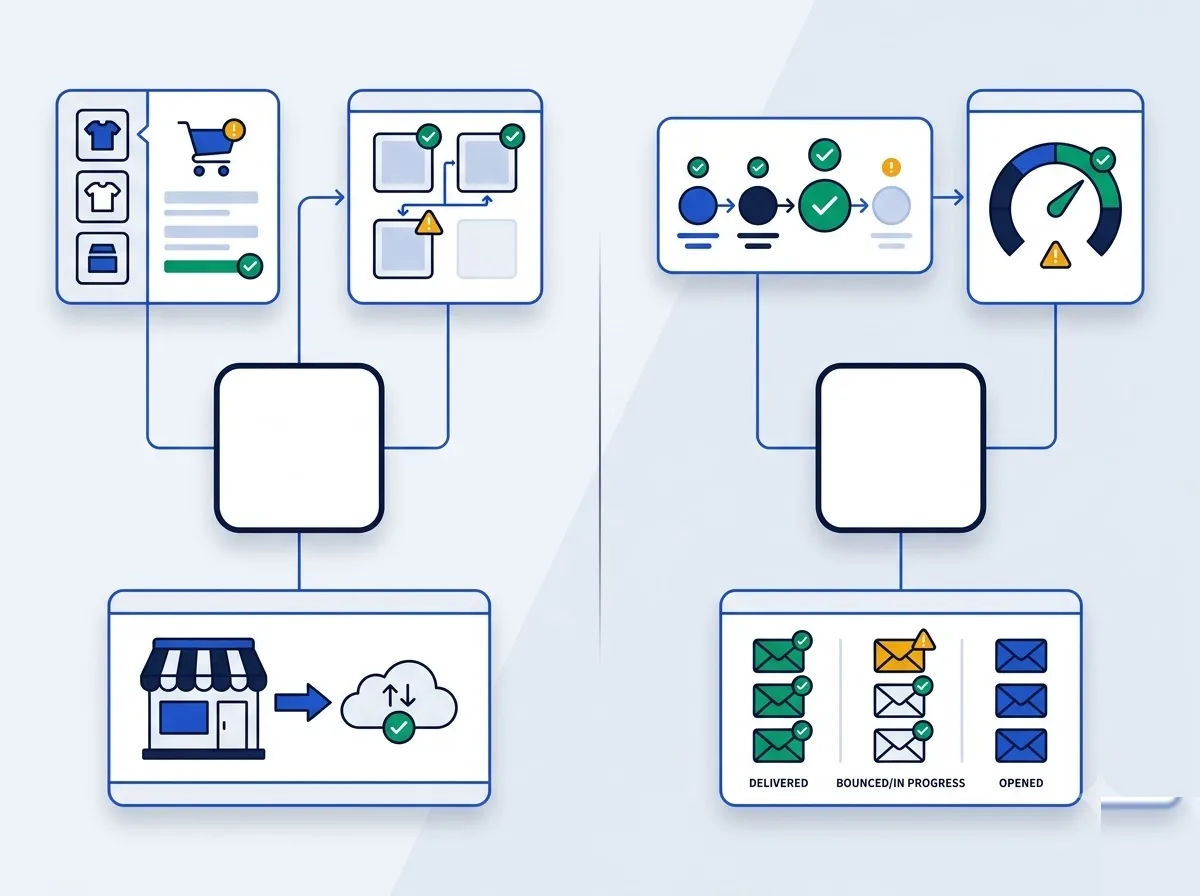
Mailchimp suits teams needing fast promotional sends, abandoned cart sequences, and predictive customer segments. Because online retail customers usually decide quickly, you do not need complex sales pipeline tracking. Connected e-commerce stores using Mailchimp report an average of up to 30x ROI on paid plans, according to the official Mailchimp Marketing Platform Comparison checked in October 2026. You can set up automated product recommendations and purchase follow-ups within minutes. The platform connects directly to platforms like Shopify and WooCommerce. As a result, your team can segment audiences based on purchase history without custom developer work.B2B and multi-stakeholder buyer journeys
HubSpot fits organizations where sales reps nurture prospects across months. When your revenue depends on multiple decision-makers, lead scoring and lifecycle triggers become essential. According to the HubSpot ROI Report, marketing customers see 3x inbound leads within six months of deployment. Sales reps can track when a deal prospect opens an email, clicks a pricing link, or views a contract. That activity updates the lead record instantly inside HubSpot Smart CRM. Therefore, your sales team knows exactly when to follow up with a telephone call or customized proposal. If you want to evaluate alternative CRM tools for sales pipelines, read our comparison of HubSpot vs Pipedrive.Budget-conscious small businesses
Mailchimp provides multi-step automated flows starting at $20 or €18 a month on its Standard plan. This price structure helps small marketing teams run complex campaigns without paying per-seat penalties for non-sales staff. According to Mailchimp's pricing documentation checked in October 2026, you can invite up to five team members on Standard without extra user fees. HubSpot's Starter tier begins at $15 to $20 per seat each month. However, if five marketing team members need editing rights in HubSpot, your bill multiplies per seat. That per-user fee applies even if those team members only build email newsletters.Hybrid dual-tool setup
You do not always have to pick just one system. Many companies run both tools simultaneously by using the native Mailchimp and HubSpot integration. You can maintain customer relationship records and sales pipelines in HubSpot Smart CRM while building email campaigns in Mailchimp. This hybrid approach keeps your sales data central while avoiding HubSpot's higher marketing contact surcharges. Subscriber activity syncs between both tools automatically. If you want to automate custom workflows between platforms, explore Zapier integration options.Comparing email marketing and automation depth
Email builder and template variety
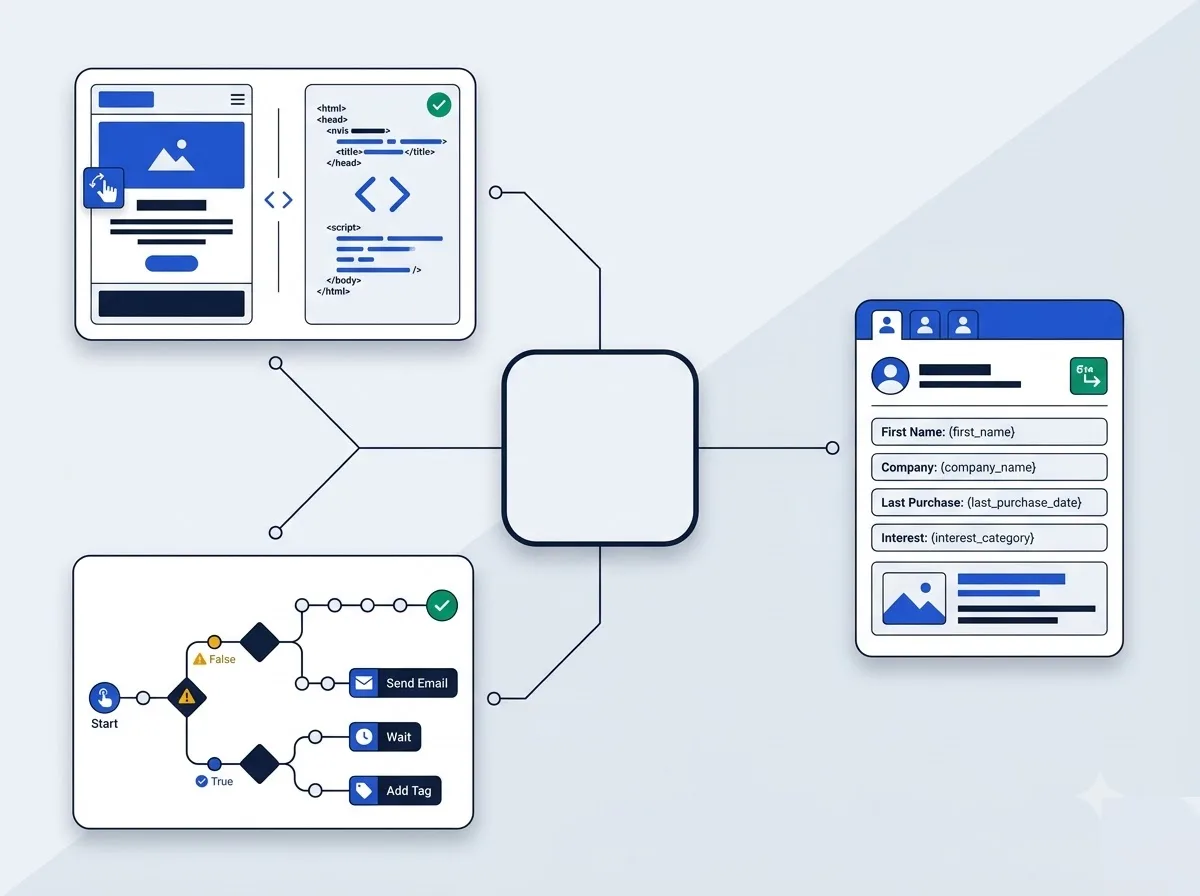
Mailchimp supplies over 100 responsive email templates on paid tiers. You can also import custom HTML code directly through URL links or compressed ZIP files on the Standard plan, according to official pricing terms. This gives your design team complete creative freedom over custom email code. HubSpot provides 45 out-of-the-box email templates in its library. While its drag-and-drop editor operates smoothly, HubSpot restricts custom HTML coding to its high-tier Professional plan at $890 per month. If your brand relies on custom-coded HTML templates, Mailchimp offers broader design access at entry-level prices.Automation logic and branching limits
Automation depth marks one of the biggest structural differences in this comparison. Mailchimp Standard ($20 or €18 monthly) unlocks up to 200 automation flow steps with multi-branching conditional logic. You can build branching paths based on email opens, link clicks, and behavioral tags. HubSpot Starter ($15 to $20 per seat monthly) limits users to simple, unbranched email sequences. To unlock multi-branching automation, lead scoring actions, and custom workflow triggers in HubSpot, you must upgrade to the $890 monthly Professional tier. That leaves a large price gap for teams needing intermediate campaign logic.Personalization tokens vs CRM depth
Mailchimp uses audience merge tags, custom subscriber fields, and predicted demographic segments. You can insert subscriber names, past purchases, or location variables into email copy. This level of dynamic content handles consumer promotional campaigns effectively. HubSpot pulls personalization tokens directly from rich CRM objects, sales pipelines, deal values, and support tickets. For example, you can dynamically insert the assigned sales representative's name, booking calendar link, or deal size into an automated message. This structural CRM connection makes B2B messaging feel personal to recipients.Deliverability and sender infrastructure
Mailchimp reports an average delivery rate exceeding 99% across transactional and marketing messages, according to official platform metrics. The vendor uses large sender IP pools and built-in inbox preview tools. These features help ensure your marketing messages pass content spam filters. HubSpot provides dedicated IP add-ons for high-volume senders on its Professional and Enterprise tiers. The platform includes detailed email health dashboards that track hard bounces, unsubscribe rates, and engagement metrics. Consequently, system administrators can spot sender reputation issues before campaign performance drops. You can also compare other dedicated senders in our Mailchimp alternatives guide.Total cost of ownership and pricing tiers
Multi-currency pricing baseline for Mailchimp
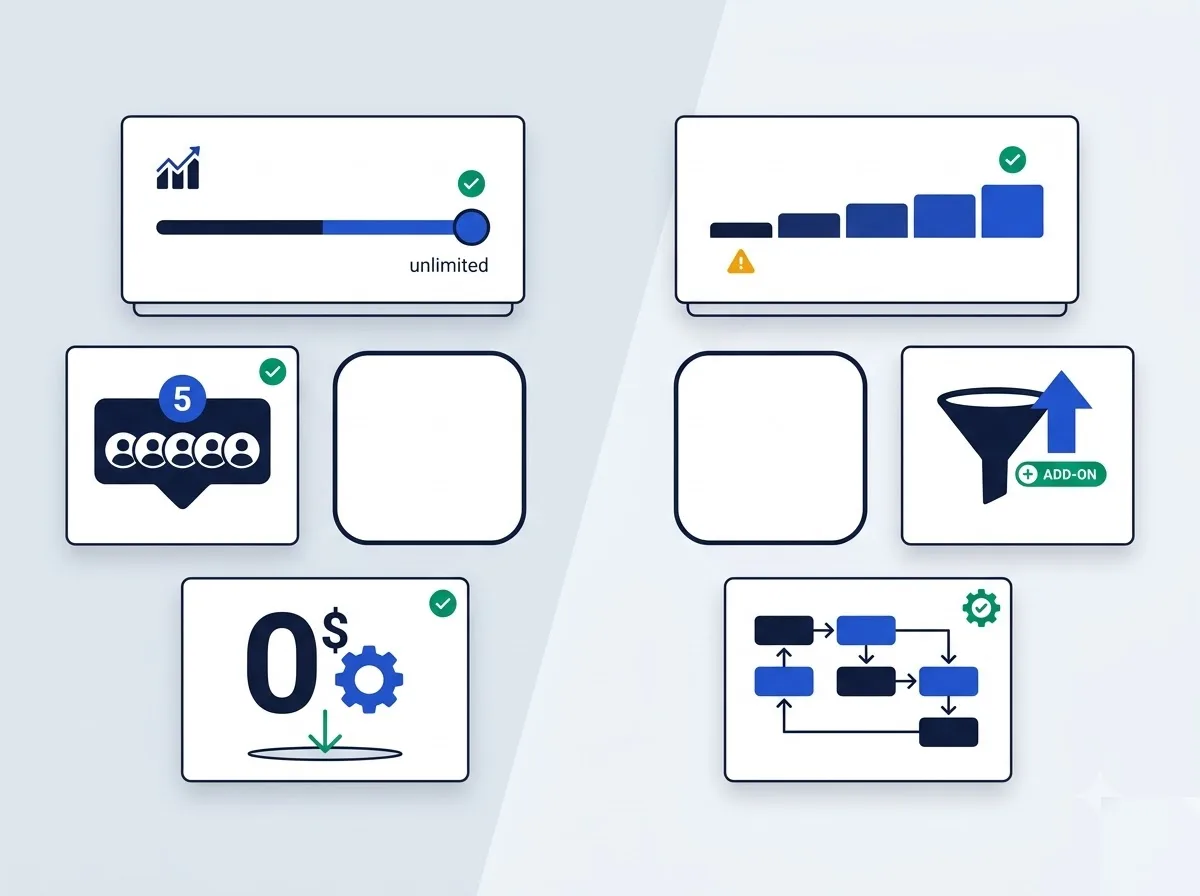
Mailchimp adjusts its pricing directly across major global currencies based on contact tiers. Below are the base monthly rates for 500 contacts, according to Mailchimp's official regional pricing page checked in October 2026:- Essentials: US$13 / €11.70 / £9.91 monthly. Includes up to 5,000 email sends, 3 user seats, 3 audience silos, and 4-step automation flows.
- Standard: US$20 / €18 / £15.24 monthly. Includes up to 6,000 email sends, 5 user seats, custom HTML templates, and 200-step automation flows.
- Premium: US$350 / €315.08 / £266.69 monthly. Covers 150,000 email sends, unlimited user seats, phone support, and enterprise SSO features.
HubSpot entry vs enterprise tiering
HubSpot structures its Marketing Hub pricing around user seats and marketing contact blocks:- Starter: $15 to $20 per seat monthly. Includes 1,000 marketing contacts with a monthly email send limit equal to 5x your contact threshold.
- Professional: $890 monthly ($800 monthly billed annually). Includes 3 user seats and 2,000 marketing contacts with a 10x email send limit. Additional marketing contacts cost between $40 and $50 per 1,000 contacts.
- Enterprise: Starts at $3,600 monthly billed annually. Includes 5 user seats and 10,000 marketing contacts with advanced multi-brand management.
The mandatory onboarding fee gap
HubSpot enforces a mandatory one-time onboarding fee for new Professional and Enterprise customers. Professional tier buyers must pay a $3,000 onboarding fee for guided system administrative configuration. Enterprise plan buyers pay $7,000 for mandatory implementation services. Mailchimp charges $0 for onboarding across all plan tiers. Standard and Premium subscriptions include complimentary guided live setup sessions, according to official Mailchimp pricing terms checked in October 2026. This setup fee difference makes Mailchimp's initial startup cost significantly lower for lean organizations.Seat licensing vs contact list growth
Mailchimp charges primarily based on total contact list size, including unsubscribed contacts kept in your audience database. However, it includes fixed user seat allotments (up to unlimited users on Premium). That allows marketing teams to share system administrative duties without paying added user licensing fees. HubSpot combines per-seat licensing with marketing contact tiers. While non-marketing contacts in HubSpot's CRM are free, every employee who needs editing access to email builders requires a paid marketing seat. Therefore, total software costs scale rapidly when team headcount and subscriber lists grow simultaneously. You can review similar tiering models in our ActiveCampaign vs Mailchimp comparison.CRM capabilities and app ecosystem depth
Audience silos vs unified Smart CRM
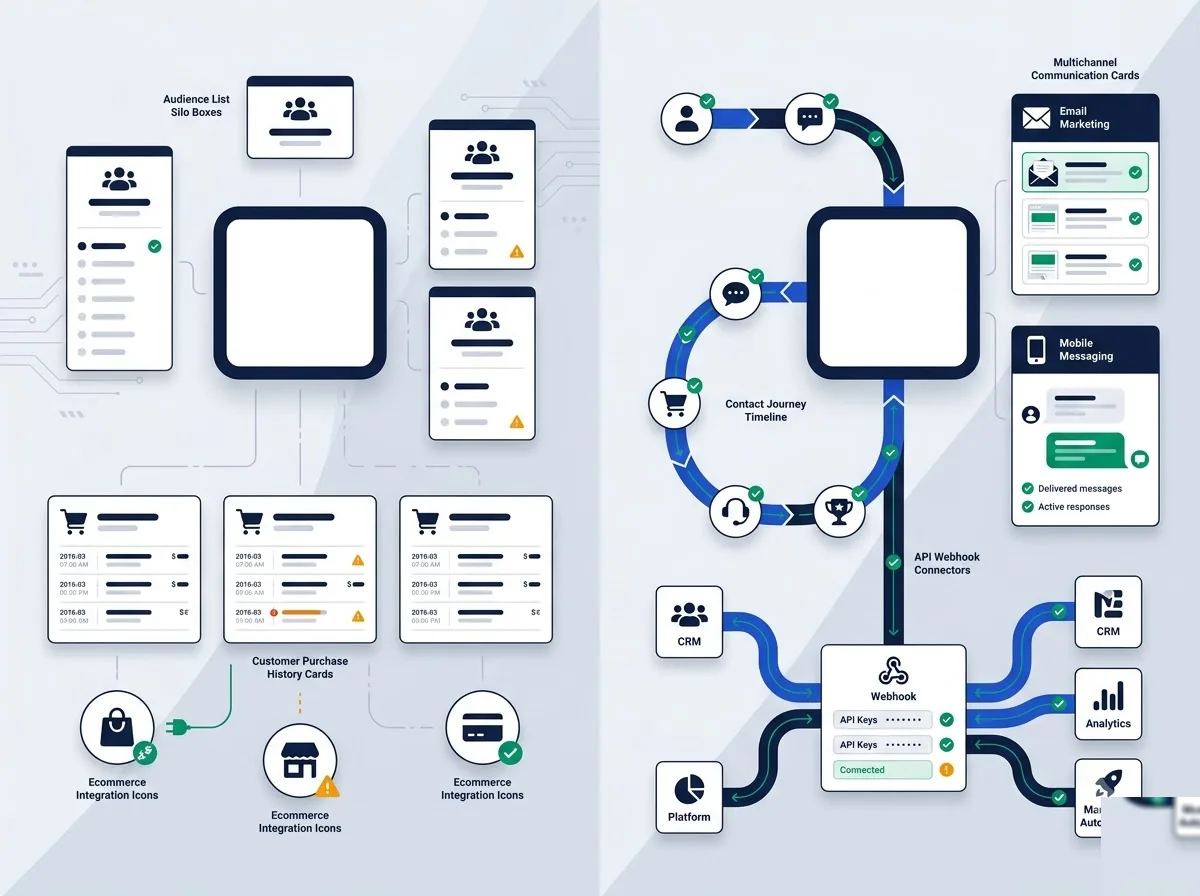
Mailchimp uses an audience-centric list architecture. Contacts stored in different audience lists are treated as independent records, which can lead to duplicate entries if you do not organize tags carefully. CRM features in Mailchimp focus on customer profile history, engagement metrics, and basic e-commerce purchases. HubSpot relies on an integrated relational database called HubSpot Smart CRM. Contacts exist once in a central system linked to companies, deals, tickets, and custom objects. Every marketing click, webpage visit, and support call appears on a single timeline. This architecture gives your team complete visibility across the customer journey.Lead scoring and revenue attribution
HubSpot includes multi-touch revenue attribution modeling on its upper tier plans. You can track exactly which blog posts, ad campaigns, or email sequences contributed to closed deals. Automated predictive lead scoring also helps sales managers prioritize outreach based on prospect activity metrics. Mailchimp provides e-commerce revenue attribution for connected online storefronts. The platform calculates campaign revenue, order volume, and average order values. It also features email campaign benchmarking reports, allowing you to measure open rates and click performance against industry peers.Native app marketplace scale
HubSpot operates an extensive app marketplace with over 2,000 native integrations. You can connect enterprise tools such as Salesforce, Zoom, Google Workspace, and specialized ERP systems. These native integrations sync two-way data records without custom code. Mailchimp features over 300 native integrations focused mainly on e-commerce, payment gateways, and social media tools. Key connections include Shopify, QuickBooks Online, WooCommerce, and Canva. Both platforms support Zapier connections for custom data flows, or you can consider Brevo options for alternative integration setups.AI and autonomous capabilities
Mailchimp incorporates generative AI copy generators and predictive segmentation tools. The platform automatically identifies high-value customer segments based on buying likelihood. Its inline AI assistant has generated content for over 3.1 billion emails on Standard and Premium plans, based on vendor platform data. HubSpot features Breeze Assistant, an AI companion embedded across all CRM tools. Breeze offers AI Answer Engine Optimization (AEO), automated campaign builders, and custom Agent Builder capabilities. These AI agents handle prospecting tasks, content remixing, and lead enrichment inside your sales pipeline.European data privacy and compliance terms