


Compare Klaviyo vs Mailchimp on EUR and GBP pricing, e-commerce automations, contact billing models, and GDPR terms to pick the right platform for your store.
If you run a dedicated online store requiring SKU-level triggers and real-time behavioral flows, paying extra for Klaviyo yields higher revenue. If you need general newsletters, social post scheduling, and simple landing pages, Mailchimp handles your email marketing for significantly less money. Here is how the two platforms compare for European e-commerce businesses.
Klaviyo vs Mailchimp for your business
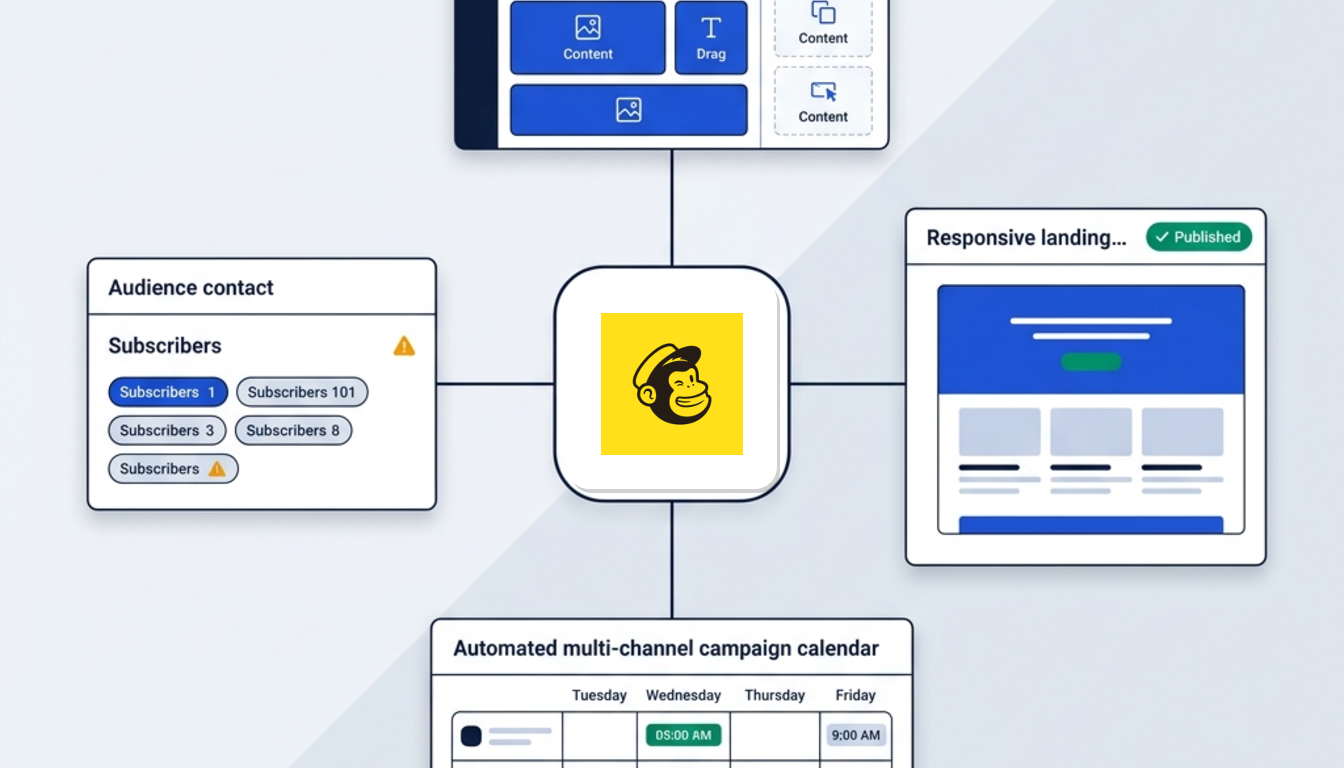
TL;DR: Choose Klaviyo for dedicated Shopify or WooCommerce stores requiring SKU-level flow triggers and omnichannel messaging. Pick Mailchimp for general marketing, landing pages, and lower upfront costs (verified across vendor pages, checked October 2026).
Decide on your core business model first when comparing klaviyo vs mailchimp. Klaviyo focuses almost entirely on data-heavy online retail, whereas Mailchimp serves a broader audience of agencies, service providers, and general content creators.
Who Klaviyo fits best
Klaviyo suits fast-growing online stores with dedicated marketing resources. If you run a direct-to-consumer store on Shopify or WooCommerce, you can leverage granular behavioral segmentation. You also gain predictive analytics that calculate customer lifetime value, churn risk, and expected reorder timing.
It fits European brands that want to combine email with WhatsApp marketing in a single workflow. If your team has the technical bandwidth to build multi-branch automation journeys, Klaviyo delivers strong revenue attribution that justifies its higher pricing tier.
Klaviyo does not suit non-store businesses, content creators, or early-stage shops working with tight budgets. If you cannot leverage advanced customer data models, you will pay for feature complexity that your store does not need.
Who Mailchimp fits best
Mailchimp suits small teams, service businesses, and emerging e-commerce stores. You get an accessible marketing suite with straightforward email templates, built-in landing pages, social media scheduling, and popup forms.
It works well if you prefer native European currency billing in euros or British pounds. The drag-and-drop editor allows non-technical marketers to build campaigns quickly without dealing with complex data integrations. You can also review other platform options in our Mailchimp alternatives breakdown.
However, Mailchimp does not suit advanced direct-to-consumer brands. If you require real-time, multi-branch automation flows based on live web browsing actions and store inventory properties, Mailchimp will limit your automation strategy.
How each platform handles data and pricing
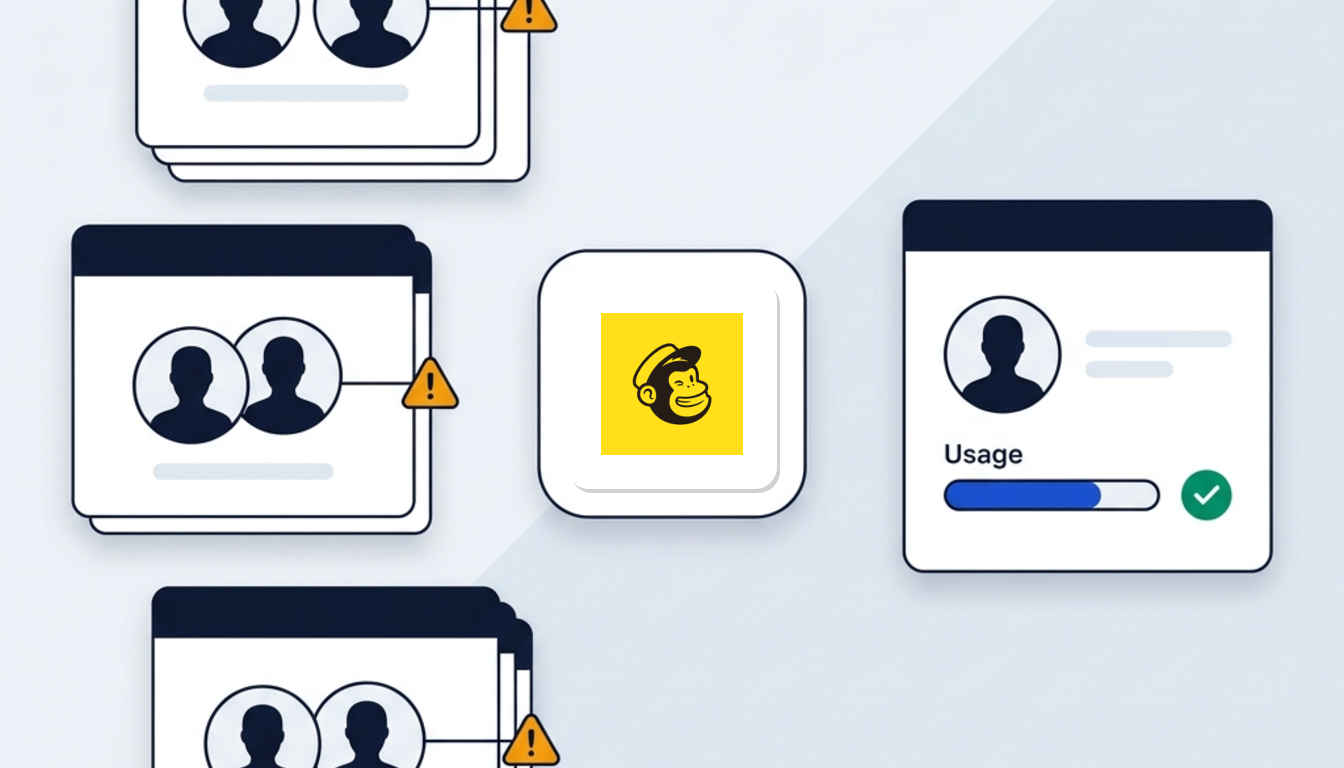
The structural difference between these platforms starts with how they store and bill for customer contact data. Mailchimp uses separate audiences, whereas Klaviyo relies on a single unified customer database.
Audience structure and active profiles
Mailchimp charges you per contact across separate audience lists. For example, if a customer exists in three separate audiences within your account, Mailchimp bills that individual contact three times (source: EmailTooltester and Klaviyo comparison page, checked October 2026).
Klaviyo uses a unified database architecture and bills you only once per active profile. It defines active profiles as subscribed contacts or individuals marketed to during the billing period. Suppressed and opted-out profiles are excluded from driving your pricing tier thresholds higher (source: Klaviyo comparison page, checked October 2026).
Free plans and entry-level tiers
Both platforms offer entry points for small contact lists, but their feature boundaries differ significantly.
- Klaviyo Free Plan: Supports up to 250 contacts and 500 emails per month with unrestricted access to multi-step flows, A/B testing, and prebuilt integrations.
- Mailchimp Free Plan: Supports up to 250 contacts and 500 emails per month, but restricts automation flows and advanced segmentation options.
- Mailchimp Entry Tier: Paid plans start at $13 monthly on Essentials for 0 to 500 contacts, and $20 monthly on Standard.
- Klaviyo Entry Tier: Paid email plans start at $20 monthly for up to 500 active profiles (source: vendor pricing pages, checked October 2026).
Because Klaviyo includes its complete automation engine on free and entry plans, you can build advanced sequences before crossing paid tier thresholds.
Real costs for European and UK buyers
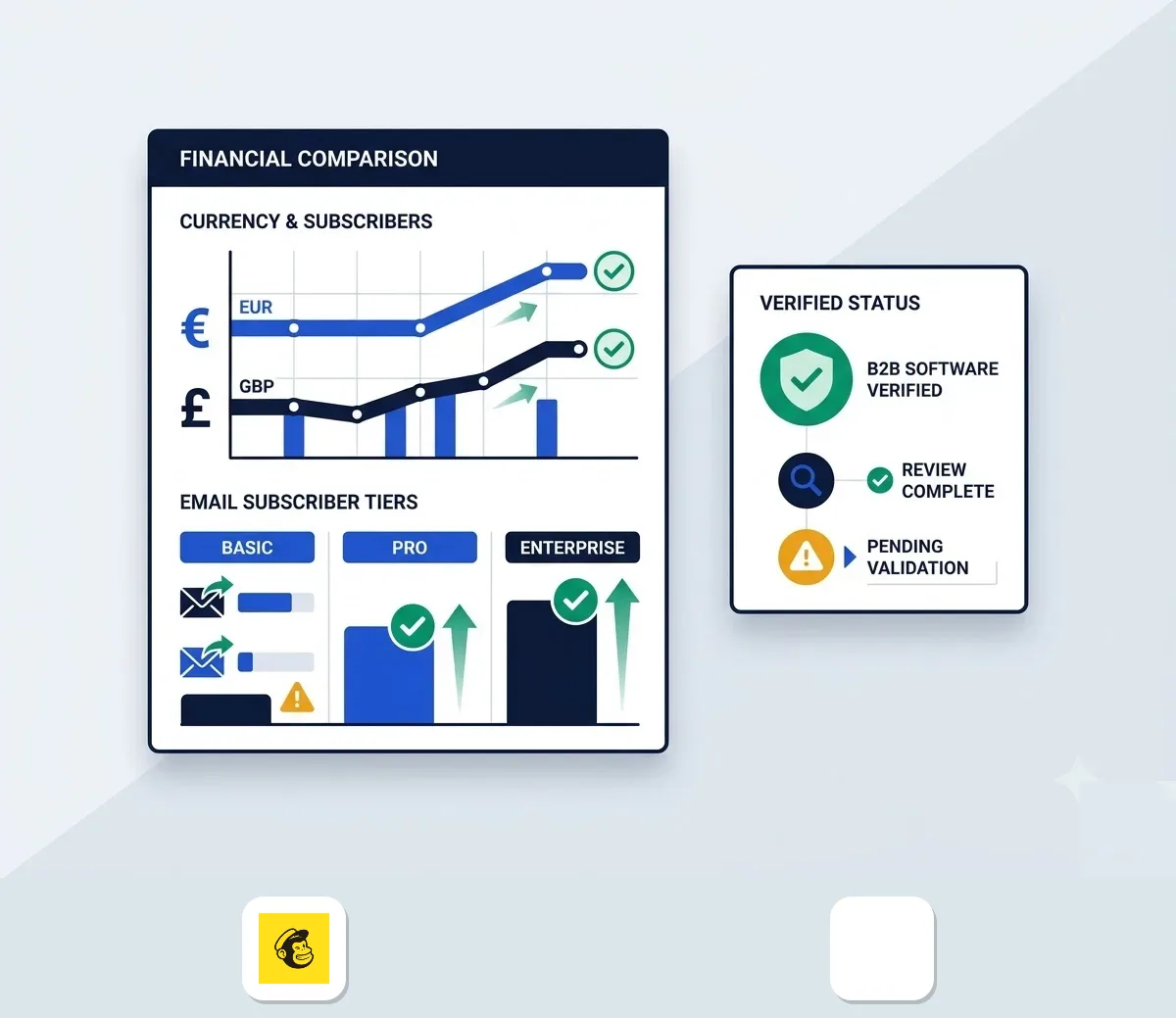
European businesses must account for multi-currency billing options and tier restrictions when estimating annual software expenses.
Native currency plans versus USD billing
Mailchimp publishes native pricing in EUR (€) and GBP (£) for European customers. In contrast, Klaviyo lists its core pricing in USD, which starts at $20 for 500 active profiles. This setup requires foreign currency conversion on your international billing invoices (source: Mailchimp pricing page, checked October 2026).
Mailchimp's verified European pricing tiers for 0 to 500 contacts are structured as follows:
- Essentials: Starts at €11.70 or £9.91 per month.
- Standard: Starts at €18.00 or £15.24 per month.
- Premium: Starts at €315.08 or £266.69 per month before VAT (source: Mailchimp pricing page read from France, checked October 2026).
Feature restrictions by tier depth
Lower Mailchimp tiers enforce functional boundaries on campaign automations. Essentials limits your automation flows to 4 steps and provides 3 separate audiences. Standard expands automation flows up to 200 steps and gives you 5 audiences with custom-coded templates.
Klaviyo includes full multi-branch flow capability across all paid email plans without restricting sequence length or branch depth.
Mailchimp documents potential savings between 25% and 50% compared to Klaviyo on raw contact tiers. However, audience duplication penalties on Mailchimp can rapidly inflate your monthly invoice if you maintain separate lists for different product lines (source: Mailchimp comparative notes, checked October 2026).
If you want to compare other marketing automation providers, check our ActiveCampaign vs Mailchimp comparison or explore our email marketing software catalog.
Comparing ecommerce automations and real-time triggers
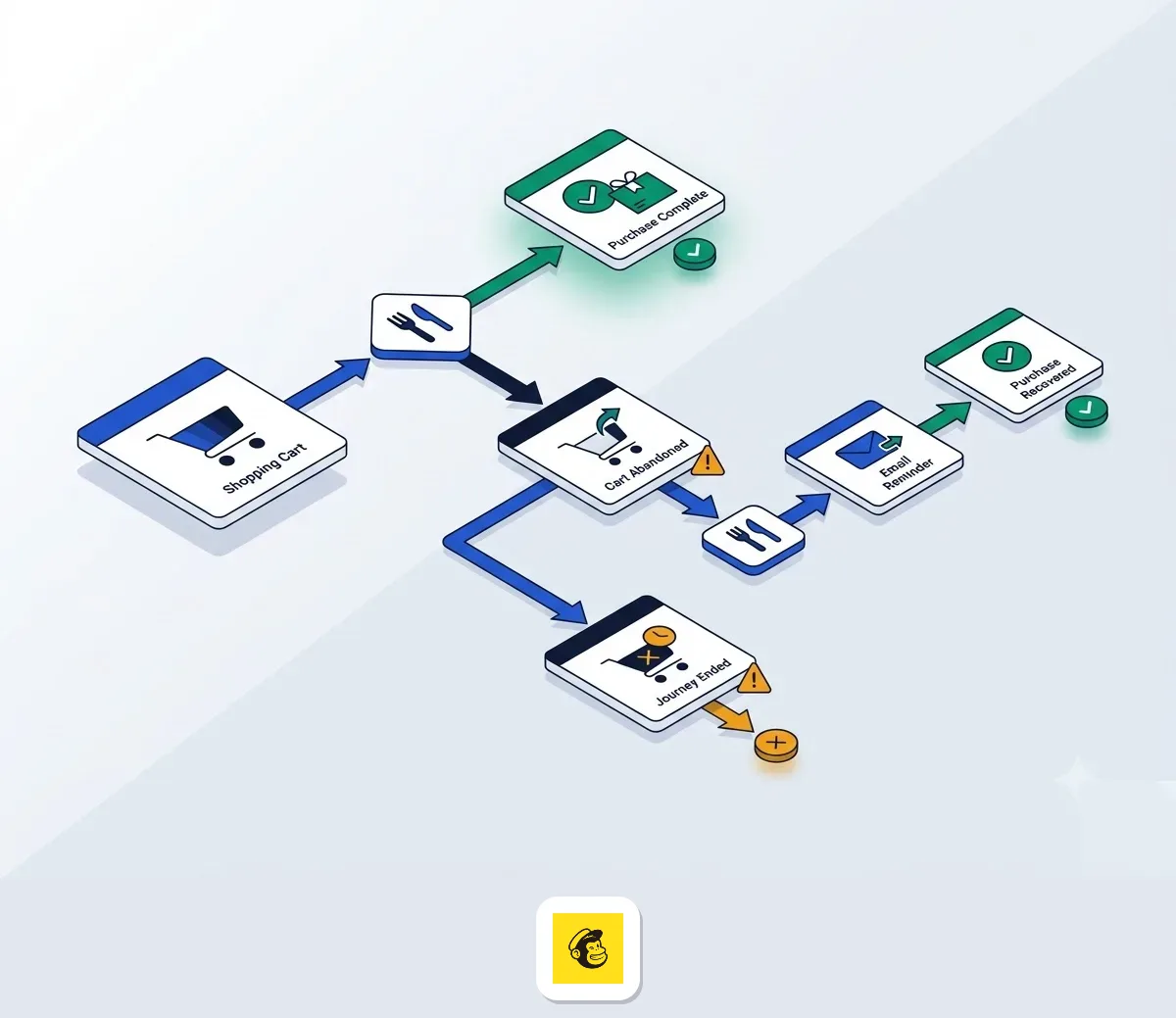
Automated flows drive recurring store revenue, but the depth of event tracking varies between platforms.
Event triggers and abandoned cart logic
Klaviyo triggers automated flows from real-time customer actions on your site. These include events like "Viewed product", "Started checkout", total cart value, and specific item SKUs (source: Klaviyo documentation, checked October 2026).
Mailchimp Customer Journeys feature over 45 behavioral triggers and 60 prebuilt templates. However, it uses broader rule splits and limits sequence depth to 4 steps on the Essentials plan (source: Mailchimp comparison page and EmailSoftwareInsights, checked October 2026).
This structural difference appears clearly in abandoned cart sequences. Klaviyo dynamically inserts exact cart items, variant options, and single-use Shopify discount codes directly into message flows.
Mailchimp provides template-driven cart emails. These carry less granular product customization options unless you write custom code.
Optimization and predictive analytics
Klaviyo lets you run multivariate A/B tests directly inside automated flows. You can test message variants, time delays, and conditional branch paths within running workflows.
Mailchimp limits multivariate testing primarily to standard email campaigns on its Standard and Premium plans.
Klaviyo also includes machine-learning projections across all paid tiers. These calculate customer lifetime value, churn probability, and expected next-order dates. Mailchimp reserves AI-predicted segments for Standard and Premium subscribers (source: vendor feature pages, checked October 2026).
Channel reach across email SMS and WhatsApp
Reaching European shoppers requires supporting communication channels beyond standard email marketing.
Messaging channels and European habits
Klaviyo supports native WhatsApp marketing and transactional messaging within unified customer flows. It combines email, SMS, mobile push, RCS, and WhatsApp on a single profile (source: Klaviyo comparison page, checked October 2026).
Mailchimp provides email, native SMS, landing pages, social media post scheduling, popup forms, and a website builder. However, native SMS is active primarily in the US and Canada, and Mailchimp lacks native WhatsApp support (source: Zapier and Mailchimp feature documentation, checked October 2026).
Performance metrics and customer support
Mailchimp reports a 97% higher click rate for brands deploying both email and SMS, reporting up to 30x average ROI for e-commerce users. Klaviyo focuses on cross-channel revenue attribution to show earnings beyond last-click attribution models (source: vendor claims, checked October 2026).
Support structures also differ between the platforms. Mailchimp offers 24/7 email and live chat support on all paid plans, with phone support reserved for Premium.
Klaviyo provides email and chat support on paid plans. Free accounts receive 60 days of onboarding support (source: vendor support policies, checked October 2026). To expand customer review collection alongside email flows, see our Stamped pricing guide.
GDPR compliance data privacy and European contracts
Data protection compliance and contracting entities represent key factors for European businesses.
Corporate contracting entities
Mailchimp contracts through Intuit Ireland Software Limited for EU customers, excluding Sweden and Denmark. It contracts through Intuit Limited for UK buyers. Klaviyo contracts primarily through its US corporate entity (source: Mailchimp legal terms, checked October 2026).
Data transfers and VAT rules
Mailchimp offers a standard Data Processing Addendum covering international transfers under the EU-US, Swiss-US, and UK Data Privacy Frameworks. It uses EU Standard Contractual Clauses and the UK addendum as fallback mechanisms (source: Mailchimp DPA, checked October 2026).
Neither platform guarantees exclusive data hosting within the European Economic Area on standard self-serve plans. Both process account data across international cloud infrastructure.
Subscriptions billed to European and UK VAT-registered businesses fall under the B2B reverse charge mechanism. You must enter a valid VAT or UK tax registration number at checkout to prevent local tax additions to your invoice. For additional European compliance analyses, read our Brevo vs Mailchimp guide.
Which platform should your store pick
Selecting between these tools comes down to your technical requirements, catalog volume, and budget structure.
Final decision checklists
Choose Klaviyo if you meet these store criteria:
- You operate a high-volume Shopify or WooCommerce store requiring real-time SKU triggers.
- You want to run automated WhatsApp messaging directly inside customer flows.
- You need dynamic segmentation without paying duplicate charges for contacts on multiple lists.
- You require predictive customer lifetime value metrics and in-flow A/B testing across all plans.
Choose Mailchimp if you meet these business criteria:
- You run general email newsletters, social media post scheduling, and simple landing pages.
- You prefer native pricing in EUR starting at €11.70 per month or GBP starting at £9.91 per month.
- You want to contract directly with an Irish corporate entity for European administrative needs.
- You need 24/7 chat support across all paid subscription tiers.
You can review current platform plans on our Mailchimp pricing page.
Migration considerations
When switching platforms, contact records transfer via a one-time API sync. However, email templates, form designs, and automated customer journeys do not transfer automatically and must be rebuilt manually on your new provider.
