













Semrush vs Ahrefs comparison for European marketing teams. Compare verified pricing in USD, backlink crawling speed, AI search tracking, and GDPR DPA terms.
Pick Semrush if you run SEO next to paid search and client reporting. Pick Ahrefs if organic search and backlinks are most of your job. That is the short answer to the semrush vs ahrefs question for most European teams. The sections below give the prices, limits and data terms behind it.
Semrush vs Ahrefs TLDR verdict
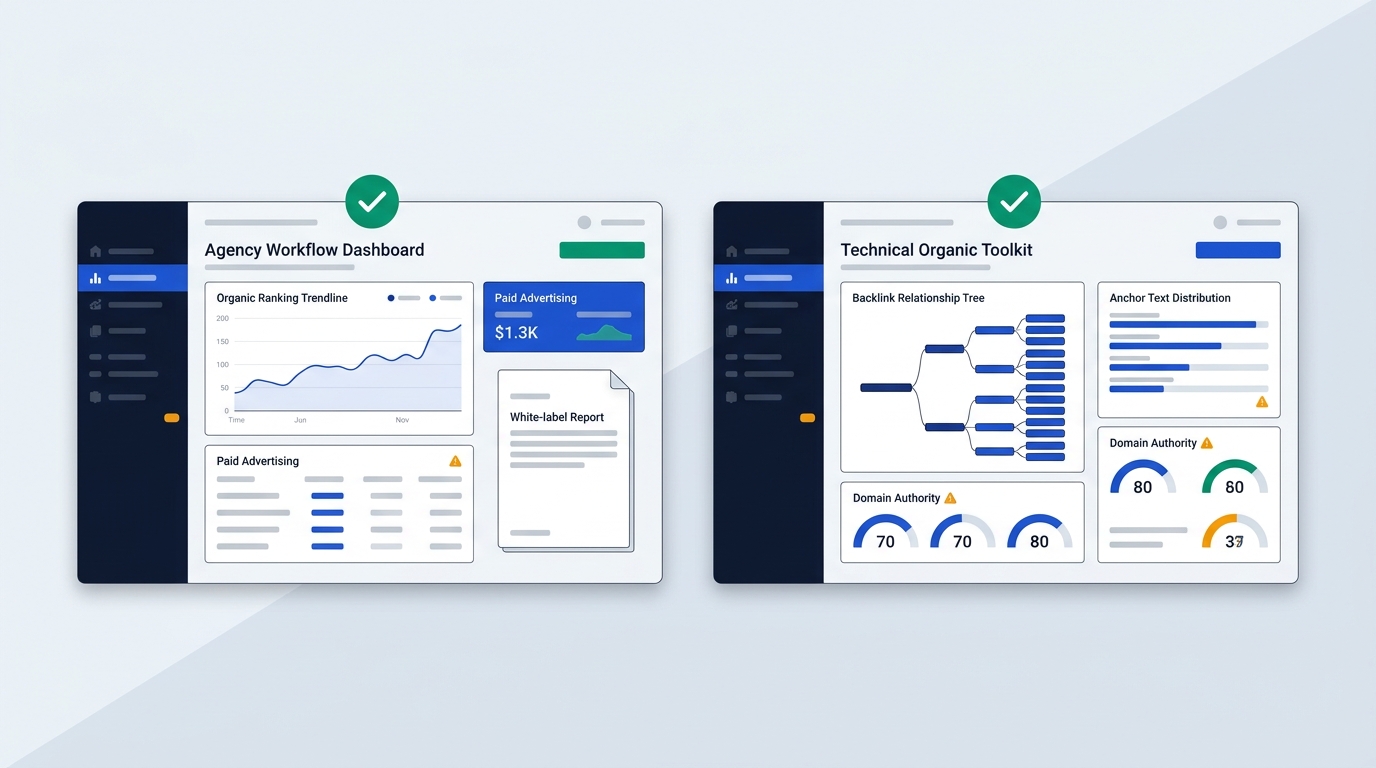
Here is the quick version, so you can stop reading if one line describes you.
- Semrush suits agencies and in-house teams that track Google rankings alongside PPC, need scheduled white-label PDF reports, and want daily custom AI prompt tracking. A 7-day trial lets you test it first.
- Semrush does not suit teams that only want backlink discovery. It is also a poor fit for small agencies that need many shared logins, because extra users cost extra.
- Ahrefs suits organic search specialists, link builders and content strategists who want fresh backlink data and a stated EU data location.
- Ahrefs does not suit teams that need paid search tooling or automated multi-channel reporting. It also offers no free trial before you pay.
Which platform fits your specific workflow
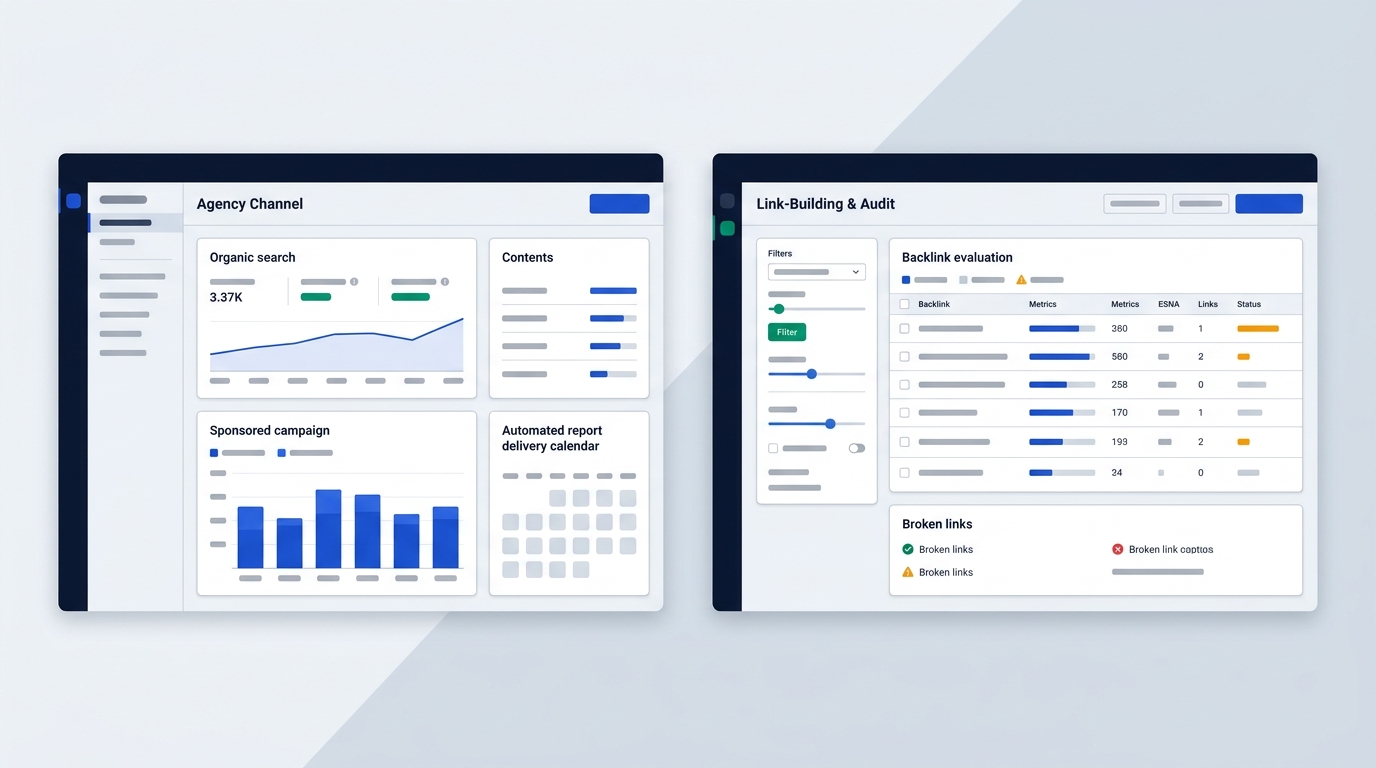
Your daily work decides this more than any feature count. If you juggle several channels, Semrush fits better. If you spend your week inside link data, Ahrefs does.
| What you need | Semrush | Ahrefs |
|---|---|---|
| Best fit | SEO, paid search and content in one place | Organic search and link building |
| Paid search data | PPC and competitor ad research | Ads history chart per keyword only |
| AI visibility setup | You choose 50 to 100 prompts to track daily (Starter, Pro+) | Enter any brand, no prompt list needed |
| Extra team members | Additional logins from US$45/mo | Lite includes 1 power user |
Source: the vendors' official pages and published comparison data, checked October 2026.
Agency work and client reports
Semrush covers organic and paid search under one login. That matters if you send twelve clients a monthly pack that mixes rankings, ad data and content notes. Ahrefs has no PPC tooling beyond the ads history chart for a single keyword.
Reporting is a paid add-on. The Base Report costs US$10 a month. It pulls data from 20+ Semrush tools and from Google Analytics and Search Console, with scheduling and PDF export. The Pro Report costs US$20 a month and adds white-labelling, 20+ external integrations, delivery at a set time and AI-generated summaries.
Link building and technical SEO
Ahrefs stays close to organic visibility. Its Domain Rating is the authority score many link builders already quote to clients. Site Explorer also supports broken-link work, and the Best Links filter sorts a profile by 77 link signals.
Semrush answers with Backlink Gap, which shows links your competitors have and you don't, plus link toxicity checks. That is useful for risk reviews. However, if prospecting is your main service, Ahrefs is built around that job.
Adopting AI visibility tracking
The two tools start from opposite ends. Semrush rewards a team that already knows the questions its buyers ask. Ahrefs gives a quick read on any brand, competitors included, before you set anything up. The next section has the numbers.
Team seats and usage limits
Seats and export limits decide the real bill. On Semrush, individual logins start at US$45 a month each, though the Advanced plan lists team users. Ahrefs Lite includes 1 power user and 500 export credits a month. Advanced raises that to 1,500 credits.
If three people share one login on either tool, you will feel the limit quickly. So decide how many people need their own access before you compare plan prices.
Keyword research and AI search tracking
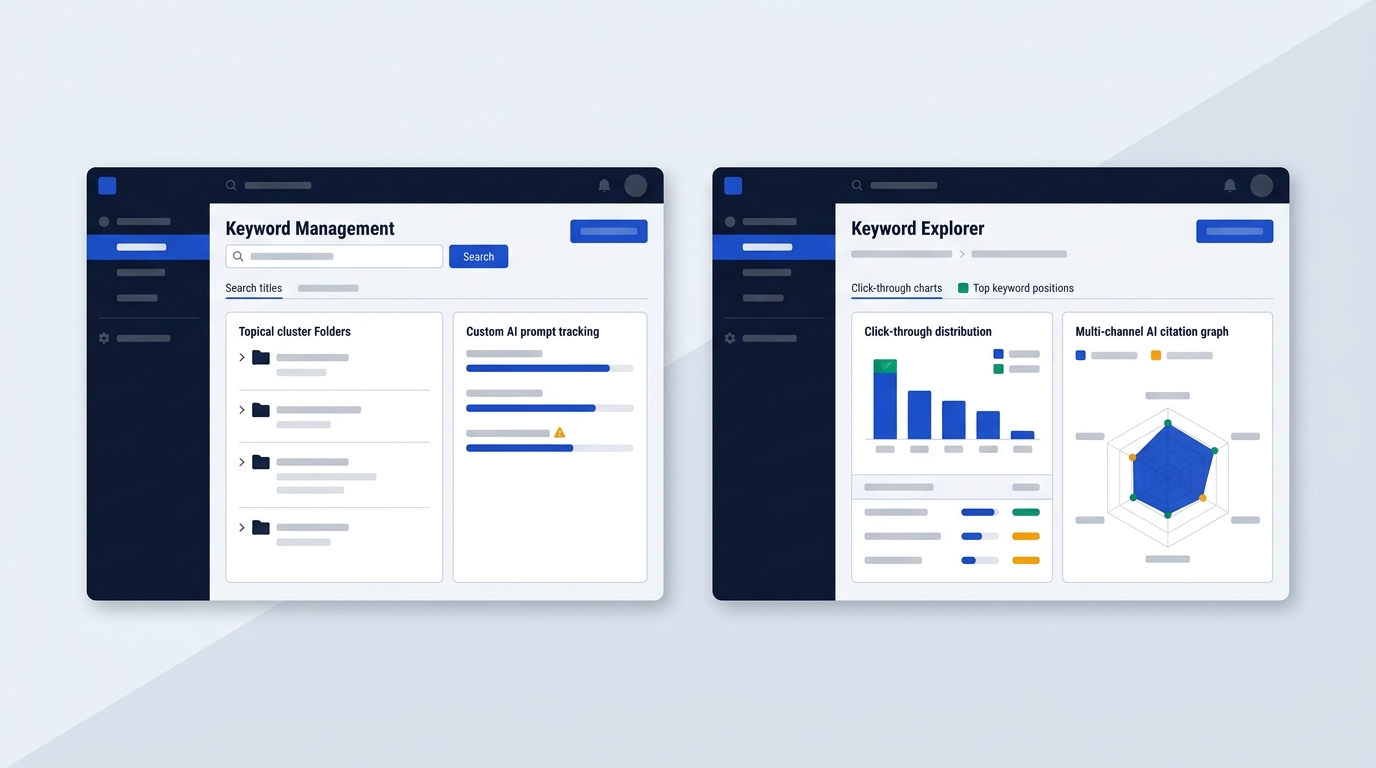
Ahrefs lists more locations and a slightly larger keyword set. Semrush gives you tighter control over which AI questions you follow every day. The table shows the database sizes.
| Keyword data | Semrush | Ahrefs |
|---|---|---|
| Keywords | 28.4 billion | 28.7 billion, filtered from 110 billion |
| Coverage | 142 geographic databases | 217 locations |
| US database | 3.7 billion | About 2.5 billion |
The extra Ahrefs locations help if you cover several European countries from one account. The US row shows the reverse: Semrush is deeper for US-focused campaigns.
Keyword Magic Tool versus Keywords Explorer
Semrush's Keyword Magic Tool returns keyword variations grouped by topic. It adds search intent classification, SERP feature data, competitive density, trend history and a Personal Keyword Difficulty score. That score adjusts to your own domain's authority, so it tells you which terms you can win now.
Ahrefs Keywords Explorer leans on clicks data. A keyword with 5,000 monthly searches can deliver a fraction of that in clicks when AI Overviews or featured snippets absorb the traffic. It also shows Traffic Potential, an estimate of what a page could earn across the main keyword and its variations. Data covers Google, YouTube, Amazon and Bing, and keywords cluster by Parent Topic in seconds.
How the AI tracking differs
Semrush tracks brand performance, sentiment and custom prompts daily, including across ChatGPT and Perplexity. The SEO plan includes AI search performance and sentiment monitoring. Starter adds 50 daily prompts for 1 domain, and Pro+ raises that to 100 prompts. For example, a UK accountancy software firm could follow "best invoicing software for sole traders" every day and watch its mention rate move.
Ahrefs Brand Radar works the other way round. You type any brand and see its AI visibility straight away, based on an index of 496 million+ monthly prompts across 7 AI indexes:
- AI Overviews: about 280 million prompts
- AI Mode: about 102.7 million
- ChatGPT, Copilot, Gemini and Perplexity: about 28 million to 28.7 million each
Brand Radar also ranks the domains that mention your brand by organic traffic and referring domains. The trade-off is plain. Ahrefs is faster for a competitor check, while Semrush is better when you need the same list of questions measured every day.
Backlink index depth and crawler performance
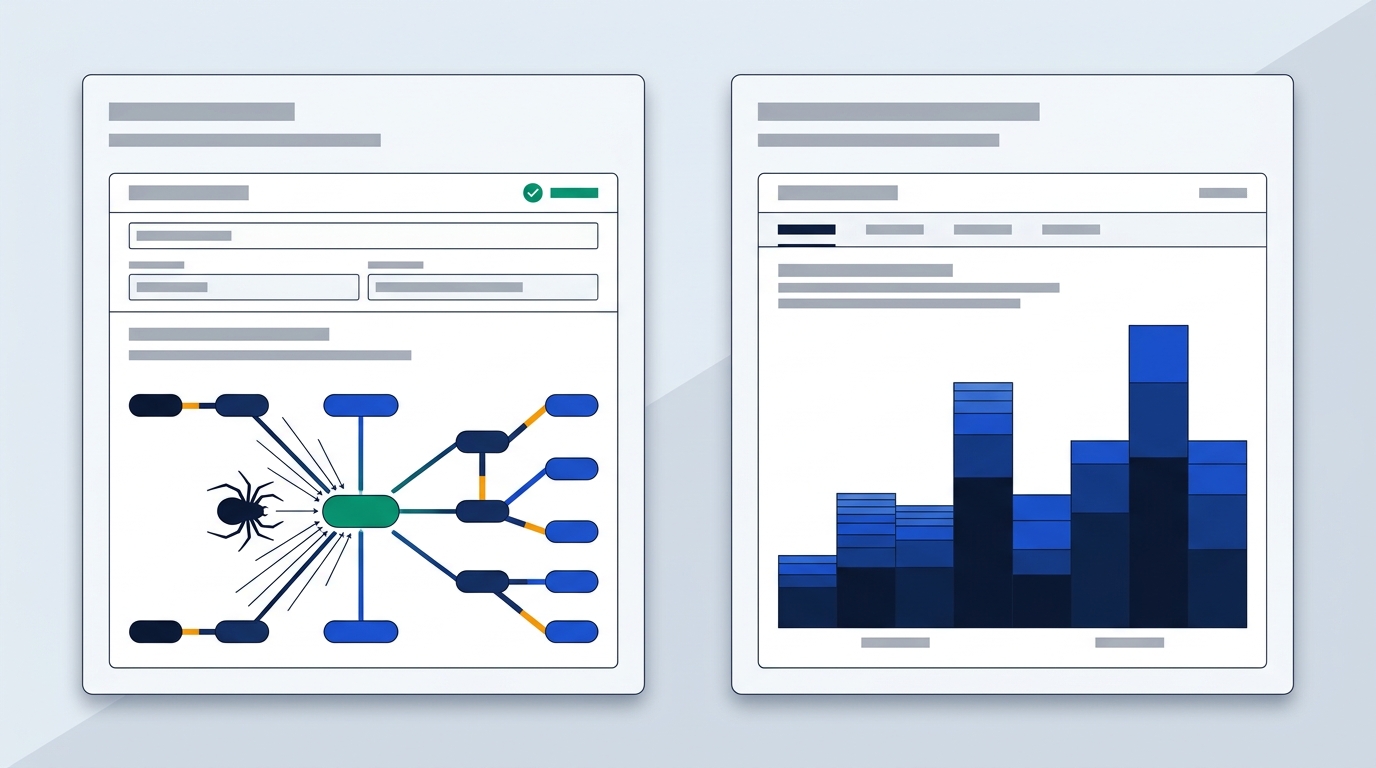
Ahrefs reports the larger set of live links, and Semrush reports the larger total. In the semrush vs ahrefs backlink debate, those two numbers are not comparable.
Ahrefs lists 35 trillion live backlinks. Semrush is credited with 43 trillion, but that count combines live and dead links. A bigger total can therefore contain fewer links you can still act on. Ahrefs updates referring domains and backlinks daily, which helps you spot a link campaign or a negative SEO attack soon after it starts. An independent review puts new discoveries at every 15 to 30 minutes.
What the crawler ranking shows
Cloudflare Radar data from July 2026, published on Ahrefs' comparison page, ranks AhrefsBot first among SEO crawlers and tenth among all crawlers worldwide. SemrushBotBacklinks is second in the SEO category.
Treat that as evidence of crawling activity, not proof of a better index. The ranking is by traffic volume, and Ahrefs published it. It still supports Ahrefs on fresh discovery, because a busier crawler finds new pages sooner.
API and link prospecting
Ahrefs lists 77 backlink-related API endpoints against 22 on Semrush, and says the API is available on all paid plans. If your agency builds its own reporting scripts, that gap is worth a look. Semrush lists API data integration on its Advanced plan.
For prospecting, Ahrefs Content Explorer searches 20.3 billion pages. It arrives with the Standard plan, so Lite users go without it. Semrush has no direct equivalent in the material above. It relies on Backlink Gap and toxicity checks, which suit a defensive audit more than a hunt for new placements.
Semrush vs Ahrefs pricing and seat costs
Ahrefs Lite is slightly cheaper than the entry Semrush plan, but each limits you in different places. All prices are in US$ as the vendors list them, before VAT. For a longer cost breakdown, see our Semrush vs Ahrefs pricing comparison.
Semrush plans
| Plan | Monthly | Annual billing, per month | What you get |
|---|---|---|---|
| Free | US$0 | US$0 | 1 demo project, 10 reports a day, no credit card |
| SEO | US$139 | US$117.33 | 5 websites, 500 keywords tracked daily, Position Tracking, Site Audit, AI sentiment monitoring |
| Starter | US$199 | US$165.17 | SEO features plus 50 daily AI prompts, 1 AI domain, 300 AI visibility reports a day |
| Pro+ | US$299 | US$248.17 | 15 websites, 1,500 keywords, historical data, content optimisation, 100 daily AI prompts |
| Advanced | US$549 | US$455.67 | 40 websites, 5,000 keywords, share of voice, API data integration |
Semrush also sells Enterprise with custom pricing, SSO and a dedicated account manager. Its details are on the Semrush page.
Ahrefs plans
| Plan | Monthly | Annual billing, per month | What you get |
|---|---|---|---|
| Lite | US$129 | US$108 | 1 power user, 500 export credits a month, basic Site Explorer, Keywords Explorer, Site Audit |
| Standard | US$249 | US$208 | 6 months of history, SERP updates, Content Explorer, Batch Analysis |
| Advanced | US$449 | US$374 | 2 years of history, Webmaster API access, Looker Studio connector, 1,500 export credits |
| Enterprise | US$999 | US$833 | Unlimited history, SSO SAML, enterprise API, customer success manager |
You can compare the plan details on the Ahrefs page.
Trials, free access and add-ons
Semrush offers a 7-day free trial you can cancel anytime. It also keeps a permanent free account, limited to 10 reports a day. Ahrefs no longer offers a general free trial. Its zero-cost route is Ahrefs Webmaster Tools, which is free for owners who verify their domain. That means you can audit your own site but not study competitors.
Count the add-ons before you decide. On Semrush, the user logins and report modules described earlier sit on top of the plan price. On Ahrefs, the extra cost is the export credit pool, which is 500 a month on Lite and 1,500 on Advanced. A high-volume exporter may need to move up a tier.
European data protection and server locations
Ahrefs states an EU data location, while Semrush offers a data processing agreement built on transfer clauses. Both give you a legal basis for GDPR work. Which one you need depends on whether your procurement team requires EU storage.
- Ahrefs: the company operates from Singapore and the Netherlands, and its data location is the European Union, in Amsterdam data centres. It describes a GDPR compliance framework with Standard Contractual Clauses and a DPA available to customers.
- Semrush: Semrush Inc. is a Delaware corporation based in Boston, USA. Its DPA names Semrush as processor and includes the EU Standard Contractual Clauses (Decision 2021/914) and a UK transfer mechanism. The Clauses are governed by Czech law. The DPA does not name where data is hosted.
- Currency and VAT: both list prices in US$, so your bank may apply a foreign exchange fee. Prices above are before VAT.
If your legal team insists on EU-only hosting, that points to Ahrefs. If SCCs and a processor agreement are enough, as they are for many UK, Irish, French, Spanish and Italian companies, either tool can pass review.
Which tool should you pick
If you manage organic search and Google Ads together and send white-label reports to clients, choose Semrush. If you build links, research content or run technical audits, and want a stated EU data location, choose Ahrefs. If you only need a second opinion on AI visibility, Ahrefs answers faster for any brand, while Semrush suits a fixed list of daily questions.
Your next step: verify one of your domains in Ahrefs Webmaster Tools and start the Semrush trial on the same day. Run the same project through both before you commit to an annual plan. If neither feels right, see the Semrush alternatives.