











Printful alternatives Europe for EU sellers: plan prices in € and US$, where each one prints, and the GDPR and VAT checks to run before switching.
For Printful alternatives Europe-wide, start with Gelato. It prints locally in 32 countries, bills in euros, and its free plan costs nothing a month. SPOD is faster for DACH orders, Printify has the widest catalog, and Fourthwall suits creators. Stay with Printful if owned production in Riga and Barcelona matters most. Below, you will find plan prices in each vendor's currency, where each one prints, and the VAT and GDPR checks to run before you switch.
Top Printful Alternatives Europe at a glance
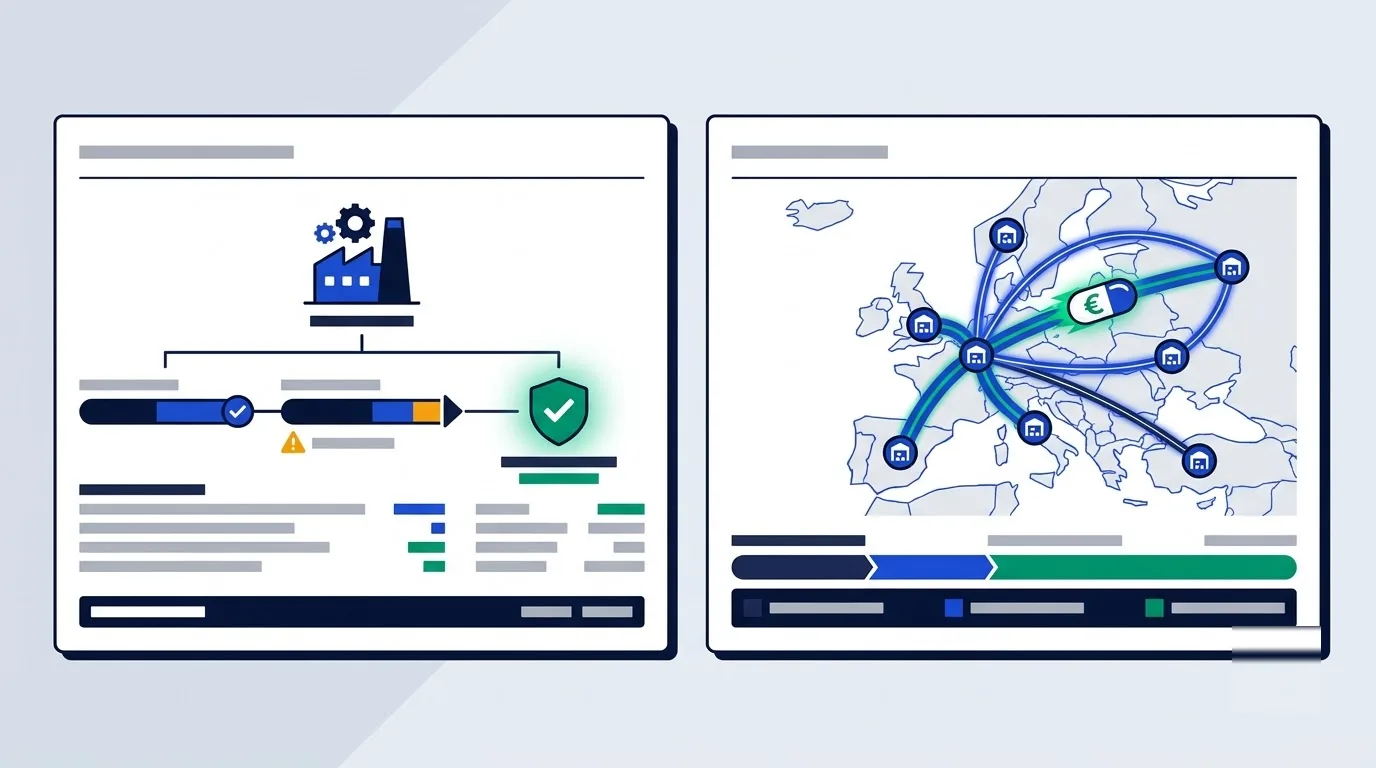
Seven options cover most European print-on-demand needs, and each one solves a different problem. The TL;DR and the table below show which problem each one solves.
Who should switch and who should stay?
TL;DR. Switch if Printful's tiers or dollar-based thresholds eat into your margin. Switching also makes sense if you sell into several EU countries and want printing close to the buyer. Stay if you value owned plants and your volume makes the Growth plan free or worth paying for.
- Gelato suits multi-country sellers who already have a store and want no monthly fee. It does not suit anyone who needs shoes, pet products or a built-in storefront.
- Printify suits sellers who want the biggest catalog and a say in which print house makes each product. It does not suit anyone who wants one standard quality bar on every order.
- SPOD suits DACH and Central European brands that want in-house production within 48 hours. It does not suit stores whose buyers sit mostly outside the EU and US.
- Fourthwall suits creators who want store, merch, memberships and tax handling in one place. It does not suit merchants who want to keep an existing store and add only a fulfillment backend.
- T-Pop suits eco-minded apparel brands. It does not suit stores that need a wide product range.
- Sellfy suits sellers with no store yet, especially if they also sell digital files. It does not suit anyone who wants to avoid a monthly store fee.
- Printful stays the right call if you want owned European plants and its three-step quality check, and your sales justify its pricing.
Our editorial picks rest on five criteria. These are European manufacturing footprint, euro billing, platform integrations, Article 28 GDPR data handling, and how much margin you keep without a mandatory subscription. They are judgments drawn from published vendor information, not test results.
How do the seven options compare?
The table compares price, plan limits and the production model behind each option. Prices are before VAT and shown in the currency each vendor lists. Printful and Gelato quote euros, while the others quote US dollars.
| Tool | Free entry | Paid tier | Plan limits | Key difference in Europe |
|---|---|---|---|---|
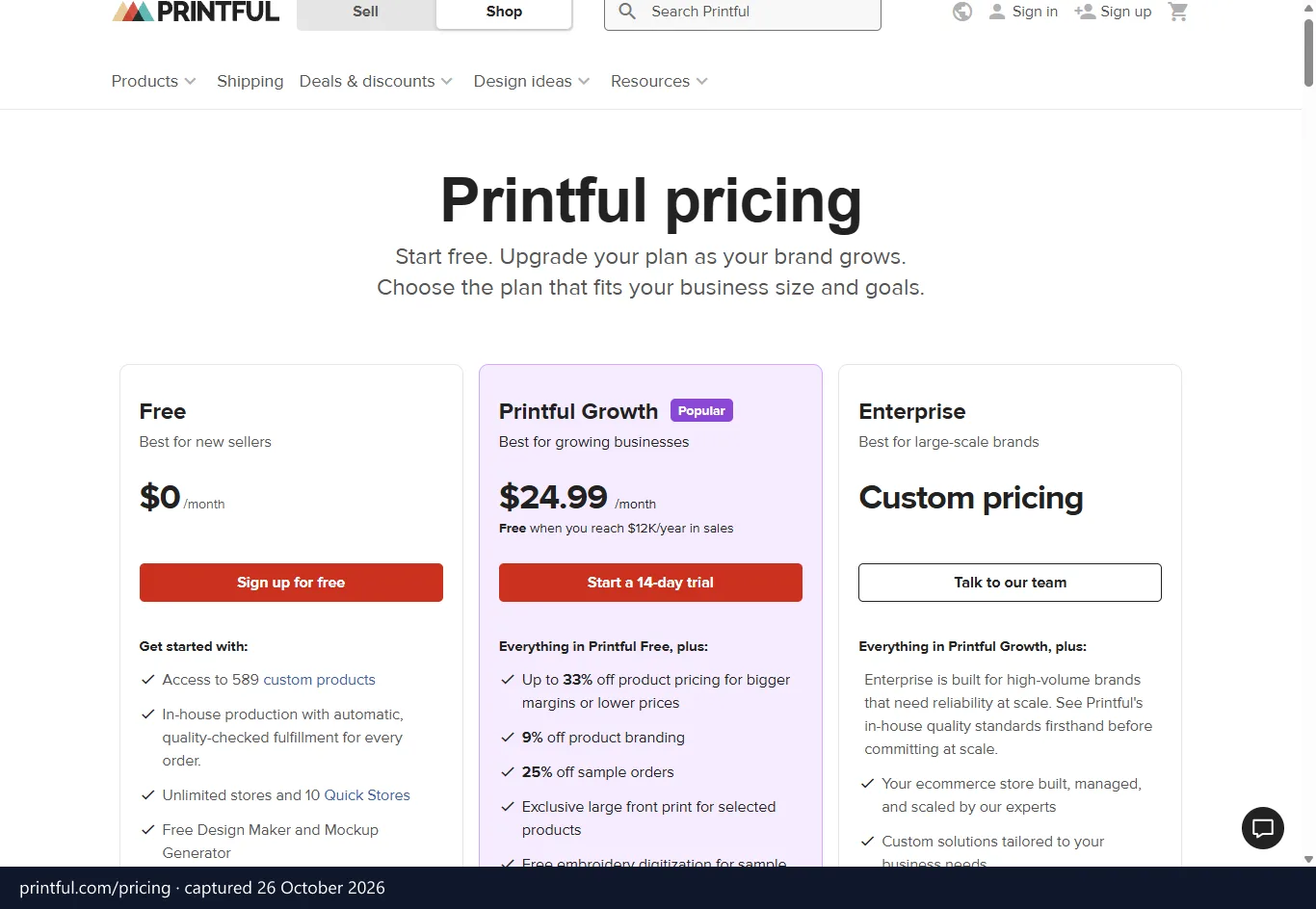
| Printful | Free standard, pay per order | Growth €24.99/month, free for stores reaching $12k+ annual sales | Unlimited connected stores; 589+ products | Owned centres in Riga and Barcelona, plus vetted partners |
| Gelato | Free, pay per order | Gelato+ €24/month (€19 on yearly billing); Gold €99/month (€79 yearly) | 2 stores on Free, 10 on Gelato+ | 250+ production partners in 32 countries; no owned printers |
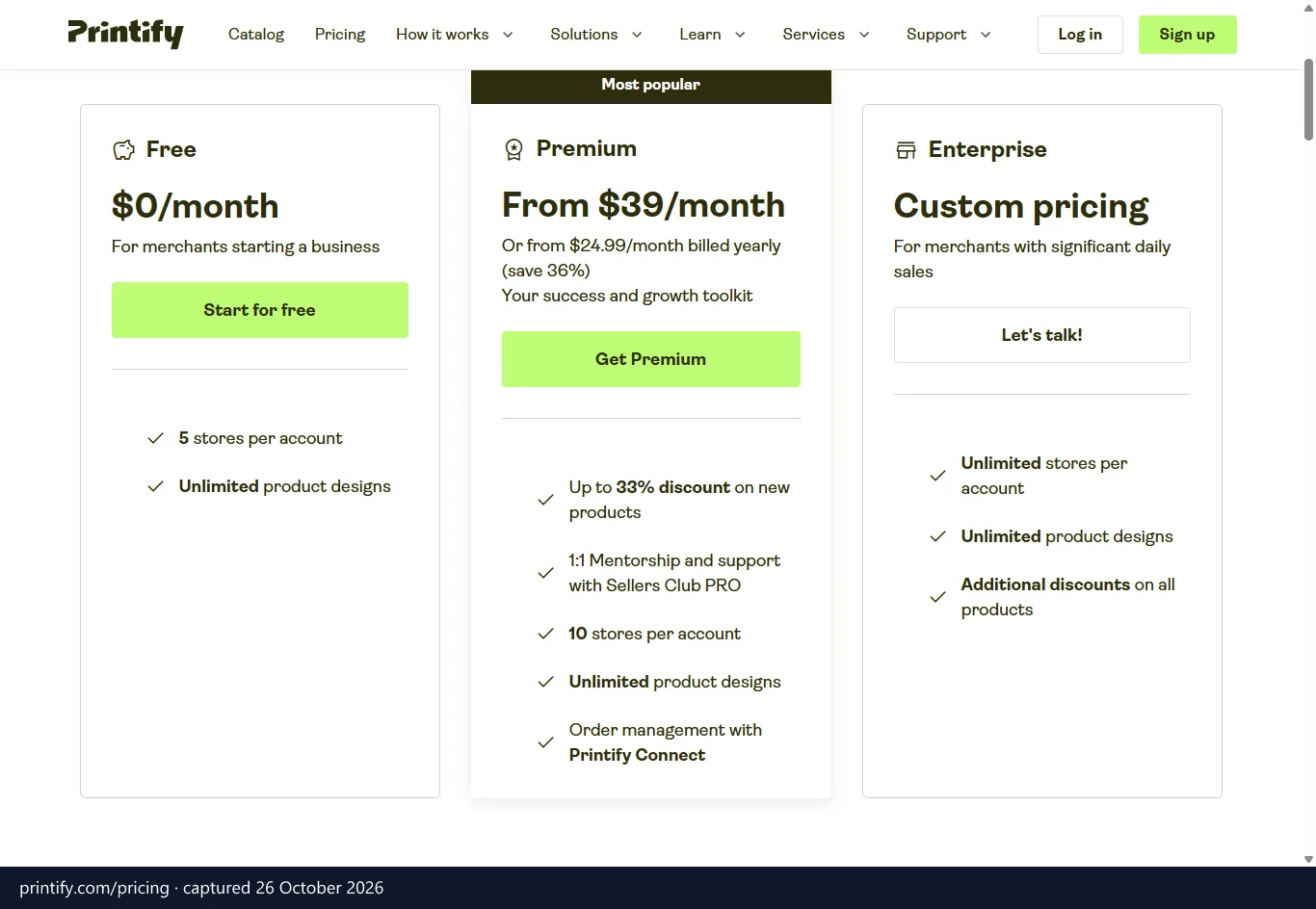
| Printify | Free | Premium $39/month, or $24.99/month billed annually | Up to 5 stores on Free; 800+ items | Independent print providers you pick by price or location |
| SPOD | — | — | 200+ products | Own sites in Germany, Poland and the Czech Republic (plus Las Vegas) |
| Fourthwall | Free, $0/month | Pro $19/month or $180/year | No order minimums on catalog products | Storefront, production, shipping and tax handling in one platform |
| T-Pop | — | — | Apparel and drinkware focus | France-based supplier focused on organic apparel |
| Sellfy | Free trial | From $19/month, depending on billing period | Store and print-on-demand catalog in one account | Hosted store with built-in fulfillment |
Sources: Printful's and Gelato's pricing pages and Fourthwall's own pricing, checked October 2026. Printify's plan prices are as listed on Fourthwall's comparison page. Sellfy's, SPOD's and T-Pop's details are as published in independent reviews.
A free plan is enough on every one of these platforms while you test products. The paid tiers earn their fee only through discounts on products or shipping, or through extra stores. Do the maths on your own monthly order volume before you upgrade.
Gooten is one more free option outside this shortlist. Fourthwall's comparison describes it as a hands-off, automated fulfillment backend for growing brands. It charges no monthly fee, routes orders automatically and connects to Shopify, Etsy and TikTok among others.
Why do merchants leave Printful?
Three complaints come up. The first is margin. Print on demand runs on thin margins, and Printful's base prices run higher than Printify's, which narrows them further. That is not universal, though. In Fourthwall's own worked example, Printful's base cost for one product was $10.75 against Fourthwall's $11.75.
The second is the Growth tier. It brings up to 33% off DTG apparel and up to 9% off embroidery, and it becomes free once a store reaches $12k in annual sales. Below that line, you either pay the monthly fee or accept standard prices. The plan only helps if the discount outweighs the fee.
The third is currency. Printful lists its own plans in euros, so it causes less friction than Printify or Fourthwall. The friction that remains is the dollar-denominated $12k threshold. It makes the free Growth tier harder to track for a euro-only store. You can check Printful's current plans and offers before deciding whether that threshold is within reach.
How to choose an EU print provider
Your choice depends on where your buyers live, how many product types you sell and how much quality variance you accept. Start with your store model, then look at catalog, production and shipping.
Which supplier fits which store model?
- Gelato fits sellers who ship across many countries. Orders go to a production partner near the buyer.
- Printify fits variety-led stores. Its 800+ items include some very niche products.
- SPOD fits German-speaking and Central European markets, with production in Germany, Poland and Czechia.
- T-Pop fits apparel brands that sell on organic and plastic-free credentials.
- Fourthwall and Sellfy fit sellers who want the store included, one for creators, the other for general merchants.
Picture a Shopify store selling posters and tote bags to Germany, France and Spain. With a distributed network, three parcels can leave from three countries, each close to its buyer. Now picture an apparel brand whose fans are mostly German speakers. A plant in Germany sits near almost every order, so one site does the whole job.
How wide is each catalog?
Catalog depth decides whether you need one supplier or two. Printful lists 589+ products across apparel, accessories and home decor. Printify goes furthest with 800+ items, including niche products that rarely appear elsewhere.
Gelato covers apparel, wall art, mugs, tote bags and other accessories. That makes it strong for posters and drinkware, but it skips shoes and pet products. Fourthwall offers hundreds of items across apparel, accessories, home goods and drinkware. SPOD has 200+ products, and T-Pop stays close to apparel and drinkware.
If your plan mixes T-shirts, mugs and framed prints, Printful, Printify and Gelato can all carry it. If it leans on unusual items, Printify is the safer bet. Map your top ten products against each catalog before you compare anything else.
Do owned plants beat partner networks?
Owned plants give predictable quality, while networks give proximity and price competition. Printful owns its centres in Riga and Barcelona. It applies a three-step quality check across in-house production and vetted partners. SPOD runs its own sites in Germany, Poland and the Czech Republic.
Gelato and Printify route to third parties. Gelato does not own printers, though reviewers describe consistent print standards across its partner facilities. Printify lets you choose a provider by price or location, so quality can differ between print houses. If a provider runs out of stock, the order may be rerouted, and you cannot be sure where it prints.
That is why a sample order matters more than any comparison table. Order the same product from two suppliers. Then judge print, labels and packaging side by side.
Where do they print, US or Europe?
Most of these suppliers print on both sides of the Atlantic, but their European reach differs widely. Printify partners with dozens of print providers each in the US, Europe, Asia, Canada and Australia.
SPOD produces in Las Vegas for the US and in three EU countries for Europe. Gelato spreads production across 32 countries. For a European store, the useful question is how close the nearest plant sits to your typical buyer, not how many plants exist worldwide.
A parcel that stays inside the EU customs union needs no customs declaration. A parcel from outside it usually does, and the buyer may face import VAT, a carrier handling charge or a held delivery. Those surprises hit repeat purchases hardest. Customers rarely forgive paying extra at the door.
Keep production in the single market where you can. Printify's geo-routing sends orders to the nearest available facility to reduce delays and customs fees, and Gelato's local network works toward the same goal. The UK, Norway and Switzerland sit outside the EU. An order from a German plant to those buyers still crosses a customs border, so plan for that if they make up a large share of your sales.
Which store integrations do you need?
Check the connection to your storefront before you compare print quality. A missing integration means manual order entry, and manual entry breaks at scale.
- Printful: Shopify, Etsy and WooCommerce, with unlimited connected stores on the free standard plan.
- Gelato: Shopify, Etsy, WooCommerce, Wix, Squarespace, BigCommerce, TikTok Shop and a custom API.
- Printify: Etsy, TikTok, eBay, Amazon and WooCommerce, plus a custom API.
- SPOD: Shopify, Amazon, eBay and WooCommerce, among others.
- Fourthwall: YouTube Merch Shelf, TikTok Shop, Twitch and Instagram and Facebook Shopping, with 20+ more.
If you still need a store, Shopify Basic lists at €28 a month, or €21 a month on yearly billing, according to Shopify's pricing page. It comes with a 3-day trial and then €1 for the first month. Sellfy and Fourthwall include a store instead, which changes the maths for sellers starting from zero.
Gelato for distributed European local production

Gelato is our editorial pick for cross-border European sellers who want local printing in 32 countries without a monthly fee. That pick rests on its production footprint, euro billing and free entry plan.
Gelato ASA is a Norwegian software company based in Oslo. It does not print itself. Instead, it routes each order to a facility closer to the customer, drawing on more than 250 production partners across 32 countries. Shorter distances can cut both transit time and shipping cost.
- You pay the product cost and shipping only after the customer has paid you.
- There are no minimum orders.
- Listed features include a mockup studio, custom packaging, DTG printing, a mobile app, local tax and VAT handling and a multi-currency wallet.
- The catalog covers apparel, wall art, mugs, tote bags and other accessories.
The plans differ in what they add rather than in access to production. According to Gelato's pricing page, checked October 2026, each tier works like this:
- Free: pay only when an item is ordered and fulfilled, connect up to 2 stores, standard production access in 32 countries.
- Gelato+: up to 30% off standard shipping, up to 10 connected stores, premium mockups and a customer product personalization tool.
- Gelato Gold: up to 50% off standard shipping, a dedicated account manager, early access to new catalog items, multi-user permissions and API support.
A Platinum plan exists for larger enterprises, with bespoke pricing. For most small stores, the choice is between Free and Gelato+. If your shipping spend is low, the free plan is enough. If you ship many parcels a month, the shipping discount is the reason to upgrade.
Where does Gelato fall short?
- The catalog is narrower than Printful's and skips categories such as shoes and pet products.
- There is no built-in storefront, so you need your own store.
- The best shipping discounts sit behind paid plans.
- Some design assets and discounts are locked behind Gelato+.
- Free covers only 2 stores, which matters if you run one store per country.
Against Printful, the trade is reach versus ownership. Printful owns two European plants and sells 589+ products, while Gelato owns none but reaches 32 countries through partners. For a seller shipping to Poland, Ireland and Italy, a nearby partner can shorten the route. Printful serves the same buyers from Latvia and Spain.
On entry cost, Gelato Free caps you at 2 stores, whereas Printful's free standard plan connects unlimited stores. On range, Printful wins. You can compare Gelato's plans and current offers against your expected shipping volume.
Printify for catalog size and provider flexibility
Printify is the strongest choice for European stores that put product variety first and want to choose their print provider by cost or geography. Its 800+ items give it a clear lead over Printful's catalog, by reviewers' counts.
Printify is a marketplace, not a factory. It connects you with hundreds of independent print providers, including dozens in Europe, and you pick the partner for each product. Partners compete on price to win your orders. Reviewers report that margins tend to be higher as a result.
- You can choose a provider for certain products by price or location.
- The geo-routing feature sends orders to the closest available printing facility to the customer.
- If a provider hits a stock shortage, an order may be rerouted, so the final print location is not guaranteed.
- Reviewers note that Printify is owned by the same company as Printful, so moving between the two keeps you in one corporate family.
Geo-routing is the feature that matters for a European store. A German buyer should receive a product printed in Europe, which avoids customs steps. The rerouting caveat means you should watch tracking on your first orders.
The free plan supports up to 5 stores and custom order imports, and Premium prices sit in the table above. Both are quoted in US dollars, so a euro card or bank account may add a conversion spread on top. The 5-store allowance is generous next to Gelato's 2 on its free plan. If you run separate storefronts per market, that difference alone can decide the choice.
Where does Printify fall short?
- Print consistency varies between independent providers, so choose them carefully.
- Quality control is limited because Printify relies on third-party print houses.
- You need an existing website, because Printify has no storefront.
- Plan prices are quoted in US dollars rather than euros.
Printify offers 800+ items against Printful's 589+, and more control over which printer makes each product. Printful, on the other hand, applies a standard three-step quality check across its own and partner production. Printify gives you reach and price competition, while Printful gives you a more predictable result.
If you can invest time in vetting two or three providers for your top products, Printify can pay off. If you want to place an order and not think about it, Printful is easier. Printify's current plans and offers are listed on its page, and our European price comparison of Printify and Printful goes deeper on the two.
SPOD for fast 48-hour Central European production
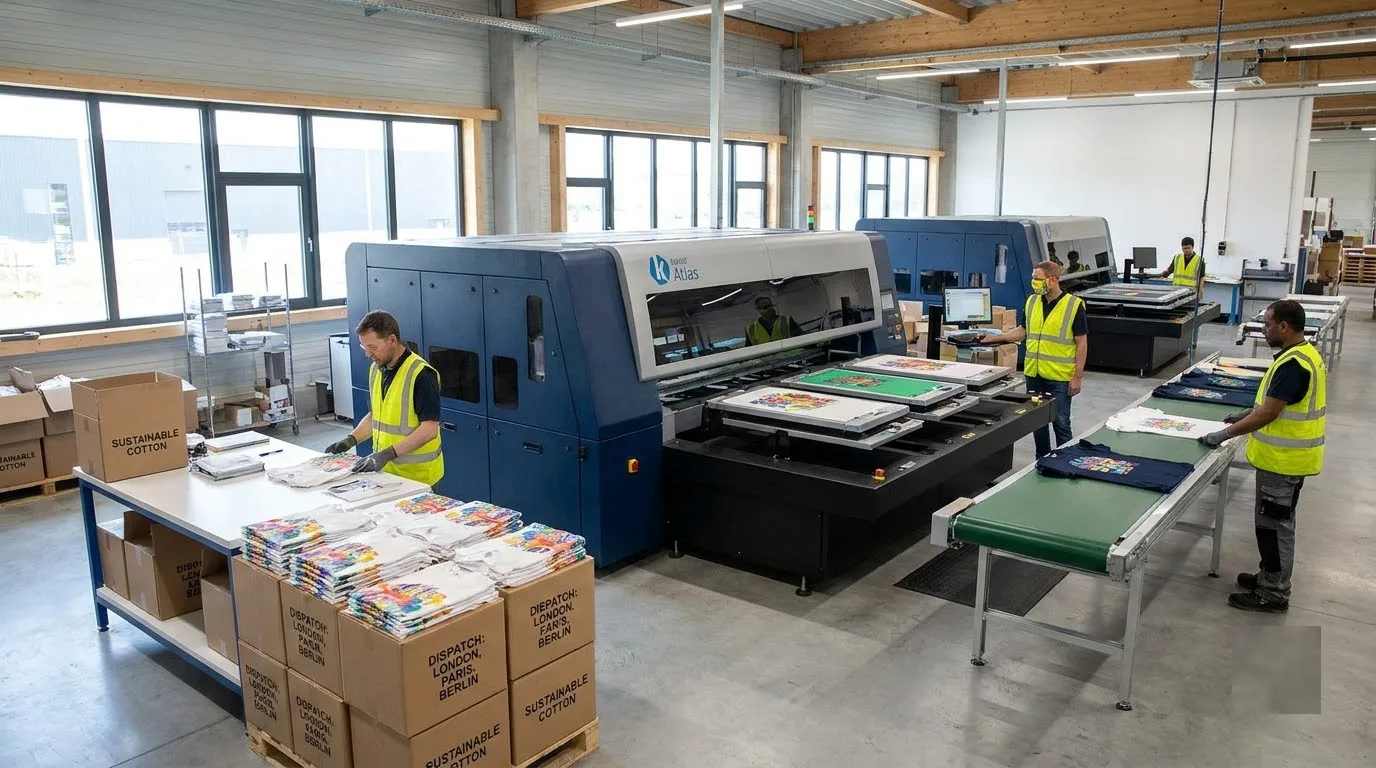
SPOD fits brands that sell mostly in DACH and Central Europe and want in-house production within 48 hours. It has been around for 20 years and has built a strong reputation in that time.
SPOD runs its own production sites on both sides of the Atlantic. In Europe it produces in Germany, Poland and the Czech Republic, and in the US in Las Vegas. You choose where you want orders produced when you sign up.
Once your store is connected, fulfillment is fully automated. Each order goes to SPOD, which produces it in-house within 48 hours and ships it. That 48 hours covers production, not carrier transit, so add a few days when you quote delivery dates to customers.
- More than 200 products across its catalog.
- Native integrations with Shopify, Amazon, eBay, WooCommerce and more.
- Designer tools and a library of 50,000+ pre-made designs.
- Discounted test samples, so you can check quality before you launch.
Reviewers describe good quality, strong design tools and excellent integrations. The sample discount is the useful part for a European seller. A German or Polish shop can see exactly what an Austrian customer will receive before a single order arrives.
Where does SPOD fall short?
- There are only four production centres.
- Local fulfillment is available only in the EU and the US. Anywhere else, overseas shipping can take a while.
- The catalog of 200+ products is smaller than Printful's 589+.
Think about your map before you commit. Switzerland and the UK are outside the EU, so a parcel from a German or Polish plant crosses a customs border on its way there. If those markets are a big share of your sales, the speed advantage shrinks.
SPOD's 48-hour production window is a concrete promise, and its plants sit in Germany, Poland and Czechia. DACH and Central European orders therefore start close to home. Printful serves the continent from Riga and Barcelona, a better fit for Baltic, Iberian and Southern European buyers. If your customers are German, Austrian, Polish or Czech, SPOD's footprint matches them better.
The trade-off is range. If your plan relies on 300 or more product variations, SPOD's smaller catalog may force you to add a second supplier.
T-Pop and Sellfy for specialized European stores
Two smaller options serve narrower needs. T-Pop is a specialist for eco-conscious apparel, while Sellfy bundles the store and the fulfillment into one subscription.
Who is T-Pop for?
T-Pop is the specialist pick for apparel brands that want a French producer and a clear sustainability story. It positions itself on 100% organic cotton garments, plastic-free packaging and vegan-friendly water-based inks. Those are concrete claims you can put on a product page. A generic supplier cannot match them.
The trade-offs are range and distance. T-Pop focuses on apparel and drinkware, so it will not cover a catalog of posters, phone cases and home goods. A producer in one country also means longer transit to far destinations, such as the Nordics or Eastern Europe. A sample order shipped to a far-away address will show you the real delivery time.
Who is Sellfy for?
Sellfy is an e-commerce platform with print on demand built in, so it suits creators and small brands with no store yet. It comes with a drag-and-drop site builder, themes, a shopping cart, email marketing, upsells and discounts. You can sell merch, digital downloads and subscription memberships from the same account.
- You import products from its built-in catalog in one click and add your own designs.
- Sellfy fulfills print-on-demand orders, and you pay the base product cost and shipping after the sale.
- You set your own prices, which keeps your margin under your control.
- A free trial lets you build the store before the first paid month.
The downsides are a monthly subscription fee and limited payment gateways. PayPal and Stripe are the options listed. If your buyers expect other local payment methods, test the checkout before moving live products.
Against Printful, the difference is the bill count. Printful needs a separate storefront, so pairing it with Shopify Basic means paying two services. Sellfy puts store and fulfillment on one bill. Its price is in US dollars and Shopify's is in euros, so compare them in your own invoices rather than converting.
T-Pop beats Printful on sustainability credentials, but Printful's 589+ products win on range. Sellfy removes the need for a separate store. However, it will not connect to an existing Shopify or WooCommerce shop the way a pure fulfillment partner does. Choose by the problem you actually have.
Fourthwall for creator merchandise and tax handling
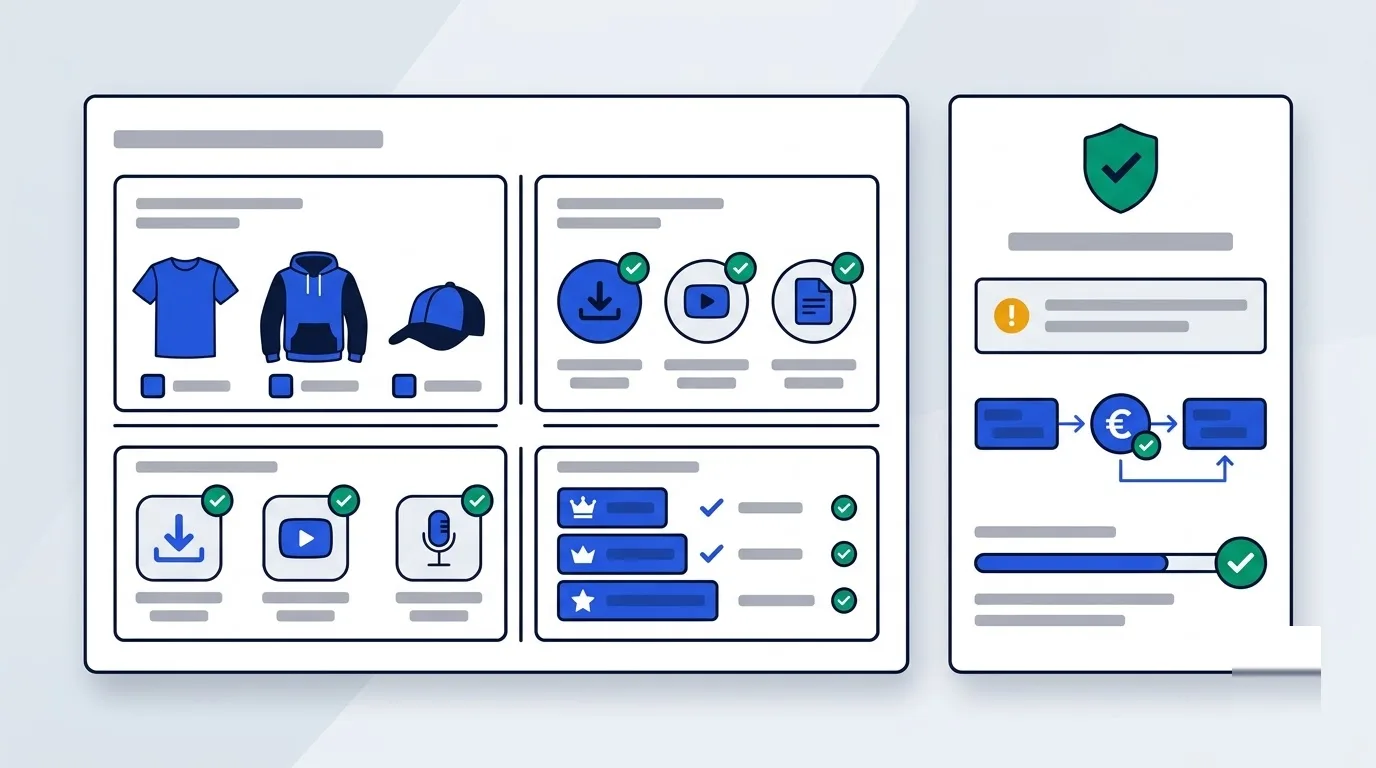
Fourthwall fits European creators who want a branded storefront, memberships, digital products and Merchant of Record tax handling without juggling several subscriptions. It suits an audience business better than a catalog business.
Fourthwall combines a fully branded storefront, print-on-demand merch, digital products and memberships behind one login and dashboard. The catalog has hundreds of customizable items across apparel, accessories, home goods and drinkware. Production methods include DTG, DTFx, embroidery, screen printing and sublimation, depending on the product.
- As Merchant of Record, Fourthwall handles sales tax and VAT for applicable transactions.
- Native integrations cover TikTok Shop, YouTube Merch Shelf, Twitch and Instagram and Facebook Shopping, with 20+ more.
- There is no monthly fee to start and no order minimum on catalog products.
Its business model differs from a subscription. According to Fourthwall's pricing, it earns the gap between production cost and your base price, so you set the retail price and keep everything above it. The Free plan covers the storefront, physical and digital products, memberships and tips. Card processing is 2.9% + $0.30 per transaction.
Memberships carry a 5% fee. Digital products also carry 5% on Free, but 0% on Pro. Pro adds a domain, higher limits and priority support. All amounts are in US dollars.
Does it cost less than Printful?
Not on product cost alone. In Fourthwall's own worked example, base cost was $11.75 on Fourthwall and $10.75 on Printful. The gap opens in the tooling around the product.
A Printful seller usually adds a storefront such as Shopify Basic, plus the Growth plan unless sales pass $12k a year, plus a tax tool. Fourthwall's Free plan bundles the store and the tax handling. If you are a creator who would otherwise stitch those pieces together, Fourthwall removes two recurring bills. If you only need fulfillment, it does not.
There are real limits too:
- It is storefront-first, so it does not fit if you want to keep an existing WooCommerce or custom site and just add a fulfillment backend.
- There is no built-in marketplace for product discovery, so you bring your own audience.
- It is built for on-demand production, not high-volume bulk or wholesale runs.
- Fees and plans are quoted in US dollars.
European VAT and cross-border billing guide
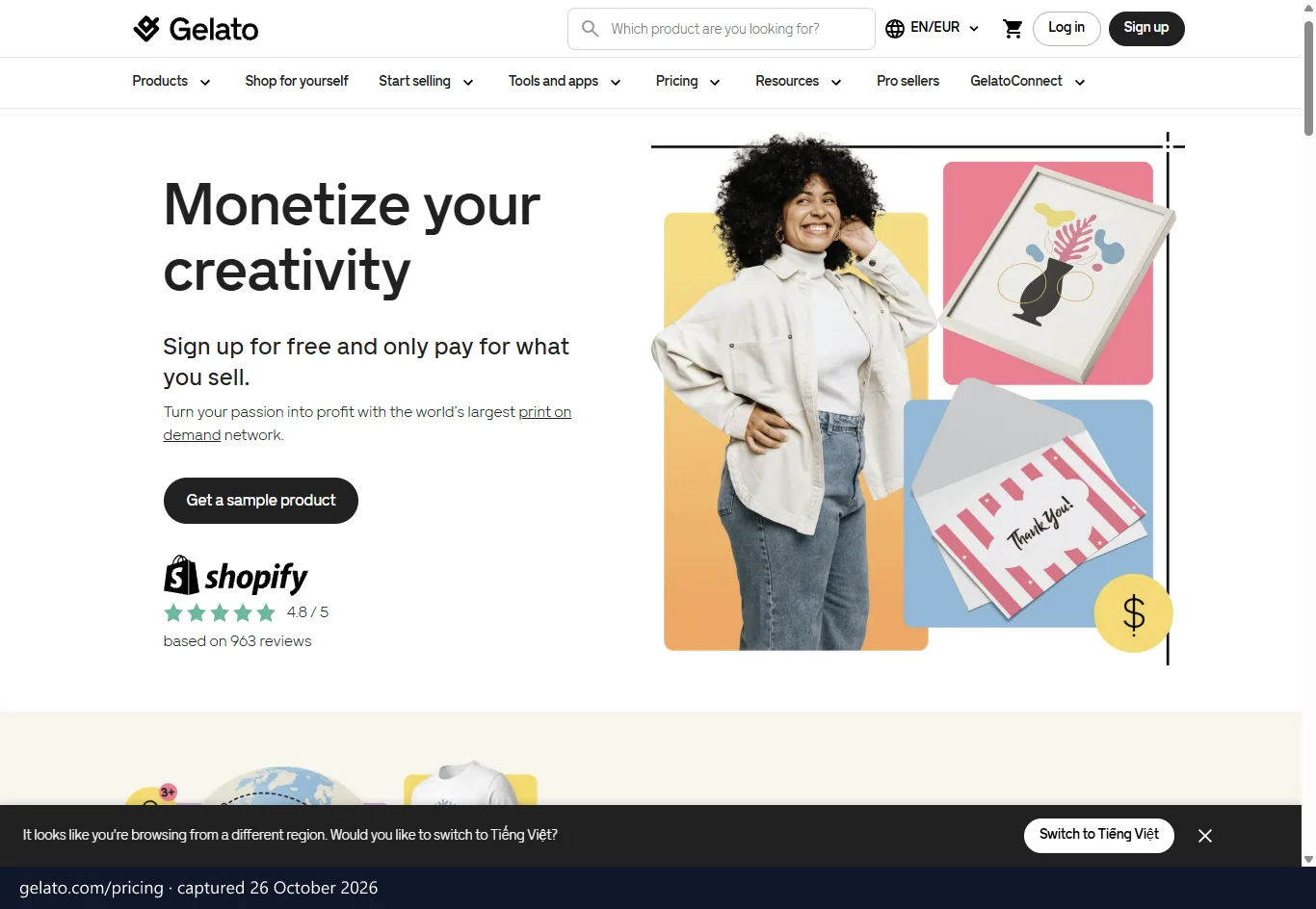
Two things decide your real cost with a European POD supplier: how the invoice treats your VAT ID, and which currency it uses. Compare both before you compare list prices.
Under Article 196 of the EU VAT Directive (2006/112/EC), a VAT-registered business buying services from a supplier in another country accounts for the VAT itself. The supplier does not charge it. You need a VAT number that validates in VIES at checkout. Our guide to the VAT reverse charge for European businesses explains the mechanism step by step.
For a POD seller, the clearest case is the platform fee, such as a Growth, Gelato+ or Pro subscription. A supplier that does not apply the reverse charge adds local VAT to a B2B invoice. Invoices for printed goods can follow different rules depending on where the goods ship from and to. Ask your accountant how each leg should be invoiced.
Currency is the second check. Compare prices in euros or pounds, and see whether they are net or gross of VAT. A price list in US dollars looks simple, but the bank's foreign-exchange fee and exchange-rate movements land on you. That is the hidden cost behind Printify, Fourthwall and Sellfy list prices.
Printful and Gelato quote euros, which lets a eurozone store budget without exchange-rate risk. It does not mean the others are expensive. It means their true cost needs one more line in your spreadsheet.
What about UK buyers after Brexit?
The UK left the EU in 2021, so the EU directive and the VIES-based reverse charge do not apply there. A UK VAT-registered business buying services from an overseas supplier still accounts for the VAT itself. It does so under the UK reverse charge, described in HMRC VAT Notice 741A on the place of supply of services. Ask suppliers for a tax invoice that fits UK rules.
What should you check at sign-up?
- Which legal entity bills you. Printful's entity is AS Printful Latvia, Gelato's is Gelato ASA in Oslo, and Shopify's contracting entity for Europe is Shopify Commerce Europe Ltd in Dublin.
- That your VAT ID validates in VIES and is entered before the first invoice.
- That the invoice shows the supplier's full company address and VAT ID.
- Whether prices are quoted net or gross of VAT.
Entity location alone does not settle the VAT treatment. A Norwegian or a Latvian supplier can both invoice correctly, so read the first invoice instead of assuming.
GDPR compliance and customer address data
When you sell to EU customers, you are the data controller, and every print supplier that receives their details is your processor. That covers names, phone numbers and street addresses. Article 28 GDPR therefore requires a binding Data Processing Agreement (DPA) with each of them.
In this comparison, Printful and Gelato are the two with published terms we can quote, from their privacy policies and terms, checked October 2026. Printful keeps primary EU customer and manufacturing data in the European Union, in Latvia and Spain, on AWS infrastructure. It describes itself as compliant with Article 28 GDPR, with a published DPA and Standard Contractual Clauses for global routing.
Gelato ASA hosts its distributed production network and customer data in tier-1 data centres in Norway and Germany. It describes itself as compliant with Article 28 GDPR and Norwegian privacy law, with a standardized DPA. Norway applies the GDPR through the EEA Agreement, so Norwegian hosting still sits inside the European data-protection framework.
Partner networks add a layer of risk. Every order carries a real person's delivery details to whichever printer makes it. In a partner network, that printer is an independent company, and it may sit in another country. Printify's network, for example, includes providers in the US, Asia, Canada and Australia, and its stock-shortage rerouting can send an order somewhere you did not expect.
Data leaving the EEA needs a lawful transfer mechanism, usually an adequacy decision or Standard Contractual Clauses. Without one, you could be exposed even if the supplier's marketing looks reassuring.
What belongs on your GDPR checklist?
- A standardized Article 28 DPA you can sign or accept, not a vague privacy notice.
- A named data location for production and delivery data, ideally inside the EEA.
- Clear terms on sub-processors, meaning the printers behind the platform.
- Standard Contractual Clauses wherever data can leave the EEA.
- A retention rule that deletes address records after the delivery and dispute window.
Run this list against Printify, SPOD, Fourthwall, Sellfy and T-Pop before you connect a live store. If a supplier cannot answer it in plain terms, treat that as a reason to look elsewhere, whatever its price.
Which European print provider should you pick
Pick Gelato if you sell in several EU countries and want local printing without a monthly fee. Choose Printify when you need the widest catalog, SPOD when DACH customers expect fast dispatch, and Fourthwall if you are a creator who wants store, memberships and tax handling in one dashboard. T-Pop suits eco-minded apparel, and Sellfy suits sellers with no store. Printful still earns its place if you want owned European plants and strict in-house quality control, and your sales cover its pricing.
Your next step is simple. Order the same product from two shortlisted providers. Check wash durability, labels, packaging and the real transit time to your own address before you move any live listings.