















Compare the best Taskade alternatives for solopreneurs. Evaluate single-user project management tools on EUR/GBP pricing, GDPR, and AI productivity features.
TL;DR: The Best Taskade Alternatives for Freelancers
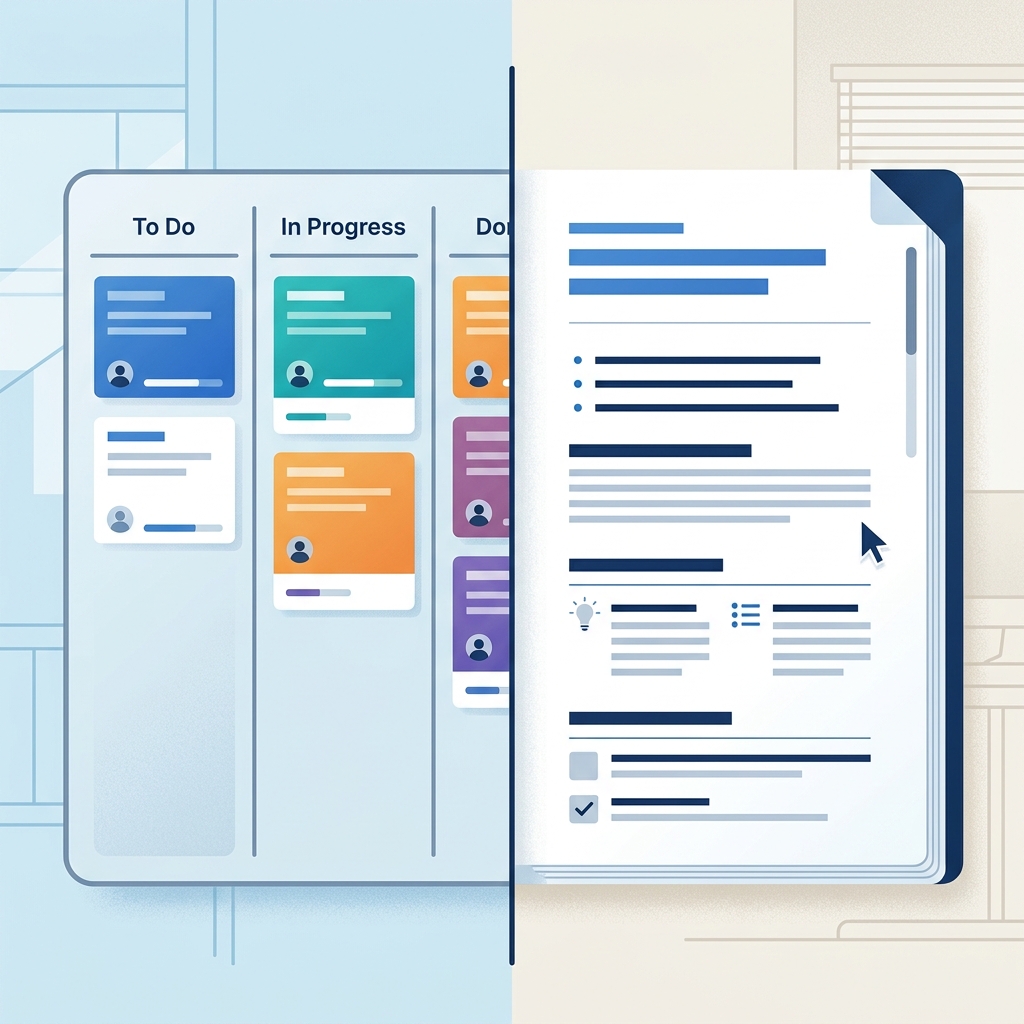
Searching for Taskade alternatives for solopreneurs? Your best pick depends almost entirely on how you work — not on feature counts. Here is a plain-language summary based on official vendor documentation so you can skip straight to the section that matches your situation.
| Tool | Best suits | Does not suit |
|---|---|---|
| Nuclino | Solo consultants who need a lightweight, EU-hosted wiki for client knowledge bases and internal documentation | Anyone requiring heavy AI-driven task automation or recurring workflow templates |
| Notion | Freelancers who want a single, flexible workspace covering notes, databases, projects and client portals | Users expecting a simple, out-of-the-box daily to-do list with zero configuration |
| Todoist | Solopreneurs whose priority is fast, friction-free task capture and deadline tracking across devices | Those who also need long-form document editing or embedded wikis in the same tool |
| ClickUp | Technical freelancers managing complex, multi-stage client projects with custom statuses, time tracking and automations | Anyone who wants a minimalist interface and a short learning curve |
EU compliance note: Processing client personal data requires a signed Data Processing Agreement (DPA). A compliant vendor publishes its DPA, lists sub-processors, and confirms storage locations. Each section below covers this explicitly.
All prices below are net rates in EUR (€) or GBP (£).
Why Solopreneurs Look Beyond Taskade

Taskade started as a clean, lightweight outliner. Recently, the platform shifted focus toward AI agent teams. That suits larger teams well, but it adds clutter if you only need to track projects and draft proposals. Because the interface promotes an AI workforce, you end up navigating tools designed for larger companies.
The Free Tier Falls Short
Taskade caps free users at limited monthly AI credits and workspace counts. You reach these limits quickly. Task generation, summaries, and chat all draw from the same credit pool. So, hitting the ceiling mid-project forces you to upgrade or lose those key AI features.
Built for Teams, Not Client Pipelines
Taskade's core UX centres on real-time collaborative chat, shared agent workflows and team-wide publishing. These are genuinely useful features — for teams. A freelancer has different priorities. You need clean client data, distinct project deliverables, and quick access to details. Taskade's team-chat-first layout adds cognitive overhead rather than removing it.
Compliance is another factor. Finding Taskade's DPA terms requires extra research, whereas several alternatives handle data agreements transparently.
For these reasons, solo operators look for alternatives that fit a one-person business model.
The Minimum Seat Trap & EU Billing Realities
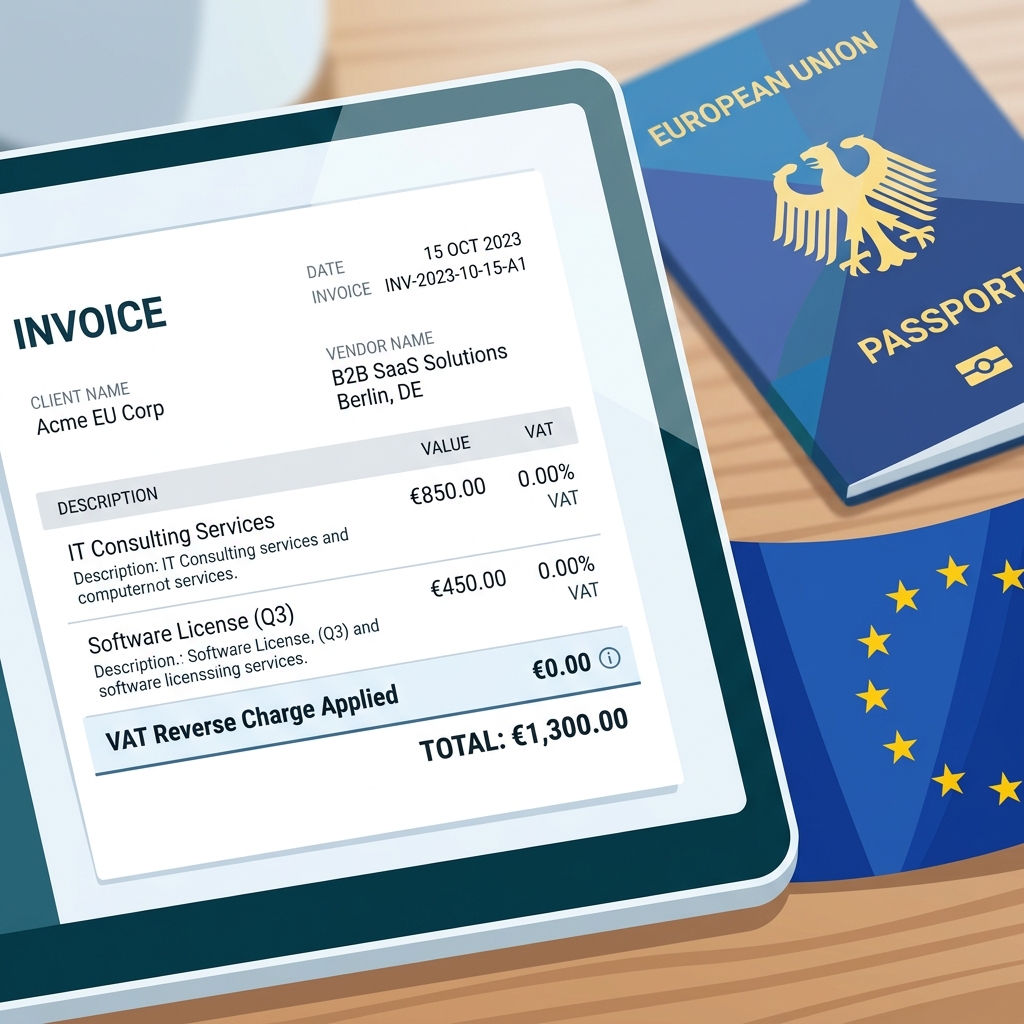
However, the advertised price rarely tells the full story. Three separate billing traps — seat minimums, VAT complexity, and USD-only invoicing — can silently inflate your annual software spend by 30% or more before you notice.
The Seat Minimum Penalty
Several mainstream productivity platforms structurally exclude solo users from their paid tiers. Some platforms enforce multi-seat commitments on their paid tiers. You end up paying for two or three empty seats every month. That mandatory floor creates unnecessary expense for a solo operation.
A tool marketed at a low per-user rate can cost double or triple once seat minimums apply. Check seat floors carefully before choosing a plan.
EU VAT & the Reverse-Charge Mechanism
If you have a registered VAT number, B2B SaaS purchases qualify for the EU reverse-charge mechanism. The vendor charges net prices, and you report the VAT locally. The catch: this only works if the vendor's checkout validates your number against the VIES database in real time. Many US-based SaaS tools skip this step, charging local VAT rates up to 25% to exempt business buyers. European buyers often face surprise markups when checkouts do not validate VAT numbers.
The Hidden Cost of USD-Only Billing
Tools that invoice exclusively in US dollars create a compounding cost problem for EUR and GBP buyers. Your bank or card provider applies a foreign-exchange conversion fee — typically 1.5–3.5% per transaction — on top of any mid-market rate spread. Over a 12-month subscription, that adds up. A tool nominally priced at $15/month costs closer to €15.50–€16.50/month once conversion fees and rate fluctuations are factored in, with no compliant EU tax invoice (full corporate address, VAT ID) generated for your accountant.
1. Notion: The Ultimate All-in-One Workspace

TL;DR: Notion suits solopreneurs who need a flexible, database-driven workspace to manage clients, projects, and knowledge in one place. It is less suited to users who want Taskade's real-time outliner-first, AI-native workflow out of the box.
Notion vs Taskade: Structure Is the Core Trade-Off
Compared to Taskade, Notion sits at the opposite end of the structural spectrum. Taskade is built around a collapsible outliner: every project starts as a list, and AI assistance is woven into that hierarchy from the start. Notion, by contrast, is a blank canvas of relational databases, linked views, and modular blocks. This flexibility lets you build a CRM, content calendar, and invoice tracker in one space. However, it demands deliberate setup time.
For example, a freelance translator could use Notion to link a client database to a project tracker and a payment log, with filtered views per client. In Taskade, the equivalent would be a series of nested task lists with AI-generated subtasks — faster to start, but structurally shallower.
The Good vs The Bad
| The Good | The Bad |
|---|---|
| Robust free tier for single users (unlimited pages, limited file uploads) | Notion AI costs an additional $10/month per user on top of any paid plan, per Notion's public pricing page |
| GDPR-compliant Data Processing Agreement (DPA) publicly available, as confirmed on Notion's security page | Data hosting defaults to US-based infrastructure; EU data residency is not offered as a self-serve option |
| Interface localised into French and German (not machine-translated) | Pricing is published in USD only; EU buyers pay via currency conversion, which introduces FX variability and potential bank surcharges |
| Sub-processors listed publicly, supporting GDPR Article 28 compliance review | No EU data centre option means some compliance officers at German or French firms (subject to BfDI or CNIL guidance) may require additional legal review |
Pricing Reality for EU Buyers
According to Notion's pricing page, the Plus plan costs $10 per user monthly when billed annually. European buyers should budget for bank conversion fees.
Notion offers a standard DPA. Even so, the lack of EU-based data hosting remains a drawback for European privacy.
2. Todoist: Streamlined Task Management
If your priority is capturing tasks fast, Todoist is a reliable alternative. It strips away document layers and focuses entirely on structured task management with natural language input (type "every Monday at 9am" and it schedules itself). That simplicity is the point.
Who It Suits — and Who It Doesn't
Todoist fits the solopreneur who runs their day from a single task list and needs reliable cross-device sync, not an AI writing co-pilot. It does not suit anyone who needs long-form notes, document collaboration, or an integrated wiki alongside their tasks.
Pricing in EUR and GBP
Per Todoist's official pricing page, the Pro plan is billed at €4/month (annual) or €5/month (monthly) for a single user. That plan raises the active-project limit to 300 projects, up from 5 on the free tier. The Free plan supports up to 5 active projects and 5 collaborators per project — workable for a true solopreneur with minimal project complexity. Todoist validates EU VAT at checkout. Therefore, registered businesses receive net billing without foreign VAT added.
The Good vs The Bad
| The Good | The Bad |
|---|---|
| True single-user Pro tier billed in EUR and GBP | No native long-form note-taking or document editor |
| UI fully localised in German, French, Italian and Spanish (not machine-translated) | No built-in AI text generation or content drafting |
| GDPR-compliant DPA available; data is hosted in the US (no EU data residency) per Doist's privacy documentation | Project templates are task-only — no rich media or embedded docs |
| Natural language scheduling reduces friction for solo operators | 300-project Pro cap is generous but still a hard ceiling |
GDPR Position
Doist provides a DPA for Pro and Business subscribers, including sub-processor disclosures.
Bottom line: Among taskade alternatives for solopreneurs who want speed over sophistication, Todoist's clean pricing, genuine EU localisation and solid GDPR footing make it a dependable shortlist entry — provided you keep notes elsewhere.
3. Nuclino: The European Lightweight Alternative
TL;DR: Nuclino suits EU solopreneurs who want a clean, fast workspace for notes, docs and lightweight project tracking — with zero GDPR headaches. It does not suit anyone who needs AI agent automation or advanced workflow logic comparable to Taskade.
Nuclino is built in Munich, setting it apart from US-based rivals. This German origin brings clear benefits: EU hosting, a straightforward DPA, and native EUR billing without currency fees.
The interface is deliberately minimal. Pages load near-instantly with zero clutter. You can master the interface in minutes. For a solopreneur managing client notes, internal wikis or simple project lists, that frictionlessness has real daily value.
Plan Limits (per Nuclino's pricing page)
| Plan | Price | Item Limit | Storage |
|---|---|---|---|
| Free | €0 | 50 items total | 2 GB |
| Starter | €6/user/month | Unlimited | 10 GB |
| Business | €12/user/month | Unlimited | Unlimited |
The 50-item free cap feels restrictive, but the Starter plan at €6 per month is affordable. Because Nuclino bills in EUR, you avoid currency markups.
The Good vs The Bad
- ✅ EU-hosted infrastructure with a clear, accessible GDPR Article 28 DPA — critical for German, French and Austrian solopreneurs answerable to strict national data protection authorities.
- ✅ Native EUR pricing with no FX markup or USD conversion risk.
- ✅ Extremely fast, distraction-free interface — genuinely one of the snappiest collaborative tools available.
- ❌ No AI agent automation. Nuclino's AI features cover writing assistance only; it offers nothing close to Taskade's multi-agent workflow automation.
- ❌ Limited view types. You get List, Board (Kanban) and Graph — no timeline/Gantt, no calendar view, no embedded databases.
- ❌ Free tier is tight at 50 items, making it more of a trial than a sustainable free plan.
If data sovereignty and billing simplicity are your top priorities and your workflow is documentation-heavy rather than automation-heavy, Nuclino is one of the most credible EU-native choices on this list.
4. Mem.ai: AI-First Note Taking
TL;DR: Mem.ai suits solopreneurs who live inside a single, unstructured knowledge base and want AI to do the filing for them. It is a poor fit for anyone needing task pipelines, team collaboration, or billing in EUR/GBP without currency-conversion friction.
Mem.ai occupies a distinctive niche by replacing folders and tags with automated AI organisation. You write freely while the tool links relevant notes automatically. For freelancers handling scattered research, that setup saves significant time.
How the Self-Organising Workspace Works
Mem applies automatic tagging and semantic search across every note you create. When you open a new note about a client, Mem surfaces related entries from weeks prior — no folder navigation required. Mem's AI can also generate summaries and draft content from your notes. This makes it a capable second-brain tool for solo operators.
The Good vs The Bad
| The Good | The Bad |
|---|---|
| Excellent AI recall and automatic tagging — minimal manual upkeep | Billing is USD-only; per the intra-EU VAT guidance, European buyers face FX conversion fees and non-compliant invoices |
| Strong for unstructured brain dumps and fast capture | No Gantt charts, kanban pipelines or deadline tracking — not a project management tool |
| Semantic search genuinely reduces time spent hunting old notes | EU data-centre availability is not confirmed on lower-tier plans; Mem's public terms do not specify a Frankfurt or Dublin hosting option for standard subscribers |
GDPR & Privacy Reality Check
This is where European solopreneurs must pause. Per Mem's publicly available Privacy Policy, the company reserves the right to use content to improve its services, with opt-out available only on higher-tier plans. Mem does not provide an automated DPA for entry-level plans, which limits its suitability for client data.
Pricing Snapshot
The AI-powered tier costs around $14.99 per month billed annually. Without EUR billing or clear VAT-exempt checkout, your actual cost will be higher.
Bottom line: Mem.ai is a genuinely clever capture-and-recall tool, but its USD billing, absent EU hosting guarantees on standard plans, and lack of project management features make it a supplementary tool at best — not a Taskade replacement for most EU solopreneurs.
5. ClickUp: For Complex Freelance Projects
TL;DR: ClickUp suits independent consultants and freelancers juggling multi-phase client projects that require task dependencies, time tracking, and granular reporting. It is not the right pick if you want a lightweight, fast-to-learn tool for simple daily task management.
ClickUp is the most feature-dense option here. While Taskade focuses on notes and AI chat, ClickUp targets structured project delivery. It includes Gantt charts, dependencies, and built-in time tracking.
The free Forever plan is genuinely functional: unlimited tasks, unlimited members (useful if you occasionally loop in a subcontractor), and 100 MB storage. Paid plans start at $7 per member monthly on the Unlimited tier. ClickUp bills in USD, so you should account for foreign exchange fees.
The Good vs The Bad
| The Good | The Bad |
|---|---|
| Personal tier available — no forced team seat minimums | Steep learning curve; onboarding alone can consume several hours |
| EU data residency via AWS Frankfurt and AWS Ireland (confirmed on ClickUp's security page) | Interface becomes overwhelming for simple recurring tasks |
| Fully featured free tier — dependencies, time tracking and custom fields included | ClickUp AI is a paid add-on ($7/member/month extra), not bundled into base plans |
| UI localised into French, Spanish, and German per official release notes | GDPR DPA requires manual request; not self-serve for free-plan users |
GDPR & EU Compliance
ClickUp provides a DPA and supports EU data residency. You must choose European hosting during setup, as US hosting is the default.
Who Should Choose ClickUp Here?
If you manage multi-client retainers with deliverable dependencies, ClickUp's depth justifies its complexity. It tracks billable time seamlessly. However, if you only need simple lists and AI drafting, the learning curve is too steep.
GDPR Compliant Task Management for EU Freelancers
Most solo operators focus on features and price. However, data compliance carries real practical weight for client work.
Why a DPA Is Not Optional
Storing client names, emails, or project details inside software makes you a data controller. You need a signed Data Processing Agreement (DPA) before storing sensitive data. Standard terms of service do not qualify. A proper DPA must name sub-processors and confirm the vendor acts solely on your instructions.
Regulators enforce data protection rules across companies of all sizes. Operating without an agreement leaves your business exposed.
Zero Model Training: Verify Before You Sign
AI-powered task tools present a specific risk: vendors may use workspace content — your client briefs, meeting notes, task descriptions — to improve their foundational AI models. Ensure the vendor explicitly excludes your workspace data from AI model training. Vague clauses about improving services usually mean your data could train public models.
DPA, SCC and EU Hosting: What the Vendors Actually State
| Tool | DPA Available | Counter-signed SCCs | EU Data Centre Option | Zero Model Training Stated |
|---|---|---|---|---|
| Notion | Yes (self-serve) | Yes, per Notion's legal page | No dedicated EU region (as of 2024) | Business/Enterprise plans only |
| ClickUp | Yes | Yes, per ClickUp's privacy documentation | EU hosting available on Enterprise | Stated for paid plans |
| Asana | Yes | Yes, per Asana's Data Processing Addendum | EU residency option (Enterprise) | Yes, per vendor DPA |
| Todoist | Yes (Doist DPA) | SCCs included in DPA | AWS EU regions stated | Not explicitly confirmed |
| Taskade | Available on request | Not prominently published | Not confirmed as EU-primary | Not explicitly stated |
Practical note: Always download and read the vendor's current DPA directly from their legal or trust page — not from third-party summaries. Sub-processor lists change, and you are responsible for reviewing updates under Article 28(3)(d).
ClickUp publishes comprehensive compliance documentation, while Todoist covers the essentials at a lower price point. Notion and Taskade require closer scrutiny before handling sensitive client details.
Frequently Asked Questions
Which Taskade alternatives offer true single-user plans?
Several strong options impose no minimum seat requirement. Notion, Todoist, and ClickUp all offer individual plans with no seat minimums. You pay only for yourself. Always check seat floors, as tools requiring multi-seat commitments can double or triple your actual software costs.
Are AI productivity tools GDPR compliant?
A tool is GDPR compliant for your business when two conditions are met. First, the vendor provides a standard DPA covering data processing terms. Second, terms must prohibit using your data for public AI training. While Notion and ClickUp offer DPAs, verify whether their data storage is US-based or EU-based.
Can I pay for these tools via SEPA or local EU credit cards?
Tools that bill natively in EUR avoid foreign exchange markups. For example, EU-based tools like Nuclino support local cards and SEPA payments seamlessly. Tools priced exclusively in USD may trigger bank FX conversion fees of 1.5–3%, and their invoices may lack a compliant EU VAT ID field. As a practical example: if you hold a validated VIES VAT number, vendors supporting the EU reverse-charge mechanism will zero-rate the invoice, removing the VAT line entirely. Always verify at checkout that the invoice includes your VAT ID and the vendor's EU entity address.
Checklist: Migrating Your Solo Business
Switching tools is straightforward when done in order. Rushing can lead to lost files or imported clutter that slows down your work.
- Step 1 — Export your Taskade data first. Per Taskade's official export documentation, projects can be exported as Markdown or CSV from the workspace settings panel. Do this before cancelling your plan; access is revoked immediately on downgrade in some cases.
- Step 2 — Verify GDPR compliance and billing before upgrading. Locate the new tool's Data Processing Agreement (per GDPR Article 28) and confirm it covers your member state. Then enter your VIES-validated VAT number at checkout so the reverse-charge mechanism applies — avoiding a 15–25% surprise VAT surcharge, per EU VAT Directive Article 196.
- Step 3 — Map your core workflow before importing historical data. Sketch your two or three daily routines (client onboarding, task inbox, weekly review) in the new tool first. Importing old data into an unmapped structure creates clutter that slows adoption.
Complete all three steps in order and the migration typically fits inside a single afternoon.