

















Compare verified Lovable alternatives for 2026. Explore pricing, credit expiration rules, code ownership, and EU compliance across top AI app builders.
For app builders seeking better value, clearer code ownership, and more predictable pricing than Lovable, several strong alternatives exist in 2026. If you are a developer prioritizing full code control and fixed monthly costs, Cursor or GitHub Copilot offer direct Git integration and predictable subscription models. If you need a hosted prompt-to-app workflow with more transparency or a comprehensive visual builder for business apps, Bolt.new, Replit, Zite, or Bubble provide different levels of abstraction and control. Frontend teams focused on UI quality will find v0 by Vercel a compelling option for component generation.
Best Lovable Alternatives at a Glance
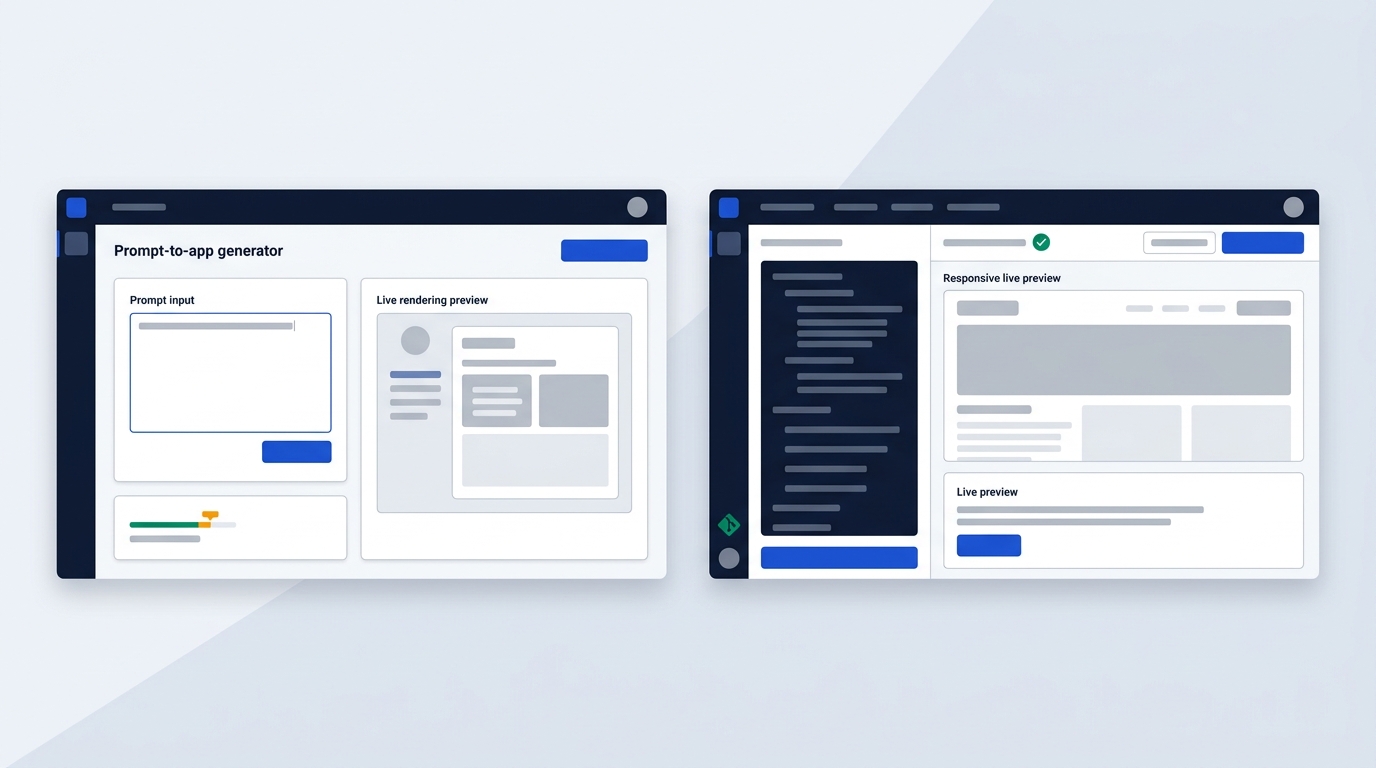
Lovable excels at a prompt-to-app workflow, letting you quickly turn ideas into running web applications using a shared workspace credit balance and a managed Supabase backend. It offers daily build grants to get started. However, many builders look for alternatives due to Lovable's rigid credit expiration rules, where monthly credits vanish after two months. Unpredictable debugging token consumption can also cause anxiety, and the process of exporting code often involves friction when taking over the full stack.
Here is a quick overview of how the top Lovable Alternatives stack up for your app building needs:
| Alternative | Best for | Starting Price (monthly) | Billing Model | Code Export Capability | Free Tier | Core Strength vs. Lovable |
|:------------------- |:--------------------------------------- |:----------------------- |:------------------- |:--------------------- |:-------- |:------------------------------------------------------- |
| Lovable | Rapid prototyping & greenfield apps | Free | Credit-based | Yes (GitHub sync) | Yes | Instant running preview from prompts |
| Zite | Production-ready business software | $25/month (100 credits) | Credit-based | No | Yes (50 credits) | Visual workflows, built-in database, unlimited users |
| v0 by Vercel | Design-forward React UIs | $20/month ($20 credit) | Credit-based | Yes | Yes ($5 credit) | Superior UI aesthetic, image-to-code, Vercel deployment |
| Cursor | Developers who want full code control | $20/month Pro | Fixed subscription | Yes (VS Code fork) | Yes | Full codebase awareness, multi-file refactoring |
Bolt.new Browser Based Full Stack Development
| Bolt.new | Browser-based full-stack dev | $25/month | Token-based | Yes (Git integration) | No | In-browser IDE feel, framework flexibility |
| Bubble | Complex web and mobile apps | $69/month (monthly) | Workload Units (WU) | No (rebuild required) | Yes | Native mobile apps, visual programming depth |
| Replit | Collaborative AI app generation | $20/month | Effort-based credits | Yes (Git integration) | Yes | Real-time multiplayer, built-in database/auth |
| Windsurf (Devin Desktop) | Agent-first desktop IDE workflows | $20/month | Fixed subscription | Yes (local IDE) | Yes | Unlimited SWE-1.7 completions, Fast Context engine |
| GitHub Copilot | AI assistance in your existing IDE | $10/month | Fixed subscription | Yes (IDE integration) | Yes | Unlimited completions, deep repository context |
Source: Lovable official pricing documentation, competitor review #1, #3, #4, checked October 2026.
Lovable is a hosted, AI-driven builder that creates websites and web apps from chat prompts. It provides a managed backend called Lovable Cloud, abstracting away database, authentication, storage, and edge functions. While it offers GitHub integration for code ownership, this sync works best for new projects. You cannot start a Lovable project from an existing GitHub repository. When you connect GitHub, Lovable syncs both ways, but only default branch changes flow back into the editor. This makes it ideal for solo prototyping and early-stage teams prioritizing speed over a rigorous full-repo workflow. However, if you outgrow the platform, exporting your code is just the first step; you still need to set up your own environments, CI/CD, and deployments.
Why Look for Lovable Alternatives?
Many users seek alternatives because Lovable's credit system can be restrictive. Monthly plan credits expire two months after being issued, and annual plan credits expire one month after your annual period ends. Daily build grants do not roll over. This means unused capacity is lost. Debugging AI-generated code can also consume tokens quickly, leading to unpredictable costs. While you own your code, the export process requires significant effort to transition to a self-managed setup, including handling environments, CI, and future refactors yourself.
How to Choose Across Real-World Workflows
Selecting the right app building tool depends heavily on your role, technical skill, and project goals. You need to consider who will use the tool and what level of control you require over the generated code and infrastructure.
* Non-technical operators and internal operations leads: You likely need a platform that abstracts away code entirely. Zite and Bubble are strong contenders here, offering visual logic, built-in databases, and drag-and-drop interfaces. Zite focuses on business software, while Bubble is more versatile for web and mobile apps.
* Full-stack developers: You want AI assistance that integrates with your existing workflow and grants full code ownership. Cursor, Windsurf (Devin Desktop), and GitHub Copilot are AI-native IDEs that make you faster at writing, refactoring, and debugging code within your own repository.
* Design engineers: Your priority is high-quality UI scaffolding and smooth integration with frontend frameworks. v0 by Vercel excels at generating clean React components and integrating with the Vercel ecosystem.
* Founders prototyping rapidly: If you need a quick prompt-to-app loop with more control than Lovable, Bolt.new and Replit offer hosted development environments with direct Git integration and framework flexibility.
Hosted Black-Box Builders vs. Repo-Native Workflows
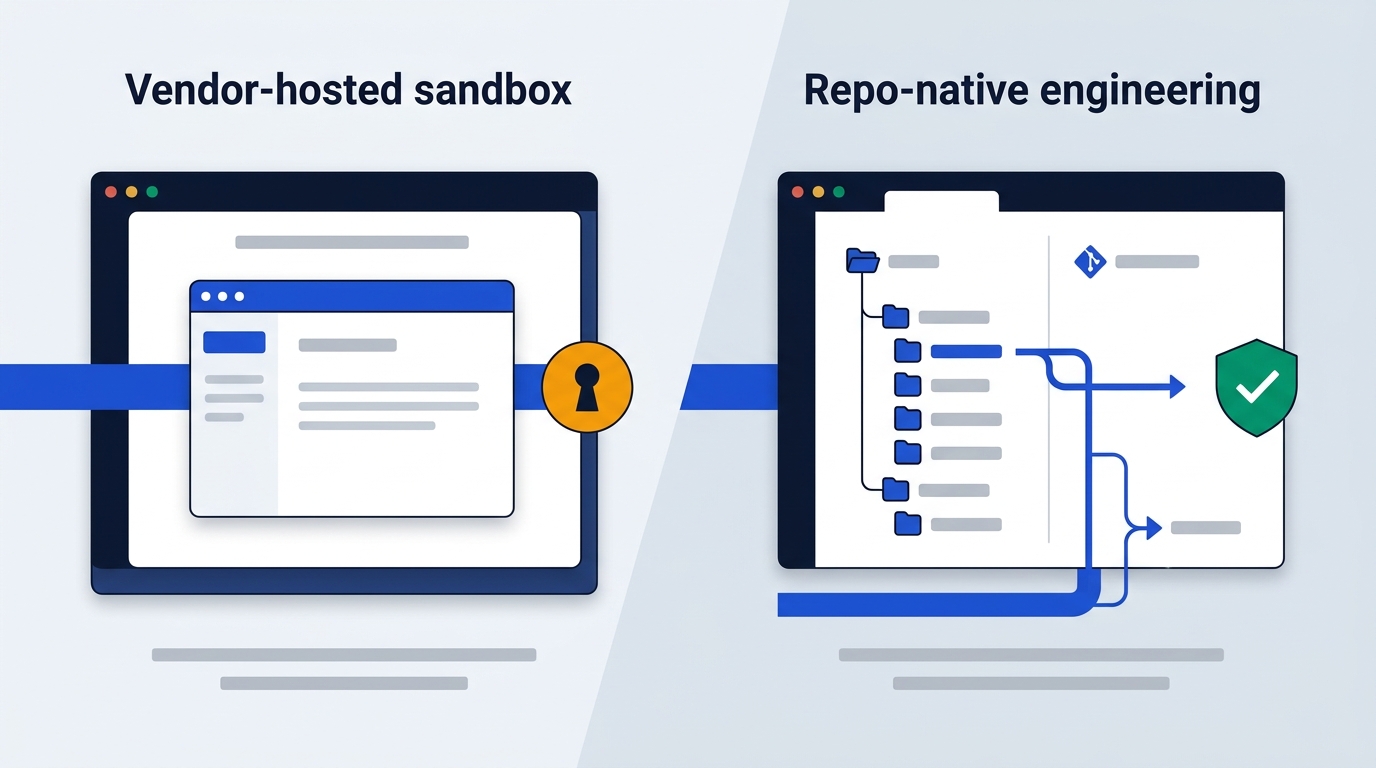
The fundamental trade-off is between instant previews with vendor-managed environments and full code ownership within your own Git repository. Hosted black-box builders like Lovable, Zite, and Bubble offer immediate gratification. You describe what you want, and the platform generates and hosts it. This speed comes at the cost of vendor lock-in; moving away usually means rebuilding rather than simply exporting code and continuing your work.
Repo-native workflows, offered by tools like Cursor, Windsurf (Devin Desktop), and GitHub Copilot, integrate directly into your existing development setup. You maintain full Git control, enabling standard pull requests, CI/CD pipelines, and complete ownership of your codebase from day one. This approach requires more technical expertise for deployment and infrastructure management, but it gives you maximum flexibility and long-term scalability.
Budget Predictability Analysis
Predictable costs are crucial for any business. You will find two main billing models among Lovable Alternatives:
* Fixed subscription models: Cursor at $20/month Pro and GitHub Copilot at $10/month offer unlimited usage for core features, making your monthly spend highly predictable. Windsurf (Devin Desktop) also offers a fixed $20/month plan for new users, including unlimited Cognition SWE-1.7 completions. These are ideal if you want to avoid fluctuating costs.
* Metered credit architectures: Lovable, Bolt.new, Replit, Zite, and v0 by Vercel use credit or token systems. Lovable's costs vary by task complexity (e.g., 0.50 credits for button styling, 1.70+ for a landing page). Replit uses effort-based pricing, where complex builds consume more credits. Bolt.new has token-based pricing, which can introduce anxiety during iterative debugging. Zite offers 100 credits for $25/month, with visual UI edits being free. v0 by Vercel provides $20 worth of credits for $20/month plus daily free credits. While these models can offer flexibility, they require careful monitoring to manage expenses, especially during intensive development or debugging.
Backend Architecture Constraints
Your choice also depends on how you want to manage your backend. Lovable Cloud provides a managed backend, abstracting away Supabase for database and authentication. This simplifies setup but limits your control over the underlying infrastructure.
* Managed backend abstractions: Lovable, Replit, and Bubble handle much of the backend for you. Replit includes built-in databases and authentication. Bubble has a real-time database and visual workflow designer. This is great for speed but can lead to platform lock-in.
* Visual databases: Zite offers a user-friendly built-in database with a spreadsheet-like interface, meaning you do not need to set up external services like Supabase.
* Bring-your-own-backend: AI code editors like Cursor, Windsurf (Devin Desktop), and GitHub Copilot do not provide built-in hosting or database provisioning. You are responsible for setting up and managing your own backend infrastructure. This offers maximum flexibility but demands more technical expertise.
Hosted Prompt to App Builders
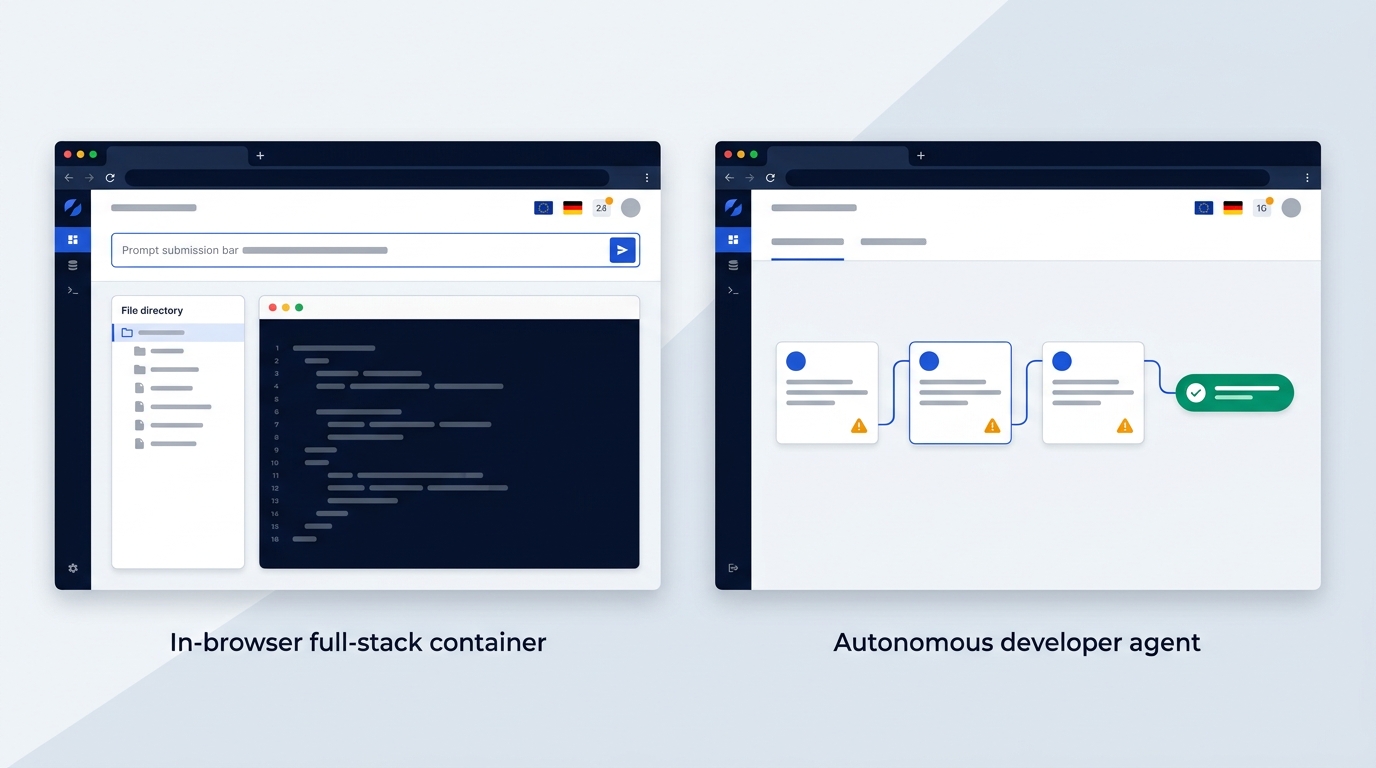
If you appreciate Lovable's prompt-to-app loop but need more control or a different execution environment, these hosted alternatives offer similar capabilities with distinct advantages.
Bolt.new: Browser-Based Full-Stack Engine
Bolt.new is a strong contender for those who want Lovable-style speed without needing a local terminal. It provides a browser-based full-stack development engine built on StackBlitz WebContainers. Starting at $25/month, Bolt.new offers an instant running preview directly in your browser and features direct Git integration. This makes it feel more like an in-browser IDE than a black-box visual builder, giving you more code visibility. It is considered one of the most exact 1:1 alternatives to Lovable, with slightly better Git integration for developers who are comfortable reading code.
A real downside of Bolt.new is its token consumption anxiety during multi-step debugging iterations. While it offers framework flexibility, the pricing model can make it hard to predict costs if you frequently iterate on features. It also lacks the visual drag-and-drop UI adjustment tools found in some no-code platforms, meaning you primarily interact through code and prompts.
You can learn more about Bolt.new by visiting Bolt.new pricing in Europe (October 2026): plans, free plan & deals.
Replit: Collaborative AI App Generation
Replit offers a complete hosted development environment, powered by Agent 4, that integrates building, running, and deploying within a single browser workspace. Starting at $20/month with a free Starter tier, Replit features built-in databases, authentication, and leverages Microsoft Azure infrastructure for enterprise buyers. Agent 4 can plan builds, write code, test it, and deploy it from a single prompt, allowing you to follow along. It also supports imports from Figma, Lovable, and Bolt.new.
Replit's real downsides include its browser-first environment, which requires workflow adaptation for developers accustomed to desktop IDEs. Its effort-based pricing means complex builds can rapidly consume credits, making cost forecasting a challenge if your projects involve extensive AI generation.
Replit covers more of the development job than many other tools, making it a good fit if you want an all-in-one online IDE experience. You can find more details on Replit pricing in Europe (October 2026): plans, free plan & deals.
Bolt.new and Replit vs. Lovable
When comparing Bolt.new and Replit against Lovable, consider sandbox execution, repo syncing, and prompt-to-production velocity:
* Sandbox execution: All three offer immediate running previews. Bolt.new and Replit provide more transparency into the code and environment, feeling more like a cloud IDE. Lovable's sandbox is more abstracted.
* Repo syncing: Lovable offers two-way sync after a project is created, but it's default-branch-first and cannot start from an existing repo. Bolt.new offers direct Git integration, and Replit also integrates with Git. This gives Bolt.new and Replit an edge for teams already using Git workflows.
* Prompt-to-production velocity: Lovable is fast for greenfield prototypes. Replit, with Agent 4, aims for production-scale output from prompts, including full web apps, dashboards, and data pipelines. Bolt.new offers similar speed with more code visibility.
Visual No-Code Platforms for Business Apps

For those who prioritize visual control, built-in databases, and zero-code workflows, these platforms offer compelling alternatives to Lovable, especially for business-focused applications.
Zite: AI-Powered Business Software Builder
Zite is an AI-powered no-code platform designed specifically for building business software like dashboards, intake forms, CRMs, and client portals from plain English descriptions. Priced at $25/month for 100 credits (with 50 free credits on sign-up), Zite stands out with its flowchart-style visual logic editing and a built-in spreadsheet database.
Zite's core advantages vs Lovable:
* Unlimited workspace users: All Zite plans, including the free plan, support unlimited users, which helps control costs as your team grows.
* Zero credit cost for visual UI styling edits: Unlike Lovable, where even minor style changes consume credits, Zite allows you to restyle the UI directly on the page without using any credits.
* Built-in schema without external Supabase setup: Zite comes with a user-friendly built-in database that auto-generates your schema, which you can edit visually and manage like a spreadsheet. Lovable relies on an external service like Supabase for its database and authentication.
* SOC 2 Type II compliance: Zite is SOC 2 Type II compliant, offering a higher level of security assurance for enterprise use cases.
* Visual workflows and debugging: Logic appears as visual workflows, allowing you to inspect past runs and debug changes without touching code.
A downside is that Zite is not designed for consumer-facing mobile apps or SaaS MVPs, and it hosts your apps without offering code export. This means you do not have to manage infrastructure, but it also implies a degree of vendor lock-in if you decide to move platforms.
Bubble: Mature Visual Programming Platform
Bubble is a well-established visual programming platform that allows you to build complex web and mobile applications without code. Starting at $59/month when billed annually ($69/month monthly), Bubble offers a unified web and native iOS/Android mobile deployment via React Native from a single project. Its AI App Generator creates full web apps from natural language prompts, and a vast plugin marketplace extends its capabilities.
Bubble's downsides and Lovable comparison:
* Steep workload-unit (WU) cost forecasting: Bubble's usage is metered in workload units, which bundle server resources. Forecasting these costs accurately can take practice, making budget predictability challenging for new users.
* Vendor lock-in: Moving off Bubble requires a full rebuild rather than a simple code export. This is a significant consideration if you prioritize complete code ownership.
* Paid entry threshold: While Bubble offers a free plan for building, launching a live app requires a paid plan, and the entry price is higher than many other tools on this list.
* Hosting location: Choice of hosting location is reserved for the Enterprise tier, which might be a concern for EU data residency.
Bubble remains a strong pure no-code platform, especially for founders who want to build web and native mobile apps without touching code.
AI Code Editors for Complete Ownership
For technical founders and developers, the goal is often complete code ownership and smooth integration with existing Git-managed codebases. AI code editors offer powerful assistance directly within your development environment, moving beyond the sandbox approach of Lovable.
Cursor: AI-Native VS Code Fork
Cursor is an AI-native code editor that forks VS Code, providing a familiar interface with powerful AI capabilities. Available at $20/month for the Pro plan (with a free Hobby plan), Cursor delivers full codebase awareness. It uses background agents and enables surgical multi-file diff refactoring. It does not build apps from prompts like Lovable; instead, it aims to make you a faster developer by understanding your entire project, including dependencies and patterns, for intelligent refactoring and code generation.
Cursor's multi-file editing capability is a key differentiator, allowing you to review and approve changes across multiple files before they are applied. Background agents can handle tasks in parallel, improving your workflow efficiency.
Cursor's advantages vs Lovable:
* Full codebase awareness: Cursor understands your entire project structure, dependencies, and patterns, offering context-aware assistance. Lovable works more prompt-by-prompt.
* Complete code ownership: You work directly in your own environment with full control over your code. You can export your code anytime, use any framework, and deploy anywhere.
* Multi-file refactoring with diffs: Cursor shows you clear diff views of proposed changes across multiple files, allowing for precise approval or rejection.
A downside is that Cursor requires coding knowledge, making it a steep step for non-technical Lovable users. While it helps generate and refactor code, it does not provide built-in hosting, database provisioning, or one-click deployments; these remain your responsibility. Some users also report paying for AI mistakes during debugging, as heavy use can spill into on-demand charges beyond the subscription.
You can explore Cursor further at Cursor pricing in Europe (October 2026): plans, free plan & deals.
Windsurf (Devin Desktop) Analysis
Windsurf, now known as Devin Desktop after its acquisition by Cognition in 2025, is an agent-first IDE. New users can get started at $20/month, with a free tier that includes unlimited use of Cognition's SWE-1.7 coding model and a Fast Context engine for rapid file retrieval. The IDE features a command center that coordinates local and cloud agents. It offers Supercomplete for predicting next edits and aims to provide polished agent workflows.
While it retains its strength as a capable agent-first IDE, its former budget positioning has changed, with its Pro plan now matching Cursor's price. It is still a developer IDE and does not offer app hosting for non-coders.
GitHub Copilot Breakdown
GitHub Copilot is a developer assistant that integrates with popular IDEs like VS Code, JetBrains IDEs, Neovim, and Visual Studio. Starting at $10/month, it offers unlimited code completions, deep repository context, pull request summaries, and CLI agents. Its strength comes from being built by GitHub, allowing it to leverage your issues, pull requests, and code history for highly relevant suggestions.
Copilot has evolved from just autocomplete to a full agent platform, including a cloud coding agent and AI code review. It fits directly into your existing developer workflow, providing AI assistance without forcing you into a new environment.
Like other AI editors, GitHub Copilot does not provide built-in hosting, database provisioning, or one-click domains. Deployment and server operations remain your responsibility.
Graduating from Lovable to AI Code Editors
Technical founders should consider graduating from Lovable's prompt sandboxes to Git-managed codebases in professional AI IDEs when their prototype needs to scale, integrate into a larger team workflow, or demand specific infrastructure. Lovable is excellent for initial velocity, but for predictable iteration, branches, reviews, and CI/CD, a repo-first workflow with tools like Cursor or GitHub Copilot becomes essential. These tools allow every change to land as a normal pull request from day one, fitting into established engineering practices.
Specialized Frontend Generators for React Teams
For teams primarily focused on crafting high-quality user interfaces, specialized frontend generators can significantly accelerate development, offering a different approach compared to Lovable's full-stack app generation.
v0 by Vercel Evaluation
v0 by Vercel is a generative frontend assistant that focuses on creating accessible shadcn/ui components from text prompts or image uploads. Starting at $20/month (which includes a $20 credit balance plus $2 daily login credits, with a $5/month free tier), v0 excels at producing aesthetically pleasing and production-ready React UIs.
v0's strengths over Lovable:
* Superior UI aesthetic quality: v0 outputs clean, production-grade React code with shadcn/ui components, which are known for their accessibility and modern design. Lovable's generated code often requires cleanup before it is production-ready.
* Accurate image-to-code and Figma screenshot scaffolding: You can upload a Figma design or screenshot, and v0 generates working React code that closely matches the visual input.
* Smooth one-click Vercel edge hosting deployments: If you are already within the Vercel ecosystem, v0 integrates perfectly for easy deployment with automatic CI/CD, preview URLs, and edge hosting.
v0 Limitations
The primary limitation of v0 is its strict focus on frontend presentation and component scaffolding. It does not handle database wiring, custom backend logic, or authentication; these aspects must be managed by separate services. It is designed to provide the raw materials for your UI, not a complete application. While it offers a free tier, its credit system for paid plans means you need to monitor usage.
You can learn more about v0 by Vercel at v0 by Vercel pricing (October 2026): plans, free plan & deals.
Optimal Hybrid Workflow
An effective strategy can be to use v0 to generate clean, accessible React components and then integrate them into a full-stack environment like Lovable, Bolt.new, or Cursor. This hybrid workflow allows you to leverage v0's superior UI generation capabilities for the frontend, while using other tools for backend logic, data management, and deployment. This approach combines the best of both worlds: high-quality UI design with full-stack functionality and control.
Credit Expiration and Workspace Pricing Compared
Understanding the intricacies of credit systems and workspace pricing is vital for predicting your total cost of ownership. Lovable's credit model, in particular, has specific rules that can impact your budget.
Lovable Credit Expiration and Consumption
Lovable's official pricing documentation outlines critical credit expiration rules:
* Monthly plan credits: Unused credits expire two (2) months after they are issued.
* Annual plan credits: Unused credits expire one (1) month after your annual period ends.
* Top-up credits: These last twelve (12) months from purchase.
* Daily grants: Included daily build credits (5 per day) expire at the end of each day and do not roll over.
If you cancel your plan, you can use remaining credits until the end of the current billing period. They reactivate if you re-subscribe before their 2-month expiry limit. Credits are not refundable.
Credit consumption varies by mode and task complexity:
* Plan Mode: Each message costs 1 credit.
* Default Mode: Credits vary based on task complexity. For example, updating button styles costs 0.50 credits, adding authentication costs 1.20 credits, and building a landing page with images costs 1.70 credits. You can see the cost of each message in your history.
Lovable Shared Workspace Pooling
Lovable plans belong to a workspace, and all invited team members share its credits. Workspaces support unlimited members on all plans, with pricing based on included credits, not seats. Workspace owners and admins can set default monthly credit limits and per-member overrides to manage consumption. This system works the same for companies, classrooms, and communities.
Cross-Vendor Comparison
Comparing Lovable's credit and workspace model to alternatives reveals distinct approaches:
* Zite: Offers unlimited workspace users on all plans, including the free tier. Crucially, visual UI styling edits in Zite do not consume credits, which can lead to significant savings compared to Lovable's metered styling changes.
* Cursor: Uses a per-seat pricing model, with the Pro plan costing $20/month per user. This is a fixed subscription, offering predictable costs for teams.
* Bubble: Employs a workload-unit (WU) resource metering system. While you can build for free indefinitely, launching a live app requires a paid plan, and forecasting WU costs can be complex.
* Replit: Uses effort-based pricing, where more complex tasks consume more credits. The Starter plan is free, with paid plans starting at $20/month.
* v0 by Vercel: Offers a $20/month plan with a $20 credit balance plus $2 of free daily credits on login, similar to Lovable's credit system but focused on frontend generation.
Total Cost of Ownership (TCO) Calculation for a 3-Person Team
For a 3-person team over 6 months, Lovable's TCO depends heavily on usage and credit expiration. If a team consistently uses most of its monthly credits, the cost is predictable based on the plan. However, if credits expire unused, the effective cost per used credit rises.
Consider a Lovable Pro plan (hypothetically, 1000 credits/month). This adds up.
This fixed cost provides high predictability.
For a visually-driven team using Zite, with unlimited users and free visual edits, the $25/month for 100 credits could be more cost-effective if development heavily relies on UI adjustments that are not credit-metered.
European Data Compliance and VAT Guide
For businesses operating in Europe, data protection, compliance, and taxation are critical considerations when choosing an AI or SaaS tool. This section evaluates how Lovable Alternatives address these concerns.
Data Protection and GDPR Compliance
When selecting an app builder, you need to evaluate its commitment to GDPR compliance, especially regarding Data Processing Agreements (DPA) and Standard Contractual Clauses (SCC). A DPA, mandated by GDPR Article 28, ensures the vendor processes your data according to GDPR standards. SCCs are crucial for legal data transfers outside the EU/UK.
Many cloud builders, including those relying on US-hosted serverless backends, often comply with the EU-US Data Privacy Framework and offer DPAs with SCCs. You should confirm if a vendor explicitly commits to not training their AI models on your private code, which is a significant privacy concern for businesses. Zite, for example, is SOC 2 Type II compliant, indicating strong security controls. Cursor also highlights SOC 2 certification and privacy options for team concerns. Replit mentions SOC 2 Type 2 infrastructure for enterprise buyers.
Data Residency Realities
Data residency refers to where your data is physically stored. Many cloud builders, including those that abstract services like Supabase, often rely on US-hosted AWS regions. This means your data might reside outside the EU. For some businesses, this is acceptable with proper DPAs and SCCs in place. However, platforms offering dedicated EU hosting or self-hosting options provide stronger data residency assurances.
* US-hosted serverless backends: Lovable's managed Supabase backend likely uses AWS US regions.
* Dedicated EU hosting: Few AI app builders offer dedicated EU hosting as a standard feature outside of enterprise plans.
* Self-hosting: AI code editors like Cursor, Windsurf (Devin Desktop), and GitHub Copilot allow you to work on your local codebase, giving you full control over your data's location if you self-host your applications.
Enterprise Security Standards
Enterprise-grade security standards, such as SOC 2 Type II certification, are crucial for larger organizations. This certification verifies that a service organization securely manages your data to protect the interests of your organization and the privacy of its clients.
* SOC 2 Type II certification: Zite, Replit (for enterprise), and Cursor all highlight SOC 2 certification, offering a higher level of trust and compliance for businesses. Early-stage hosted sandbox builders might not yet have these certifications.
B2B VAT Invoicing Across Europe
For VAT-registered businesses in the EU (excluding the UK), the VAT reverse charge mechanism applies to cross-border B2B digital services. Under Directive 2006/112/EC, if you provide a valid VIES VAT number, the vendor should issue an invoice without VAT, and you, as the buyer, are responsible for accounting for both the input and output VAT in your own country. This simplifies invoicing across member states.
UK VAT Distinction
The UK is no longer part of the EU. Therefore, for UK VAT-registered businesses, the EU VAT reverse charge mechanism does not apply. Instead, UK buyers must apply the domestic reverse charge under HMRC VAT Notice 741A for certain services. It is important to keep UK tax rules strictly separate from EU cross-border mechanisms. Always ensure the vendor provides correct invoicing based on your country and VAT registration status.
Frequently Asked Questions
Here are some common questions about Lovable and its alternatives to help you make an informed decision.
Do Lovable credits expire if I cancel my subscription?
If you cancel your plan, you can continue using your remaining credits until the end of your current billing period. After that, your plan reverts to Free. However, if your workspace has unused paid credits, they will reactivate if you re-subscribe to any plan before their 2-month expiry limit.
Can I export clean source code from Lovable to continue in Cursor or VS Code?
Yes, Lovable allows you to sync code via GitHub. This means you can get your source code out. However, taking over a project exported from Lovable requires you to set up your own CI/CD pipelines, environments, and manage all dependencies. It is not a simple "one-click and run anywhere" process.
Does Lovable offer student discounts for European universities?
Yes, Lovable offers a student discount. Students with a valid university email address can claim their discount via lovable.dev/students. Make sure you are logged in with your university email address.
Which Lovable alternative is best for non-technical founders building internal tools?
For non-technical founders building internal tools, Zite is an excellent choice due to its spreadsheet-like database, visual flowchart logic, and unlimited user support. Bubble is also a strong option for scalable public MVPs and internal tools, offering extensive visual programming capabilities.
Is Bolt.new cheaper than Lovable for ongoing web application maintenance?
Both Bolt.new and Lovable use metered token/credit systems, so ongoing costs depend heavily on your usage and iteration frequency. While Bolt.new offers predictable browser execution, fixed monthly cost alternatives like Cursor or GitHub Copilot might be cheaper for code maintenance if you are a developer, as their pricing is subscription-based rather than usage-based.
Sources and how this was compiled
Compiled by the SaaSEuro team from the vendors' official documentation; we have not hands-on tested these products. Facts last checked in November 2026.
Which Alternative Should You Pick Today?
Choosing the right Lovable alternative comes down to your technical skill, budget predictability needs, and how much control you want over your code.
Pick Cursor if you are a developer who demands complete codebase awareness, Git control, and a fixed $20/month pricing without worrying about credit burn. Choose Bolt.new or Replit if you want the prompt-to-app loop with stronger full-stack control and transparent cloud execution. Opt for Zite or Bubble if you are a non-technical founder who prioritizes visual logic, internal software, and avoiding code management entirely. Finally, if your focus is on generating high-quality React UIs, v0 by Vercel is your best bet.
Your next step should be to explore the free tiers or trials offered by these alternatives to benchmark their prompt fidelity and inspect their GitHub repo export quality before committing your team's funds.