













Evaluate the top Intercom alternatives for 2026. Specifically, compare Fin AI resolution fees, shared inboxes, GDPR compliance, and transparent pricing.
Intercom fees scale rapidly because every automated answer incurs a $0.99 charge alongside per-seat upgrades. If your team wants transparent billing without per-resolution fees, Crisp and Front provide practical alternatives. Meanwhile, for high-volume ticketing or EU data sovereignty, Zendesk and Positive User provide predictable budgets.Which Intercom alternative should you pick?
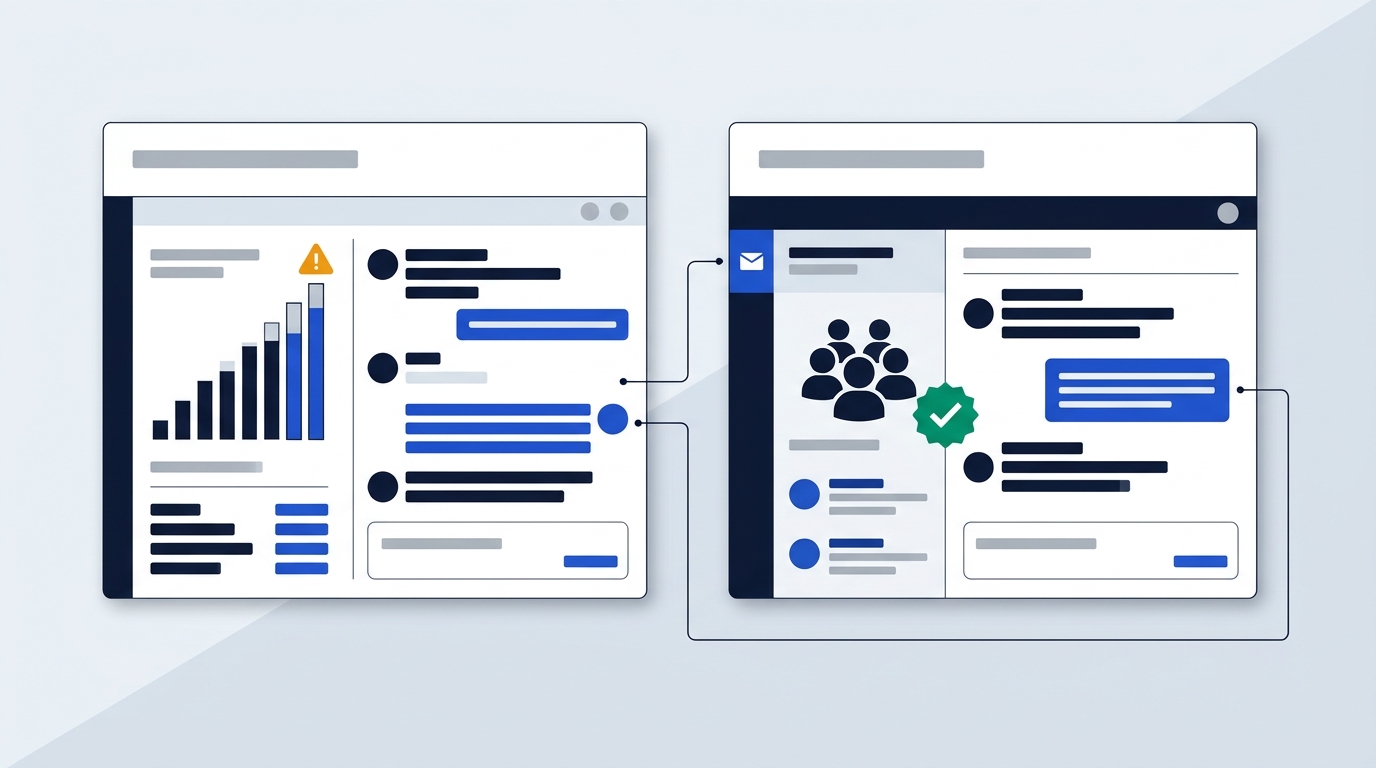
How to choose your next support platform
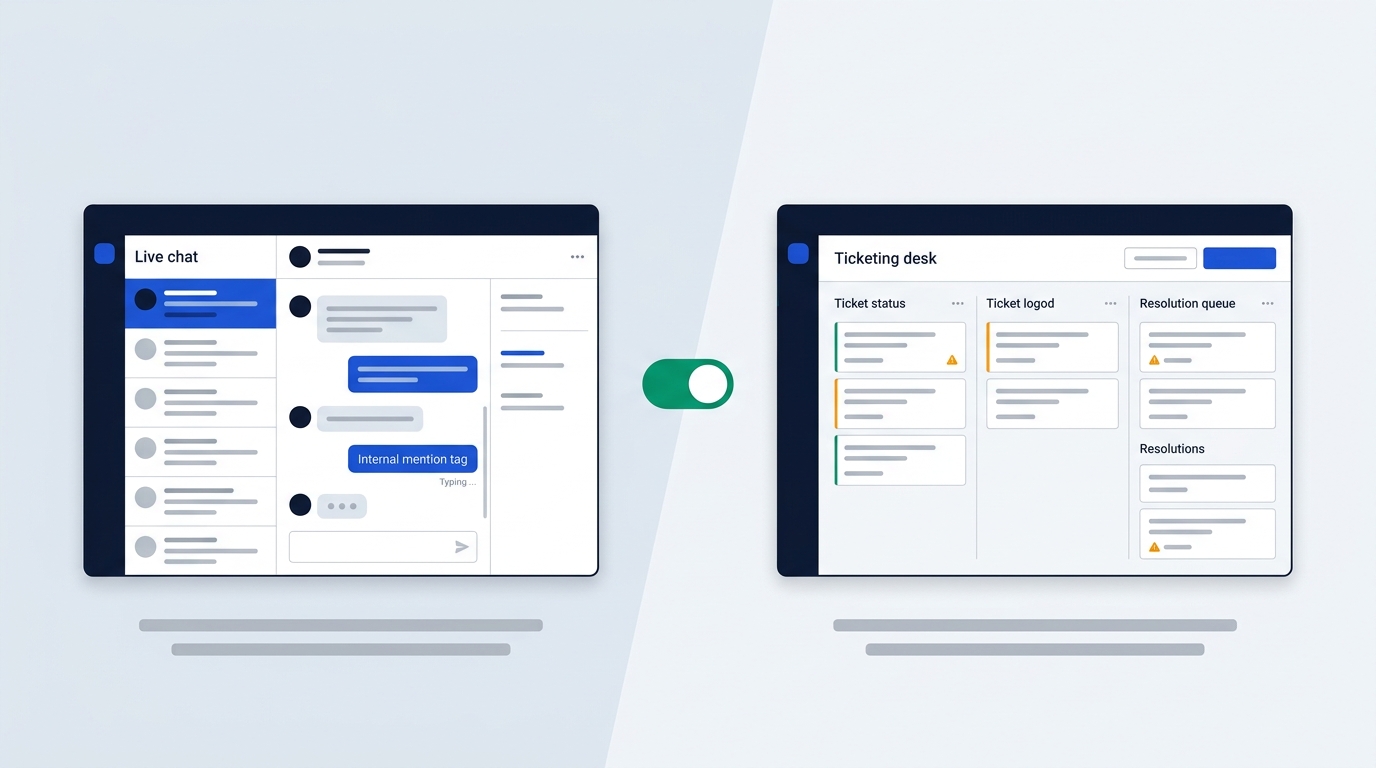
Inbox architecture vs service desks
Your inbox architecture, meaning how messages arrive and get routed, determines whether you need a shared inbox or a ticketing desk. Conversational inboxes like Front and Crisp display entire customer threads in real time, making them ideal for high-touch B2B relationships. In contrast, ticket-driven service desks like Zendesk and Freshdesk break interactions into distinct tickets to track complex queues. Engagement suites like Positive User combine live chat support with marketing automation and CRM tracking.AI cost forecasting models
Support platforms handle artificial intelligence pricing through two distinct models. Usage-based or meter-based pricing charges for every AI resolution, meaning each query closed without an agent costs money. If your AI deflection rate (the share of chats handled without humans) rises, your software bill increases. Conversely, bundled AI models like Crisp's Hugo AI or Zendesk Suite offer predictable spend because features are included in base fees.Reducing team collaboration overhead
Growing B2B support teams spend significant time coordinating across internal departments before answering customers. For instance, support reps frequently need help from engineering or billing teams to resolve technical issues. Choosing software with native internal @mentions, shared conversation drafts, and explicit assignment rules prevents staff from getting lost in isolated chat threads.Evaluating migration feasibility
Moving away from Intercom requires exporting historical customer data and knowledge base records. Most platforms import contacts and transcripts via CSV or API. But because custom bot workflows and message triggers cannot export automatically, you must rebuild those automation rules manually.The hidden costs behind Intercom and Fin
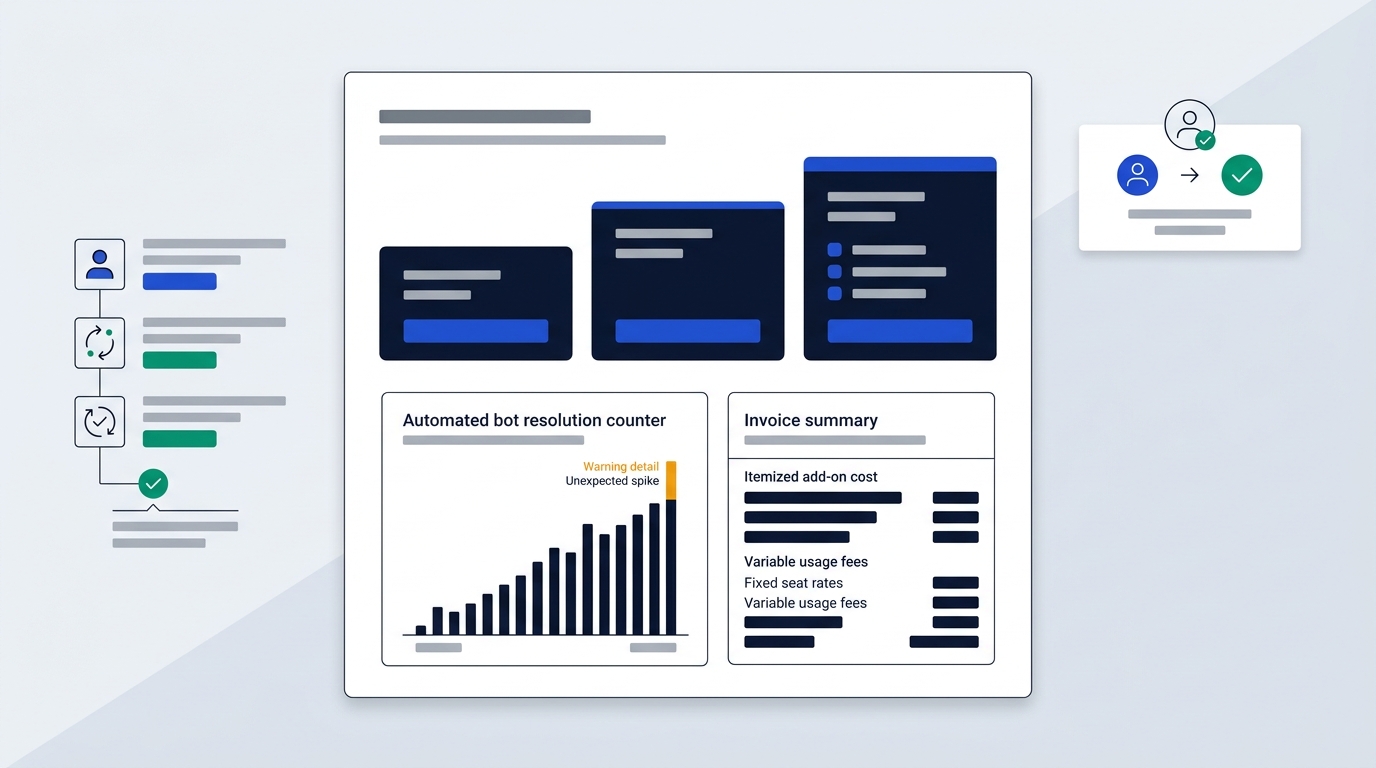
Core seat plan breakdown
Intercom structures its core platform across three main pricing tiers when billed annually: * Essential: $19 per seat/month for small teams needing live chat and basic automation. * Advanced: $85 per seat/month for growing teams requiring workflow builders and round-robin routing. * Expert: $132 per seat/month for enterprise teams needing SLAs, SSO, and HIPAA compliance support. While Essential seems affordable, advanced routing quickly pushes growing teams onto the $85 tier.The $0.99 Fin outcome mechanism
Intercom charges $0.99 per outcome, which means any query Fin resolves without human help. An outcome triggers when a customer confirms a fix, stops asking for help after Fin responds, or completes an automated workflow procedure. An effective knowledge base makes Fin resolve more queries, which raises your bill. For example, a team resolving 1,000 customer queries per month with Fin adds $990 in AI usage fees directly on top of their base seat subscription.Layered add-ons and usage credits
Optional add-ons further increase Intercom's monthly price tag: * Copilot AI inbox assistant: $29 per agent/month billed annually. * Pro operations workspace: $100 per month including 6,000 credits, with extra credits billed at $0.01 each. * Proactive Support Plus: Starts at $99 per month for only 500 outbound messages. So, unlocking advanced features requires separate monthly add-on subscriptions.Three realistic billing scenarios
Every Fin resolution is billed on top of the seat fees, so the invoice rises and falls with customer demand. Estimate how many resolutions your team expects each month before you compare plans.
Top Intercom alternatives compared side by side
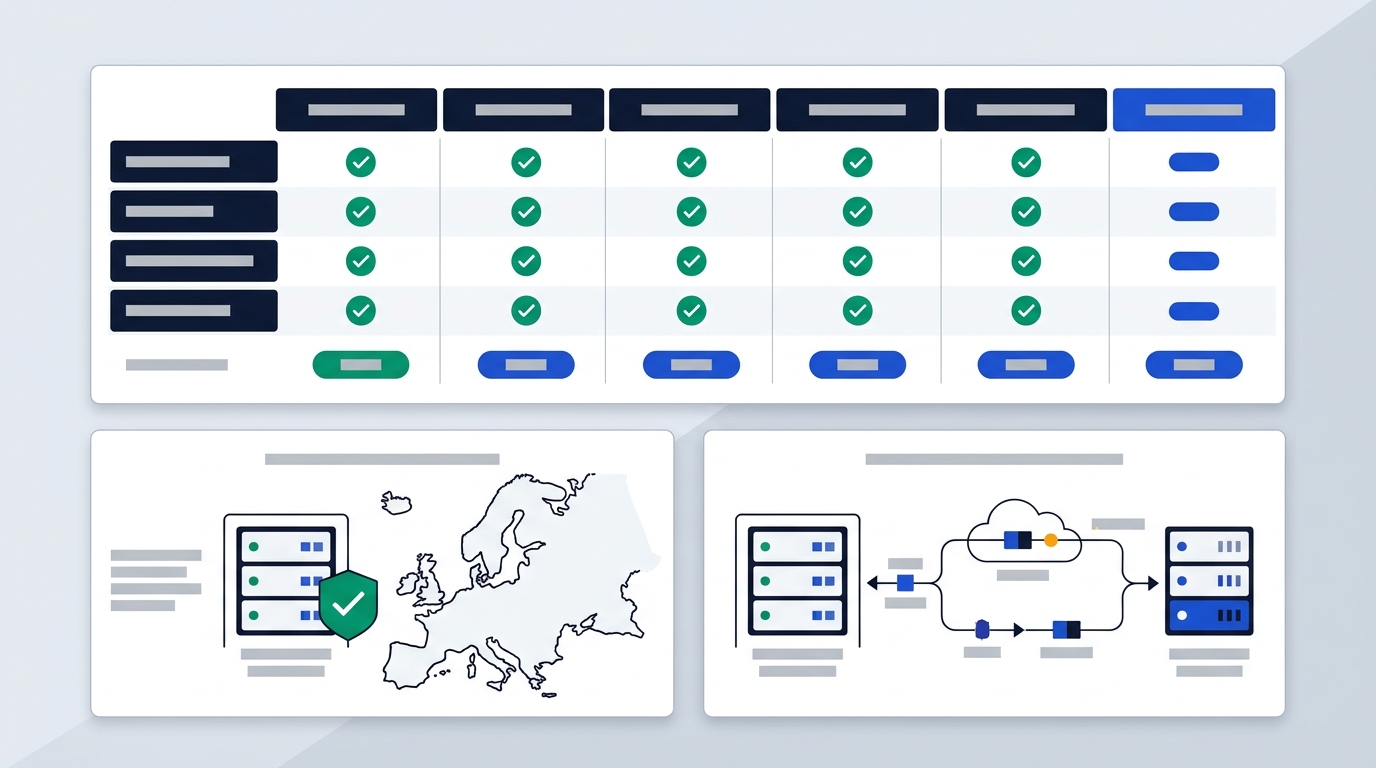
| Platform | Starting Price | Seat Structure | AI Pricing Model | Free Tier | Free Trial |
|---|---|---|---|---|---|
| $19/seat/mo | Per full seat | $0.99 per outcome | No | 14 days | |
| $295/workspace/mo | 20 seats included | Flat (Hugo AI) | Yes (2 seats) | 14 days | |
| $27/seat/mo | Per seat | Included/Piloting | No | 14 days | |
| $55/agent/mo | Per agent | Bundled in Suite | No | 14 days | |
| $15/agent/mo | Per agent | Usage-based add-on | Yes (10 agents) | 14 days | |
| €69/mo | Bundled seats | Suite inclusions | No | 7 days | |
| $25/seat/mo | Per seat | $0.75 per resolution | No | 15 days | |
| $79/seat/mo | Per seat | $1 per resolution | No | Pilot basis |
Prices are shown before VAT.
Flat-rate platforms offer predictable overhead, whereas traditional desks provide structured SLA management for larger departments.In-depth reviews of leading Intercom competitors
Crisp: Fixed pricing for growing teams
Crisp is a top choice for startups seeking predictable software spend. Instead of billing per agent, Crisp offers a flat workspace rate of $295 per month that includes 20 agent seats, making it highly cost-effective for expanding support teams. * Unlimited conversation history and messaging volume across channels. * Hugo AI agent included without individual per-resolution outcome charges. * Built-in co-browsing and video call assistance directly inside live chat. Triage and routing queues are simpler than dedicated enterprise desks. The platform also includes fewer outbound product tour tools than Intercom.Front: Built for collaborative B2B support
Front transforms email queues and live chat into structured collaborative streams. Plans start at $27 per seat/month billed annually for B2B teams handling account queries. * Internal conversation commenting through @mentions to coordinate with back-office staff. * Shared email inboxes combined with real-time live chat routing. * Autopilot AI tools that summarize long threads and draft response suggestions. The entry plan requires an annual commitment, and native in-app tours are missing. Still, internal handoffs run smoother than in Intercom.Positive User (User.com): EU compliance and marketing automation
Positive User (managed by Positive Groupe France) combines live chat, CRM tracking, and marketing automation within a fully European framework. Its Campaigns plan starts at €69/month, the Marketing Automation Suite costs €199/month, and the Customer Engagement Platform costs €499/month when billed annually. * Customer data remains within European data centers under ISO 27001 security standards. * Unified live chat, email marketing, SMS, and user activity tracking. * Automated workflow engine built for both customer support and marketing campaigns. Multi-channel sequences require careful initial setup. In exchange, European teams get an integrated marketing and support suite without US data transfers.Zendesk: Standardized enterprise ticketing
Zendesk remains an industry benchmark for enterprise service desks, with Suite plans starting at $55 per agent/month billed annually. * Omnichannel routing across chat, email, phone, and messaging apps. * Granular SLA tracking, agent performance analytics, and ticket queue management. * Ecosystem featuring thousands of pre-built integrations in the Zendesk Marketplace. The ticket interface feels rigid compared to casual chat widgets. Zendesk compensates with far stronger SLA monitoring and compliance controls.Help Scout & Freshdesk: Accessible help desks
Help Scout provides shared inboxes with per-resolution AI pricing, while Freshdesk provides a permanent free tier for up to 10 agents, with paid plans starting at $15 per agent/month. Both platforms offer straightforward setup processes compared to Intercom's complex workflow builder.Kayako: Dedicated autonomous ticket resolution
Kayako focuses on automated deflection, starting at $79 per seat/month with per-ticket AI charges after a pilot. It suits high-volume support teams wanting an automated platform to clear background queues across email, chat, and social channels.European data hosting and GDPR compliance facts
Data protection regulations require European companies to audit where customer conversations and personal information reside. Selecting software with clear data residency simplifies compliance audits.European sovereignty vs US data transfers
Positive User (operated by Positive Groupe France) hosts all customer information exclusively within European data centers, maintaining ISO 27001 certification and offering standard European Data Processing Agreements. In contrast, US-based vendors such as Intercom, Front, and Kit process data primarily on US AWS infrastructure. These US vendors rely on the EU-US Data Privacy Framework, the UK Extension, and standard Article 28 DPAs to legalise transatlantic data transfers.Cross-border B2B VAT rules across Europe
SaaS purchases across European borders follow clear tax rules: * EU B2B transactions: Providing a valid VAT number yields 0% VAT invoices under the reverse charge rule, self-accounting for tax locally. * Local transactions: Buying software from a vendor in your home country incurs local VAT. You then reclaim this tax through normal local VAT returns. * Post-Brexit UK purchases: UK businesses buying from EU or US vendors process invoices without local EU VAT, accounting for UK import tax rules locally.Mandatory AI sub-processor disclosures
When implementing AI support bots, European privacy laws require businesses to identify third-party sub-processors. If your support tool sends customer chat transcripts to external Large Language Model providers (such as OpenAI or Anthropic) to generate answers, those entities must be listed explicitly within your customer-facing privacy policy and DPA agreements.Frequently asked questions about Intercom alternatives
Here are clear answers to common questions about switching from Intercom to alternative platforms.What happens if Fin AI fails to resolve a query?
Intercom does not charge the $0.99 fee if Fin fails to answer, cannot complete the requested workflow, or if the customer asks to speak with a human agent. Charges only apply when the conversation completes successfully without human intervention.Can I use Fin AI with Zendesk or Freshdesk without Intercom seats?
Yes, you can deploy Fin AI Agent as a standalone tool alongside existing help desks like Zendesk or Freshdesk. The standalone service costs $0.99 per outcome and requires a minimum monthly commitment, but you do not need to buy Intercom help desk agent seats.Which Intercom alternative provides the best free tier?
Freshdesk offers a permanent free plan supporting up to 10 agents with basic ticketing, email support, and knowledge base tools. Crisp provides a free tier for up to 2 seats with basic live chat features, making both tools accessible options for early-stage teams.How hard is it to export conversation history from Intercom?
Intercom allows teams to export user profiles, conversation histories, and help center articles using standard API endpoints and CSV downloads. However, custom workflow rules, bot decision paths, and targeted message triggers must be manually reconfigured in your new help desk software.Picking your next platform
If flat billing matters most, Crisp fits. B2B teams leaning on internal handoffs suit Front better. High-volume desks with SLA needs should look at Zendesk or Freshdesk, while European buyers needing data residency fit Positive User. Startups still under Intercom's funding threshold can stay put, provided they watch Fin resolution volume closely.
Before switching, check how your current AI usage would translate under each model in the AI cost forecasting section.