


Looking for Brevo alternatives? Compare Kit, ActiveCampaign, and lemlist on pricing, GDPR hosting, and automation limits. Find your ideal EU email tool today.
TL;DR: The Shortlist of Brevo Alternatives at a Glance
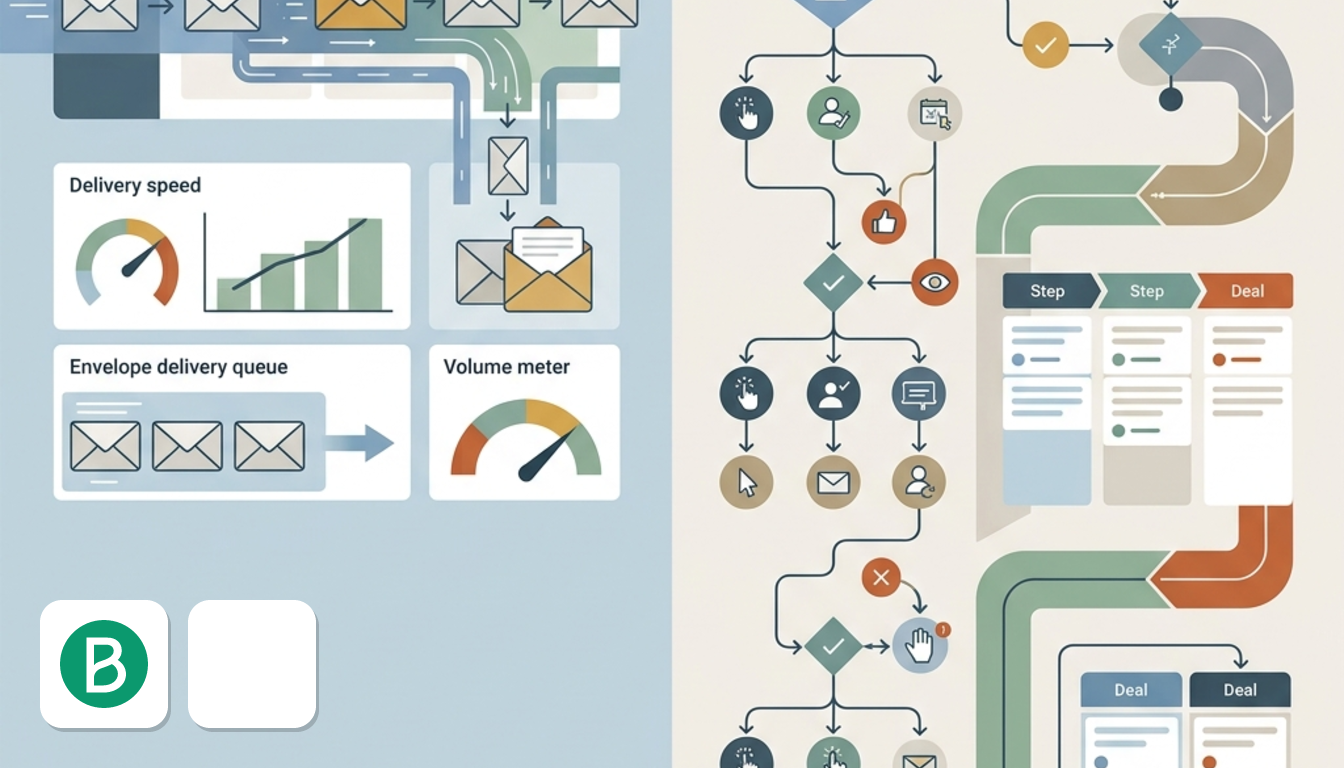
Brevo excels at transactional messaging and volume-based inbound marketing, charging per email sent rather than contact capacity. However, selecting effective Brevo alternatives depends strictly on your operational model and sales strategy:
- Kit: Built specifically for digital creators, podcasters, and broadcast newsletters. According to Kit's official pricing page (checked October 2026), its free plan supports up to 10,000 subscribers. Unsuitable for: Enterprise organizations requiring complex CRM pipelines or multi-stage deal tracking.
- ActiveCampaign: Tailored for multi-stage lifecycle marketing, advanced automation, and integrated sales CRM. According to ActiveCampaign's pricing page (checked October 2026), paid plans start at US$19/month (US$15/month billed annually). Unsuitable for: Businesses requiring a permanent free plan, as ActiveCampaign only offers a 14-day free trial.
- lemlist: Engineered specifically for cold outbound B2B sales prospecting, automated multi-channel sequences, and deliverability warming via lemwarm. According to lemlist's pricing page (checked October 2026), plans start at US$69/month (€69/month or £69/month). Unsuitable for: Inbound opt-in newsletters, where cold outreach tools violate permission marketing principles.
- Brevo: Best for high-volume transactional mail and cost-effective inbound email campaigns. According to Brevo's pricing page (checked October 2026), its free plan provides 300 emails per day. Unsuitable for: Cold B2B outbound prospecting or dedicated creator monetization.
For verified discount updates, live pricing revisions, and plan changes, refer directly to our dedicated deal hubs for Brevo, Kit, ActiveCampaign, and lemlist.
To help you quickly compare key features and make an informed decision, here's a comprehensive comparison of Brevo and its leading Brevo alternatives:
| Feature | Brevo | Kit | ActiveCampaign | lemlist |
|---|---|---|---|---|
| Primary Use Case | Transactional, inbound email marketing | Creator/publisher broadcast newsletters | Advanced lifecycle marketing, CRM | Cold B2B outbound prospecting |
| Pricing Model | Volume-based | Contact-based | Contact-based | Volume-based |
| Free Plan / Trial | Free plan (300 emails/day) (Source: Brevo pricing page, checked Oct 2026) |
Free plan (up to 10k subscribers) (Source: Kit pricing page, checked Oct 2026) |
14-day free trial (no permanent free plan) (Source: ActiveCampaign pricing page, checked Oct 2026) |
14-day free trial (no permanent free plan) (Source: lemlist pricing page, checked Oct 2026) |
| GDPR DPA | EU-US DPF compliant (Source: Brevo legal policy, checked Oct 2026) |
EU-US DPF, SCCs (Source: Kit security/privacy, checked Oct 2026) |
EU-US DPF, SCCs (Source: ActiveCampaign DPA page, checked Oct 2026) |
Yes, EU-based (Source: lemlist privacy policy, checked Oct 2026) |
| Data Hosting | Not explicitly published, EU-US DPF compliance stated (Source: Brevo legal policy, checked Oct 2026) |
United States (AWS) (Source: Kit security page, checked Oct 2026) |
US, AU, IE, BR, CR (EU-US DPF compliant) (Source: ActiveCampaign privacy policy, checked Oct 2026) |
European Union (Source: lemlist privacy policy, checked Oct 2026) |
| Key Strength | Cost-effective for high volume transactional/inbound mail | Generous free tier for creators, audience building focus | Robust automation, integrated sales CRM, omnichannel journeys | Specialized cold outreach, deliverability warming (lemwarm) |
| Key Limitation | Daily volume caps, restrictions on cold outreach | Limited multi-channel CRM, no SMS, US data hosting | No permanent free plan, pricing scales with contacts | No inbound marketing features, cold outreach only |
This table highlights the diverse strengths of these Brevo alternatives, catering to different business needs from creator broadcasts to complex CRM and cold outreach. Each platform offers a unique value proposition, making the choice of a Brevo alternative dependent on your specific marketing and sales objectives.
Why Marketers Replace Brevo (Formerly Sendinblue)

Daily Email Volume Caps
Brevo's free plan imposes a strict limit of 300 emails per day, according to Brevo's pricing page, checked October 2026. For businesses with growing subscriber lists or those needing to execute time-sensitive product launches, flash sales, or urgent broadcast newsletters, this daily cap can create significant list velocity bottlenecks. Marketers requiring the ability to send thousands of emails rapidly often find this restriction too limiting, even on paid plans where volume tiers are a primary pricing factor.Volume-Based vs. Contact-Based Pricing
Brevo's pricing structure is largely volume-based, focusing on the number of emails sent. This model can become less cost-effective for businesses managing low-frequency, high-value subscriber lists. For example, a business with a large contact database that sends emails only a few times a month might find a contact-based pricing model, such as those offered by Kit or ActiveCampaign, more predictable and economical. These platforms typically charge based on the number of active subscribers, regardless of the daily email volume, which can better suit niche markets or B2B segments with less frequent communication needs.Restrictions on Unsolicited Outreach
Brevo maintains strict terms of service against unsolicited cold B2B outreach, aligning with inbound permission marketing principles. This policy, while promoting good email hygiene and compliance, means that sales development teams focused on prospecting and cold email campaigns must look for tools specifically designed for outbound outreach. Platforms like lemlist, which explicitly offer "Email Outreach" and "Multichannel" plans, cater directly to these use cases, providing features like email warm-up and advanced personalization for cold campaigns that Brevo's terms prohibit.Advanced Automation Complexity
While Brevo provides visual campaign automation, marketers requiring highly complex, multi-branching customer journeys and deeply integrated workflow builders may encounter complexity boundaries. For enterprise-grade requirements involving intricate conditional logic, custom object integration, or advanced lead scoring, platforms like ActiveCampaign often offer more robust and flexible automation capabilities. ActiveCampaign's "Plus" plan, for instance, includes unlimited automation actions, catering to businesses with sophisticated customer lifecycle management strategies.Kit: The Creator & Broadcast-Focused Alternative

Verified Pricing Structure
Kit offers a highly accessible entry point with a generous free tier. According to Kit's pricing page, checked October 2026, this plan supports up to 10,000 subscribers and includes unlimited landing pages, forms, and email broadcasts. This structure allows creators to grow their audience significantly before needing to consider a paid subscription. For those requiring more advanced functionalities, Kit provides two primary paid tiers, : * **Creator Plan:** Priced at US$39/month, or US$33/month when billed annually, this plan introduces visual automation funnels and email sequences, making it suitable for creators looking to implement more sophisticated email journeys. * **Pro Plan:** Available at US$79/month, or US$66/month on annual billing, the Pro plan builds upon the Creator features by adding newsletter referral engines and subscriber scoring capabilities. This tier is designed for creators focused on advanced audience segmentation and growth through referrals, Prices are shown in US$ and are before VAT. For detailed pricing tiers based on subscriber list size, please check the dedicated Kit page on SaaSEuro.com at /deals/kit/.The Good vs The Bad
When evaluating Kit as an alternative to Brevo, specific strengths and limitations become apparent for businesses operating in Europe. **The Good:** * **Generous Free Plan:** Kit offers an exceptionally high subscriber threshold on its free plan, supporting up to 10,000 subscribers with unlimited landing pages, forms, and email broadcasts, according to Kit's pricing page, checked October 2026. This allows creators to build a substantial audience without immediate cost. The generous free plan makes it a strong contender among Brevo alternatives for audience building and creator monetization, according to Kit's pricing page, checked October 2026. * **Creator-Centric Features:** The platform is built with content creators and publishers in mind, offering tools like automated sequences, newsletter referral engines, and subscriber scoring on its paid plans, according to Kit's pricing page, checked October 2026. **The Bad:** * **Limited Multi-Channel CRM:** Kit lacks a native multi-channel CRM suite, which may be a significant drawback for businesses requiring integrated customer relationship management beyond email. * **No SMS Marketing:** The platform does not offer native SMS marketing capabilities, limiting options for direct mobile communication with subscribers. * **No European Server Hosting:** According to Kit's security page, checked October 2026, data is hosted in the United States (AWS). For European businesses prioritising data residency within the EU, this may be a consideration. Kit does, however, comply with the EU–US and Swiss–US Data Privacy Frameworks and the UK Extension, offering a Data Processing Addendum covering subscriber data, according to Kit's privacy page, checked October 2026. For the most current verified offers, including detailed pricing tiers and any available deals, please check the dedicated Kit page on SaaSEuro.com at /deals/kit/.ActiveCampaign: The Complex Lifecycle & CRM Alternative

TL;DR: ActiveCampaign is best suited for businesses requiring advanced, omnichannel customer journey mapping, deeply integrated deal pipelines, and comprehensive sales automation. It is ideal for organisations with evolving customer segments and complex marketing funnels. It is less suitable for businesses seeking a simple, low-cost email-only solution or a permanent free plan, as its pricing scales with contact list size and feature complexity.
Architecture Overview
ActiveCampaign offers advanced omnichannel customer journey mapping, enabling businesses to design highly personalised and automated experiences across email, website, and other touchpoints. Its architecture deeply integrates deal pipelines and sales automation, allowing for a unified view of customer interactions from lead generation through conversion and retention. This integration supports sophisticated segmentation, behavioural tracking, and dynamic content delivery, crucial for nurturing leads through complex sales cycles.Verified Pricing Structure
ActiveCampaign's pricing structure is contact-based and offers several tiers, with discounts available for annual billing. According to ActiveCampaign's pricing page, checked October 2026:- The **Starter** plan is US$19 per month, or US$15 per month when billed annually. This plan includes email marketing and marketing automation.
- The **Plus** plan is US$59 per month, or US$49 per month when billed annually. It offers unlimited automation actions, landing pages, and a standard CRM functionality.
- The **Pro** plan is US$99 per month, or US$79 per month when billed annually. This tier introduces features such as split automations, predictive content, and attribution tracking.
- The **Enterprise** tier starts at US$179 per month, or US$145 per month when billed annually, and includes custom objects, single sign-on (SSO), and a dedicated account manager.
Free Plan and Trials
ActiveCampaign does not offer a permanent free plan. However, new users can access a 14-day free trial without requiring a credit card to explore the platform's features, according to ActiveCampaign's pricing page, checked October 2026.The Good vs The Bad
ActiveCampaign stands out for its robust automation capabilities and integrated sales tools.- The Good: It provides industry-standard trigger complexity, allowing for highly nuanced automation flows based on customer behaviour. The platform supports multi-branch testing for optimising automation paths and includes a built-in sales CRM, which helps streamline lead management and sales outreach directly within the marketing platform. For businesses outgrowing Brevo's automation capabilities, ActiveCampaign offers a compelling Brevo alternative with its robust feature set.
- The Bad: A primary consideration for businesses is the steep pricing escalation as subscriber lists expand. While the initial tiers are competitive, costs can increase significantly for larger databases, making it a more substantial investment for growing businesses.
Data Protection and European Operations
For European businesses, ActiveCampaign offers a Data Processing Agreement (DPA) that relies on Standard Contractual Clauses (SCCs). ActiveCampaign is also certified under the EU–US Data Privacy Framework, according to ActiveCampaign's DPA page, checked 2026-10-09. Information may be transferred to ActiveCampaign locations in the United States, Australia, Ireland, Brazil, and Costa Rica, as stated in ActiveCampaign's privacy policy, checked 2026-10-09. For current promotional tiers and specific offers, readers should review the live deals at /deals/activecampaign/.lemlist: The Dedicated Cold Outbound & Prospecting Alternative
Brevo is designed primarily for opt-in inbound marketing, such as newsletters, transactional emails, and marketing automation for existing subscribers. Sending cold B2B outreach sequences through such inbound-focused platforms can quickly lead to account suspensions due as their infrastructure and terms of service are not built for unsolicited communication. lemlist, in contrast, is purpose-built for outbound sales outreach and prospecting, providing tools specifically engineered for cold email deliverability and multi-channel sequences to new leads. When your primary focus is cold outbound sales, lemlist emerges as a specialized Brevo alternative designed for prospecting, unlike Brevo's inbound focus.Verified Pricing Across Currencies
lemlist offers transparent pricing structures for its core functionalities. The **Email Outreach** plan is available at US$69 per month or US$55 per month when billed annually, according to lemlist's pricing pages, checked October 2026. This plan includes access to the lemwarm deliverability engine and an AI email generation tool. For businesses in Europe, the same plan is priced at €69 per month or €55 per month (annual billing), and in the UK, it is £69 per month or £55 per month (annual billing), as per lemlist's pricing pages, checked October 2026. For more comprehensive outreach, the **Multichannel** plan costs US$109 per month, or US$87 per month with annual billing, according to lemlist's pricing pages, checked October 2026. This plan expands on the Email Outreach features by integrating LinkedIn sequence touches and in-app cold calling capabilities, allowing for a diverse approach to prospecting. European and UK customers can access this plan at €109 per month or €87 per month (annual billing), and £109 per month or £87 per month (annual billing), respectively, as stated on lemlist's pricing pages, checked October 2026.Trial Evaluation
lemlist provides a 14-day free trial that includes 200 credits, without requiring a credit card to get started, according to lemlist's pricing page, checked October 2026. There is no permanent free tier available, positioning lemlist as a professional tool for dedicated outreach efforts.The Good vs The Bad
lemlist excels in its niche, but its specialization means it is not a direct substitute for all of Brevo's features.The Good
* **Specialized Deliverability**: Includes dedicated inbox deliverability engines like lemwarm, which automatically warms up email accounts to improve sender reputation and reduce the likelihood of emails landing in spam folders. * **Multichannel B2B Steps**: Facilitates complex, automated sequences that integrate email, LinkedIn touches, and cold calling, which are crucial for effective B2B prospecting. * **EU Data Location**: lemlist stores data exclusively within the European Union, according to its privacy policy, checked October 2026. As a dedicated cold outreach solution, lemlist is a distinct Brevo alternative for sales teams focused on B2B prospecting.The Bad
* **No Inbound Marketing Features**: lemlist offers zero utility for bulk newsletter broadcasts, opt-in marketing campaigns, or e-commerce transactional messaging, which are core functionalities of platforms like Brevo. It is not designed for managing existing customer relationships or broad audience engagement. For current offers and verified pricing on lemlist, visit /deals/lemlist/.Email Marketing Economics: Volume-Based vs Contact-Based Pricing
The financial mechanics of email marketing platforms vary significantly, primarily through two distinct pricing models: volume-based and contact-based. Understanding these differences is crucial for businesses to predict and manage their email marketing expenditure effectively, especially when comparing Brevo and its various Brevo alternatives.Volume-Based Pricing: Brevo and lemlist
Platforms like Brevo and lemlist operate on a volume-based model, where costs are directly tied to the number of emails dispatched, irrespective of the total size of your contact database. Brevo, for instance, offers a free plan allowing up to 300 emails a day, according to its pricing page checked October 2026. lemlist's Email Outreach plan includes 50,000 emails per month for US$69 monthly, according to its pricing page checked October 2026. This model can be highly cost-efficient for businesses with large, static contact lists that send emails infrequently. For example, holding 50,000 inactive contacts costs very little on a volume-based platform if you only send a quarterly newsletter. The expense only incurs when an email is actually sent. However, this model can become expensive for high-frequency senders. Businesses that broadcast daily newsletters, send frequent promotional campaigns, or rely heavily on transactional emails (like order confirmations or shipping updates) can quickly incur heavy overage charges as their sent volume accumulates. A daily newsletter sent to 10,000 subscribers would mean 300,000 emails per month, rapidly exceeding base allowances and driving up costs.Contact-Based Pricing: Kit and ActiveCampaign
In contrast, Kit and ActiveCampaign employ a contact-based pricing model. Here, the primary cost driver is the total number of contacts stored in your database, with the number of emails you send to them often being unlimited or very high within your tier. Kit offers a free plan for up to 10,000 subscribers, according to its pricing page checked October 2026, and its Creator plan starts at US$39 per month for 1,000 subscribers, according to Kit's pricing page checked October 2026. ActiveCampaign's Starter plan begins at US$19 per month for 1,000 contacts, according to ActiveCampaign's pricing page checked October 2026. This model is particularly advantageous for high-frequency senders, such as creator communities, media outlets with daily digests, or e-commerce stores that send multiple triggered emails. Since the cost is fixed per contact tier, sending more emails to the same audience doesn't increase the monthly fee, making it highly predictable for consistent, high-volume engagement. For low-frequency senders, however, this model might lead to paying for unengaged contacts. If you have 50,000 contacts but only email them once a month, you are still paying for the full 50,000 contacts every month, regardless of your low send volume.Calculating Real Financial Impact
The choice of pricing model significantly impacts financial strategies: * **List Hygiene:** For contact-based platforms like Kit and ActiveCampaign, rigorous list hygiene is paramount. Regularly archiving or deleting unengaged contacts directly translates into cost savings by keeping your subscriber count within a lower pricing tier. * **Transactional Trigger Frequency:** Businesses heavily relying on automated transactional emails need to consider the cumulative volume. On volume-based platforms like Brevo and lemlist, a high frequency of such emails can quickly inflate monthly costs, even if individual sends are small. * **Archiving Unengaged Contacts:** This practice helps manage costs on contact-based platforms by removing subscribers who are no longer active, ensuring you only pay for your engaged audience. Choosing between Brevo's volume-based model and the contact-based models of other Brevo alternatives hinges on your sending frequency and list engagement.European Compliance: GDPR DPA, Data Hosting, and EU VAT Rules
For businesses operating within Europe, understanding the nuances of data protection, data residency, and fiscal compliance is critical when choosing SaaS tools. This section outlines how Brevo and its Brevo alternatives—Kit, ActiveCampaign, and lemlist—address these concerns, particularly regarding GDPR, data hosting, and VAT regulations.
Data Hosting and GDPR Data Processing Addenda (DPA)
- Brevo: The Brevo group's parent company, Sendinblue France SAS, is based in Paris. Brevo operates with entities including Brevo Inc. and Brevo Germany GmbH, according to its legal policy checked October 2026. Brevo does not publish its specific server location for customer data, but Brevo Inc. complies with the EU–US Data Privacy Framework. While Brevo offers compliance measures, some Brevo alternatives provide explicit EU data residency, which can be a deciding factor for certain European businesses.
- lemlist: This provider states that it hosts subscriber data exclusively within the European Union, according to its privacy policy checked October 2026. This can be a key factor for businesses prioritising EU data residency.
- Kit: Kit hosts customer data on AWS in the United States. To facilitate data transfers for European users, Kit complies with the EU–US and Swiss–US Data Privacy Frameworks and the UK Extension, operating under an Article 28 Data Processing Addendum (source: Kit security and privacy documentation, checked October 2026).
- ActiveCampaign: ActiveCampaign transfers data across its entities located in the United States, Australia, Ireland, Brazil, and Costa Rica. It maintains compliance through its EU–US Data Privacy Framework certification and provides a Data Processing Agreement that incorporates Standard Contractual Clauses, as detailed on its legal pages checked October 2026.
EU VAT Rules for B2B SaaS Purchases
Businesses registered for VAT in EU member states such as France, Germany, Ireland, Spain, and Italy, along with those in the UK, need to consider the VAT treatment of cross-border SaaS purchases. For EU VAT-registered businesses purchasing services from another EU country, the reverse charge mechanism typically applies. This means the buyer accounts for the VAT, rather than the seller charging it. For UK VAT-registered businesses, specific UK VAT rules apply to imported services, generally requiring the buyer to account for VAT under the reverse charge mechanism. Businesses should always verify their specific VAT obligations based on their location and the vendor's billing practices.
Technical Migration Checklist: Switching from Brevo Without Disrupting Deliverability
Migrating from one email service provider to another, such as switching from Brevo to a new platform like Kit, ActiveCampaign, or lemlist, requires careful planning to maintain email deliverability and avoid service disruptions. Switching from Brevo to one of its Brevo alternatives requires a strategic approach to ensure a smooth transition without impacting your email program. A structured technical migration checklist helps ensure all critical components are transferred and configured correctly.
Step 1: DNS Authentication Overhaul
The first critical step involves updating your Domain Name System (DNS) records. For your new sending platform, you must configure new Sender Policy Framework (SPF) records, distinct DomainKeys Identified Mail (DKIM) 2048-bit selectors, and aligned Domain-based Message Authentication, Reporting, and Conformance (DMARC) policies. These records authenticate your sending domain, assuring internet service providers (ISPs) that emails originating from your new provider are legitimate. Failing to update these records correctly will likely result in emails being flagged as spam or rejected outright, severely impacting your deliverability and sender reputation.
Step 2: Suppression List Hygiene
Before sending any emails from your new platform, it is essential to extract and import your existing suppression lists from Brevo. This includes hard bounces, unsubscribe requests, and spam complaints. Importing these lists into Kit, ActiveCampaign, or lemlist ensures you do not inadvertently email recipients who have opted out or are undeliverable. This practice is crucial for legal compliance (e.g., GDPR requirements for consent and unsubscribe handling) and maintaining a good sender reputation, as repeatedly emailing suppressed addresses can lead to blacklisting by ISPs.
Step 3: Inbound Webhook and API Integration Audit
Review all existing integrations that rely on Brevo's API or webhooks. This typically includes transactional email triggers (e.g., order confirmations, password resets), lead capture forms, and any other automated workflows. Each integration must be audited and reconfigured to point to the API endpoints or webhook URLs of your chosen new platform (Kit, ActiveCampaign, or lemlist). Thorough testing of these reconfigured integrations is necessary before a full rollout to ensure seamless data flow and functionality.
Step 4: IP Warmup Scheduling
If your new email service provider assigns you a new shared or dedicated IP pool, an IP warmup schedule is mandatory. ISPs monitor sending volume from new IPs to build a reputation score. Suddenly sending large volumes from a new IP can trigger spam filters. An IP warmup involves a phased volume ramp-up, starting with smaller email batches to your most engaged subscribers and gradually increasing the volume over several weeks. This process helps establish a positive sending reputation with ISPs, safeguarding your domain's deliverability in the long term.
Frequently Asked Questions About Brevo Competitors
Why did Sendinblue rebrand to Brevo, and did the pricing structure change?
Sendinblue rebranded to Brevo. According to Brevo's press information, checked October 2026, the company's parent is a French SAS in Paris, with Sendinblue France SAS acting as a data controller depending on location. The rebrand aimed to reflect the company's expanded suite of marketing and CRM tools beyond email. While Brevo (formerly Sendinblue) has expanded its offerings, many businesses still explore Brevo alternatives for specific niches or advanced functionalities. Regarding pricing, SaaSEuro does not publish historical pricing data. For current pricing tiers and features, refer to Brevo's official pricing page.Can I use Brevo for B2B cold email campaigns without risking an account ban?
SaaSEuro's verified facts do not contain specific information regarding Brevo's policies on B2B cold email campaigns or the risk of account bans related to such activities. Users should always consult Brevo's official terms of service and acceptable use policy to ensure compliance with their guidelines before initiating any email campaigns.Which Brevo alternative offers the best free plan for large subscriber lists?
Among the verified Brevo alternatives, **Kit** offers a free plan that supports up to 10,000 subscribers, alongside unlimited landing pages and forms, and the ability to send email broadcasts, according to Kit's pricing page, checked October 2026. In comparison, Brevo's free plan allows sending up to 300 emails per day, according to Brevo's pricing page, checked October 2026, without a specified subscriber limit in the same way Kit details. Neither ActiveCampaign nor lemlist offer a confirmed free plan based on the verified information.Do Kit and ActiveCampaign store marketing data inside the European Union?
**Kit** stores marketing data in the United States, specifically on AWS, according to Kit's security page, checked October 2026. Kit complies with the EU–US Data Privacy Framework. **ActiveCampaign** states that information may be transferred to its locations in the United States, Australia, Ireland, Brazil, and Costa Rica, according to its privacy policy, checked October 2026. While Ireland is within the EU, this means data is not exclusively stored within the European Union. ActiveCampaign is certified under the EU–US Data Privacy Framework. When considering Brevo alternatives, data location is a critical factor for European businesses, especially regarding GDPR compliance. For comparison, lemlist explicitly states its data is stored exclusively in the European Union, according to its privacy policy, checked October 2026. Brevo's data location is not explicitly verified in the supplied information.How do European businesses claim the VAT reverse charge on foreign email software invoices?
European businesses that are VAT-registered can typically claim the VAT reverse charge mechanism when purchasing services from a foreign supplier, especially from outside their own EU country or from a non-EU country. This means the buyer accounts for both the purchase and sale of the service for VAT purposes, effectively "reversing" the charge. To do this, businesses usually need to:- Provide their valid VAT registration number to the software vendor.
- Ensure the invoice from the vendor clearly states "Reverse Charge" or "VAT exempt under Article [relevant EU VAT Directive article]".
- Account for the VAT in their domestic VAT return.
