











TL;DR: The right ElevenLabs alternative depends on the job. Cartesia or Inworld AI suit live voice agents. Murf AI or Synthesia suit training content. Kokoro or Chatterbox suit free self-hosting. Stay with ElevenLabs if the widest voice marketplace matters most.
Quick verdict on top speech synthesis tools
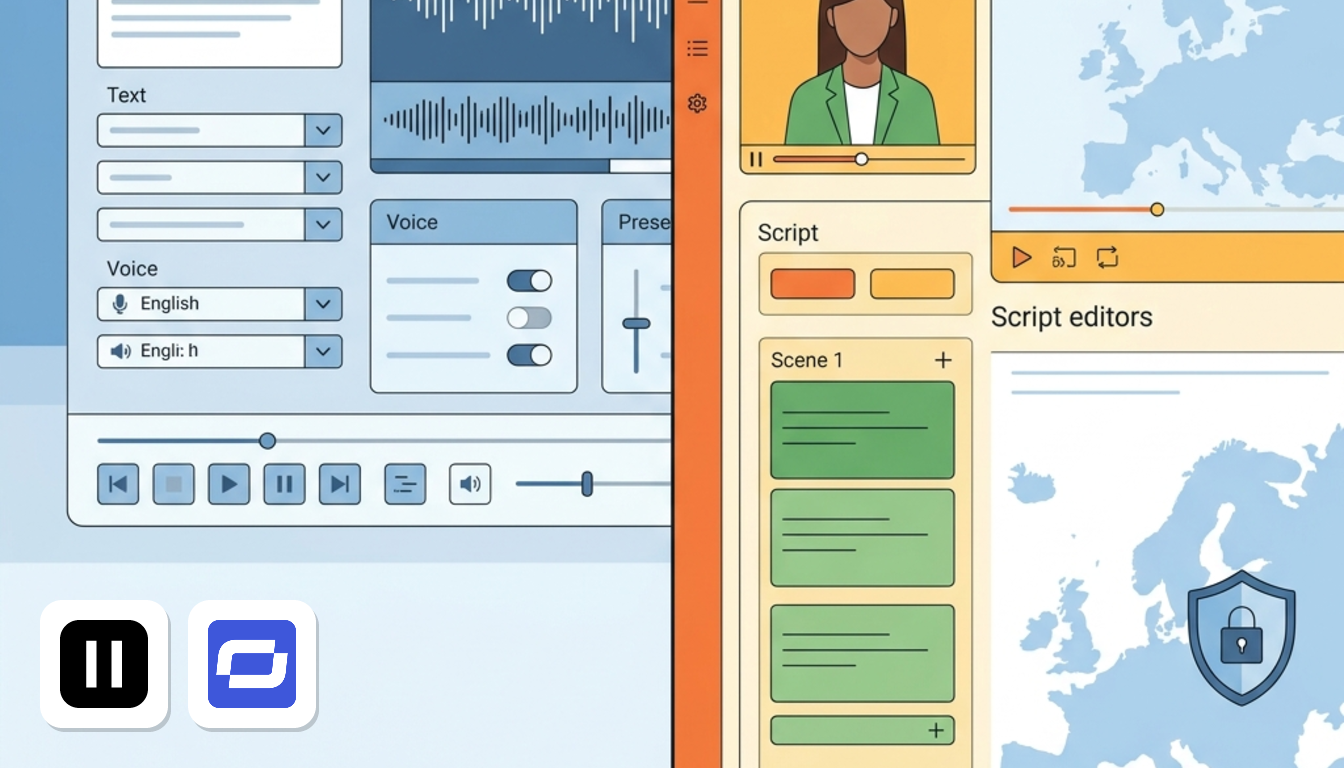
Dedicated speech APIs host outside Europe, so EU teams should pick Synthesia for video, or self-host open models if strict data residency is mandatory.
Who ElevenLabs suits
Marketing teams and publishers benefit most, because ElevenLabs maintains the broadest voice marketplace and language coverage. Starter adds basic cloning, while Creator adds professional voices. Pro at US$99 and Business at US$990 give 600,000 or 6M credits, where one credit generates one character.
Who ElevenLabs does not suit
- Live phone agents. Brilo AI reports developers often find ElevenLabs too slow for live calls. For example, one notes the latency kills conversational flow.
- Small creators who may cancel. Because accounts drop to free, unused paid credits expire immediately.
- EU teams without an Enterprise budget. EU data residency sits on the custom-priced Enterprise plan, and the other plans list the United States.
Shortlist at a glance
| Tool | Entry price | What stands out |
|---|---|---|
| ElevenLabs | Starter US$6 per month; Free plan has no commercial licence | Broadest voice marketplace and language coverage |
| Cartesia | US$4 to US$5 per month; Line agents at US$0.06 per minute | Sub-90ms time-to-first-audio claim |
| Deepgram | US$30 per 1M characters, pay-as-you-go | Speech-to-text and text-to-speech from one vendor |
| Inworld AI | US$25 per 1M characters, on-demand | Under 100ms P99 claim, 200+ languages |
| Murf AI | Free plan (10 minutes a month); Creator US$19 per month | Studio with Canva and PowerPoint integrations |
| Synthesia | Starter €19 per month; free plan with watermark | Avatar video, data stored in Ireland |
| Kokoro | Free, Apache 2.0 licence | Runs on a plain CPU |
| Chatterbox | Free, MIT licence | 23 languages, cloning from 5 to 10 seconds of audio |
Sources: ElevenLabs pricing page (October 2026); Synthesia pricing page, EUR view read from France (October 2026); Murf AI price and free plan from Brilo AI's March 2026 roundup; Kokoro and Chatterbox from Nerdynav's 2026 review; the remaining rows from Inworld's July 2026 comparison.
ElevenLabs pricing limits and credit waste rules
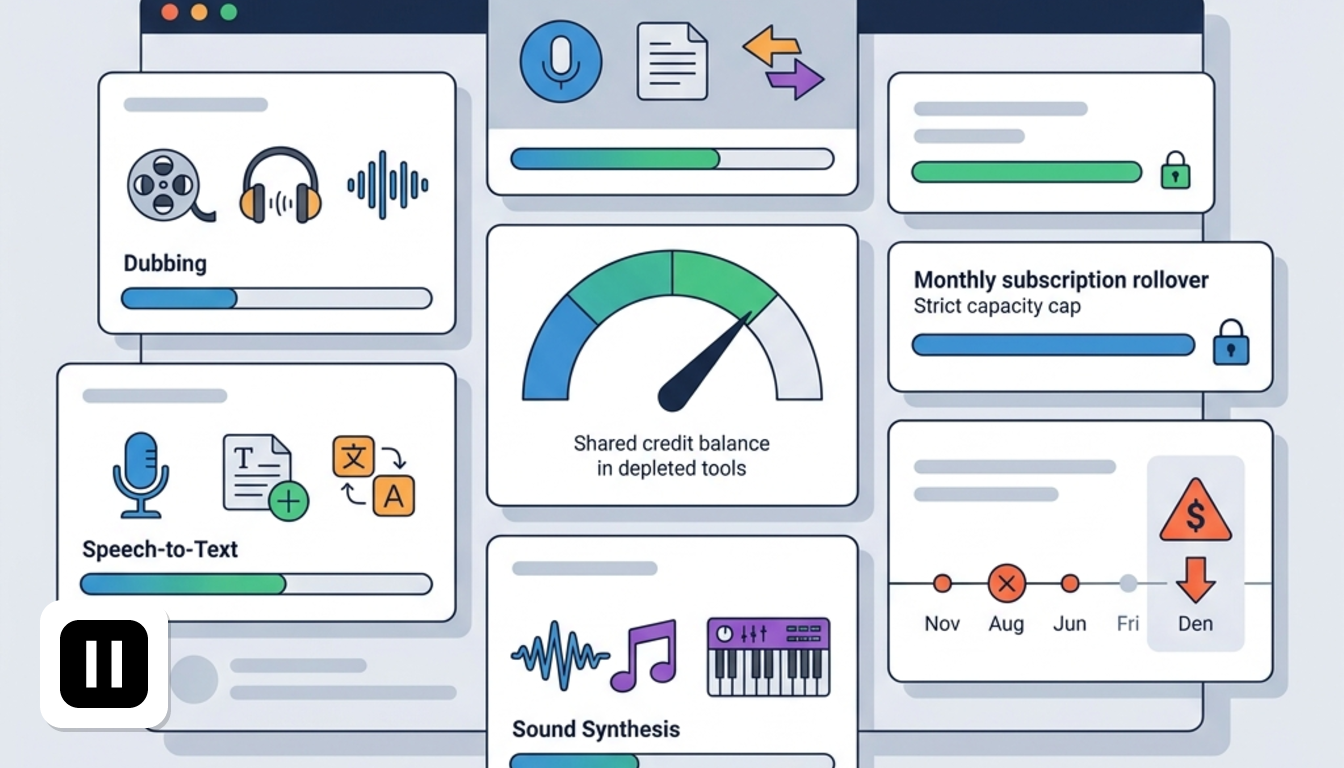
ElevenLabs costs more than its sticker price suggests, because every product draws on one shared credit pool. Our ElevenLabs page has the full plan table.
How credits get spent
V2 Multilingual models consume 1 credit per character, while Flash and Turbo cost 0.5 to 1 credit. Other features consume more credits:
- Speech to text: 330 credits per minute
- Dubbing: 2,000 to 10,000 credits per minute, depending on mode and watermark
When credits disappear
Unused credits roll over for up to two months, capped at double your monthly quota. This rollover applies only on an active paid plan.
Leaving is costly, because cancelling forfeits any remaining balance at cycle end, whereas upgrading rolls credits forward.
Re-renders and the commercial licence
Credits are charged per generation request. Changing even a single word requires re-rendering and paying for the entire section again.
Commercial rights require a paid Starter tier, as shown in the table above. First-month promotional rates showed US$1 for Starter and US$11 for Creator when checked.
Real time voice agent APIs for developers
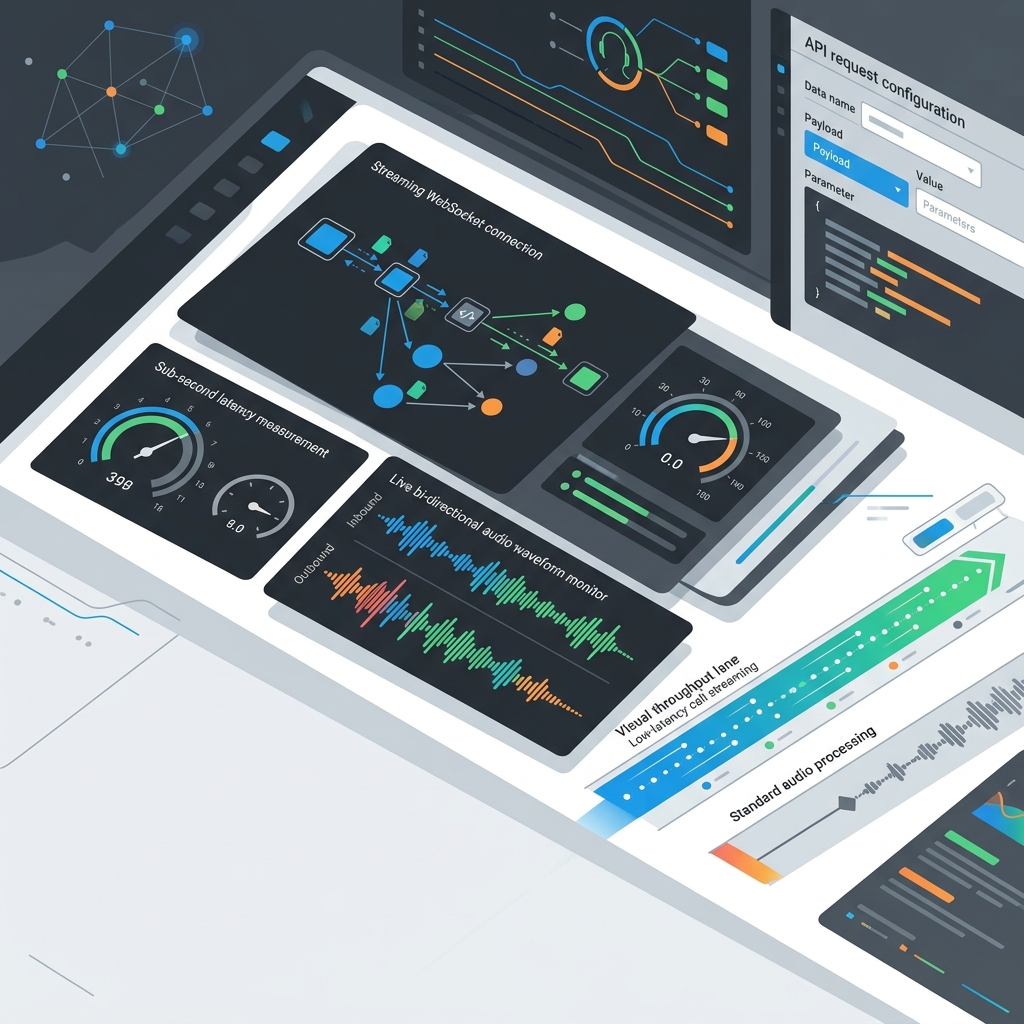
Three APIs are built around live conversation, and each wins on a different axis.
Cartesia: lowest published latency
Cartesia targets low-latency voice applications.
- It advertises sub-90ms time-to-first-audio (playback delay).
- Instant cloning works from 3 seconds of reference audio.
- For calls, Cartesia's Line voice agent streams two-way audio at US$0.06 per minute.
The free plan allows only personal use, the library is smaller, and long narration fits poorly. Plans run US$4 to US$5 for Pro (100K credits), US$49 for Startup, and US$299 for Scale.
Deepgram Aura-2 for transcription-heavy stacks
Deepgram combines speech recognition and synthesis in one platform.
- Aura-2 costs US$30 per 1M characters on pay-as-you-go, while older Aura-1 costs US$15.
- Its Voice Agent API bundles transcription, language logic, and speech output at US$0.050 to US$0.163 per minute.
It has no instant voice cloning, so teams that need a branded voice should look elsewhere.
Inworld AI for high-volume agents
Inworld focuses on interactive characters and high-volume dialog agents.
- TTS-2 claims sub-100ms P99 (99th percentile) latency, while Flash claims sub-25ms.
- It covers 200+ languages, clones voice rapidly, and steers emotion per request.
- On-demand characters cost US$25 per 1M, falling to US$12.50 on Growth and US$5 on enterprise tiers.
Its library is smaller and lacks a voice changer.
How they compare with ElevenLabs
ElevenLabs charges US$50 per 1M characters for Flash and US$100 for Multilingual. In contrast, rivals cost US$25 to US$30 at entry tiers. If your agent runs thousands of calls, that gap matters as much as latency.
Studio voiceover tools for European creators
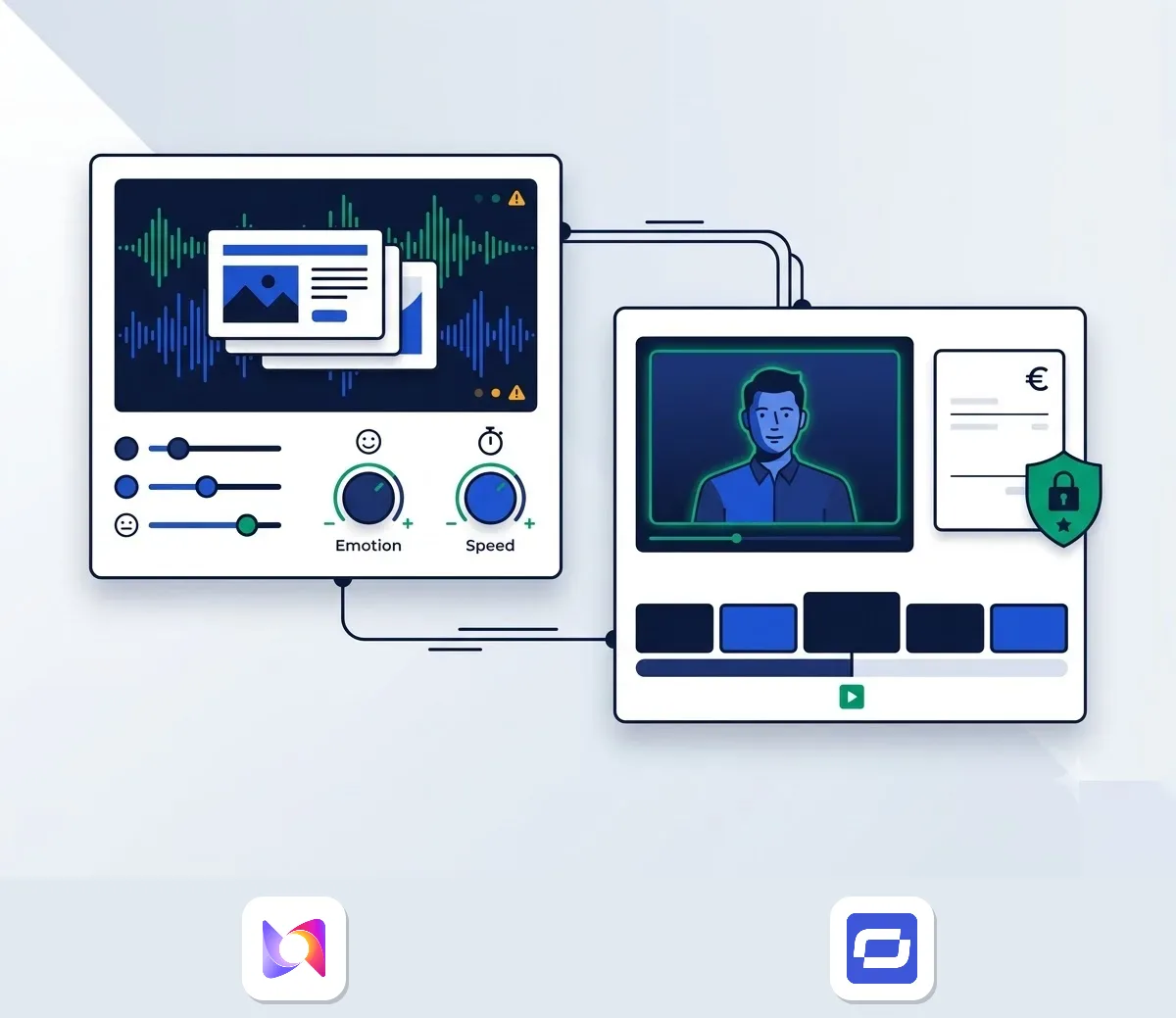
Studio tools fit better if your deliverable is a finished video rather than an API stream.
Murf AI for training and marketing voiceovers
Marketers and training teams gain an integrated production studio.
- You script, generate and edit voiceovers alongside slides and video clips, with Canva and PowerPoint integrations.
- It offers ±50% speed controls alongside varied emotional tones.
- 120+ voices cover 20+ languages.
- The free plan gives 10 minutes a month with commercial use allowed. Creator is US$19 per month and Business US$39.
Because audio is pre-rendered, it cannot power live calls. Our Murf AI page has the details, and the ElevenLabs vs Murf AI comparison goes deeper.
Synthesia for EU training teams
Synthesia pairs voice with avatar video for teams creating visual training clips.
- Billing is in EUR (Starter €19, Pro €79) or GBP (Starter £19, Pro £69), plus US$ (Starter US$29, Pro US$89).
It is a video tool, not a text-to-speech API. See the Synthesia page for plans and any current deal.
Studio tools versus ElevenLabs
If you narrate audiobooks or clone voices, ElevenLabs offers the broader audio toolkit. Murf AI or Synthesia suits visual media, avoiding the need to stitch audio into separate tools. Podcasters have a separate set of trade-offs, covered in our podcaster guide.
Free open source text to speech models
Two models cover most self-hosting needs, and neither charges per character.
Kokoro: the CPU-friendly option
Kokoro-82M is a compact open-source model with an Apache 2.0 commercial licence. It runs 0.7× real-time (faster than playback) on an M1 Air or Raspberry Pi 4. Because it needs no GPU, you avoid cloud rental fees.
It covers ten languages, including English, Spanish, French, German, Italian and Portuguese. It ships with 14 voices, cannot clone audio, and sounds like a neutral news anchor. Output quality also remains below commercial cloud models.
Chatterbox: the cloning option
Chatterbox uses a free open-source MIT licence across 23 languages. It clones voices from 5 to 10 seconds of audio and adds an exaggeration slider for emotion. It embeds PerTh watermarking so synthetic audio can be detected later.
Operational hurdles exist. It needs 8GB GPU memory, lacks Docker, and requires WSL to run Linux on Windows. Nerdynav also says it works best in English. Resemble sells a paid API with sub-200ms latency if you would rather not host.
Self-hosting versus paying for credits
ElevenLabs Creator costs US$22 per month for 121,000 credits. A rented cloud GPU starts around US$0.20 per hour, and Kokoro needs none. At steady, high volume, self-hosting wins on cost. At lower volumes, setup and maintenance time often outweigh the cost savings. Self-hosting does keep your text on your own servers, which simplifies the data-protection picture.
EU data privacy residency and VAT rules
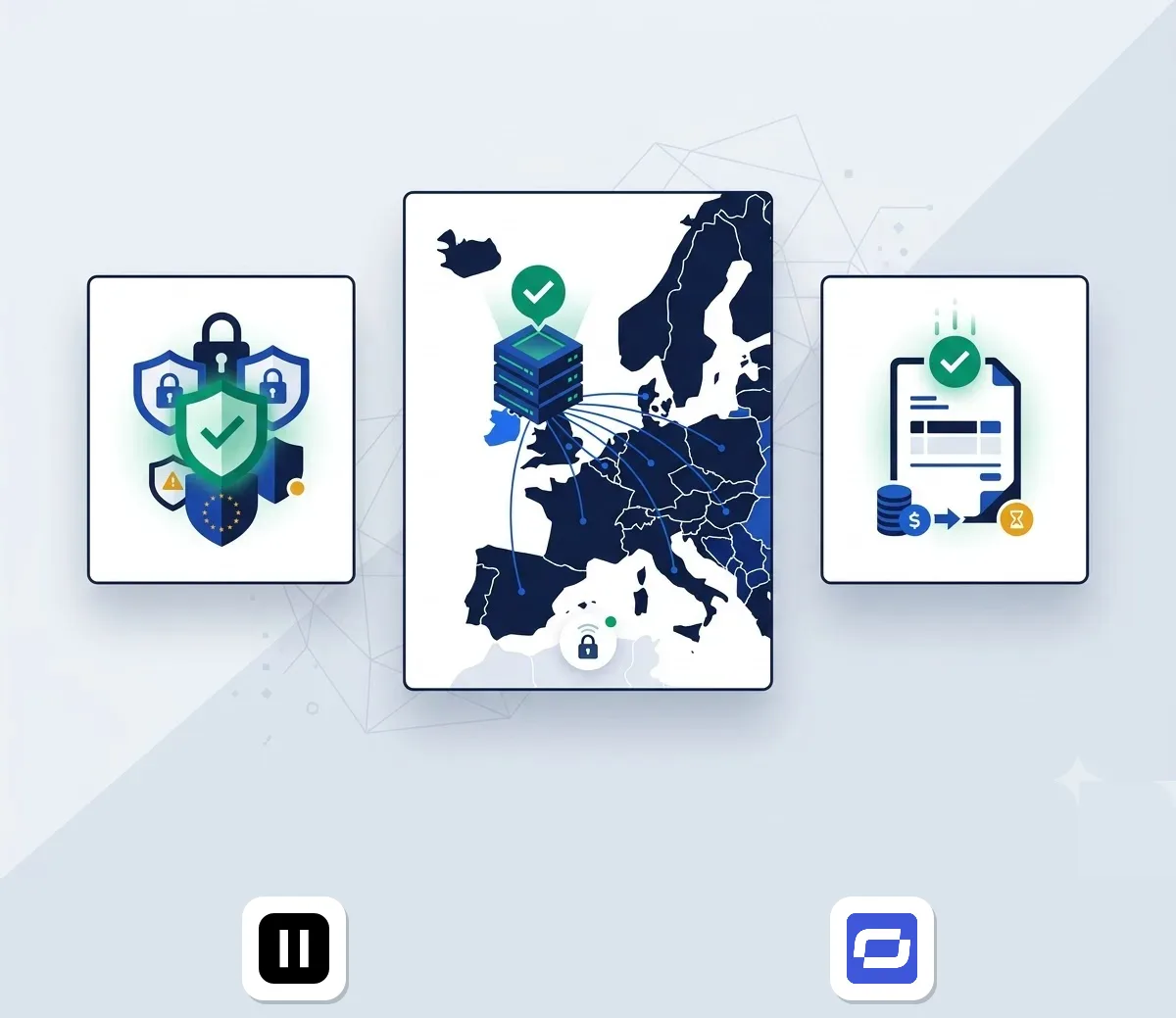
Only two vendors in this shortlist have a documented data location, and they differ.
| Vendor | Data location | Data protection terms | Price currency |
|---|---|---|---|
| ElevenLabs | United States, EU residency on Enterprise | DPA; Standard Contractual Clauses for transfers | US$ |
| Synthesia | EU (Ireland) | DPA; Standard Contractual Clauses for transfers | €, £ and US$ |
Lower ElevenLabs tiers store data in the US under DPAs (data processing agreements). Because competitors lack EU hosting, self-hosting offers complete data control.
All prices in this guide exclude VAT and local taxes. Cartesia, Deepgram and Inworld AI list in US dollars. Synthesia shows euros and pounds, so you see the price in the currency you pay.
Frequently asked questions about ElevenLabs alternatives
Is PlayHT still a usable ElevenLabs alternative?
No. Meta acquired PlayHT in July 2025 and closed all services on 31 December 2025. Teams still calling the API must migrate to an alternative.
Which free options allow commercial use?
As noted above, Murf AI's free tier and both self-hosted models permit it.
Why does latency matter for agents but not narration?
During a phone call, any audible pause feels like the agent has disconnected. Conversational APIs focus on time-to-first-audio to sustain flow, whereas studio tools render entire scripts in advance.
How do I avoid losing ElevenLabs credits when I leave?
Spend remaining balances before your billing period closes. If you are leaving for a studio tool, our AI video and voice category lists related tools and prices.
Bottom line
Pick by workload, not brand loyalty. Build live voice agents on Cartesia, Deepgram or Inworld AI, make training or marketing video with Murf AI or Synthesia, and self-host Kokoro or Chatterbox if data residency or cost control matters more than convenience. Stay with ElevenLabs only if you need its voice marketplace breadth and can live with its credit rules.
Whichever way you lean, check your current credit balance before you switch, so you don't hand ElevenLabs free money on your way out.
