
Compare the top ElevenLabs alternatives for podcasters. We analyze text-to-speech podcasting tools on GDPR compliance, EU VAT handling, and audio workflows.
TL;DR: Who Each ElevenLabs Alternative Suits Best

Finding the right ElevenLabs alternatives for podcasters depends less on raw voice quality and more on workflow fit, team size and where the audio data needs to live. The quick breakdown below helps narrow the shortlist before the detailed reviews.
- Descript — best for solo hosts and editors who want to fix flubbed lines by editing a transcript instead of re-recording.
- Murf AI — best for producers building scripted, multi-speaker episodes from a blank timeline rather than editing existing recordings.
- Resemble AI — best for enterprise studios that need documented GDPR Data Processing Agreements and strict voice-cloning consent controls.
- PlayHT — best for teams comparing API-driven TTS pricing and voice libraries against ElevenLabs on a cost basis.
- Jellypod — best for newsletter writers who want text turned automatically into a hosted podcast RSS feed, no editing suite required.
- Coqui (Open-Source) — best for privacy-conscious developers who want to self-host TTS and keep full data sovereignty, at the cost of managed-service convenience.
- Deepgram — best for technical teams needing transcription-first infrastructure that pairs with, rather than replaces, a voice generator.
None of these is a universal drop-in replacement for ElevenLabs; for example, complex studio tools won't suit casual hobbyists, and automated RSS generators won't suit audio editors. Each trades off voice realism, hosting control or editing features differently, as the comparisons below show.
Why European Podcasters Are Looking Beyond ElevenLabs

ElevenLabs remains a strong engine for raw text-to-speech and voice cloning, but a podcast is a production workflow, not a single audio file. For European creators running co-hosted shows, three recurring frictions push them toward tools like Descript, Murf AI, Resemble AI, PlayHT, Jellypod, Coqui, or Deepgram.
Workflow Gaps
According to ElevenLabs' own documentation, the platform is built around voice generation and dubbing, not episode assembly. There is no multi-track timeline for editing overlapping co-host dialogue, no native chapter markers, and no built-in RSS feed generation or hosting for distribution. Podcasters typically still need a separate editor and a separate podcast host, which fragments the workflow and multiplies subscriptions.
Financial Transparency
Many AI voice vendors, including ElevenLabs, bill primarily in USD. For a European solopreneur, this means exposure to exchange-rate swings and card foreign-transaction fees on top of the subscription price, as outlined in guidance on cross-border billing. A VAT-registered EU business should also check whether a vendor applies the reverse-charge mechanism under Article 196 of the EU VAT Directive — this requires a VIES-validated VAT number at checkout and shifts VAT accounting to the buyer, rather than adding local VAT (ranging from 17% to 27% depending on the member state) to the invoice. Alternatives that display pricing natively in EUR or GBP, and issue compliant invoices with a VAT ID, remove one layer of financial uncertainty.
GDPR & Data Sovereignty
Co-host and guest audio counts as personal data under Regulation (EU) 2016/679. Processing it through any AI vendor requires a written Data Processing Agreement under Article 28, naming sub-processors and setting a breach-notification duty under Article 33(2). Buyers should separately verify three things on each vendor's own policy pages: whether a DPA is offered at all, whether there is an explicit opt-out from having voice or transcript data used for model training, and whether EU-resident storage (for example, Frankfurt-based servers) is available rather than a US-only default. These checks — not marketing claims — are what determine real compliance.
1. Descript: Best for Hybrid Podcast Audio Editing AI
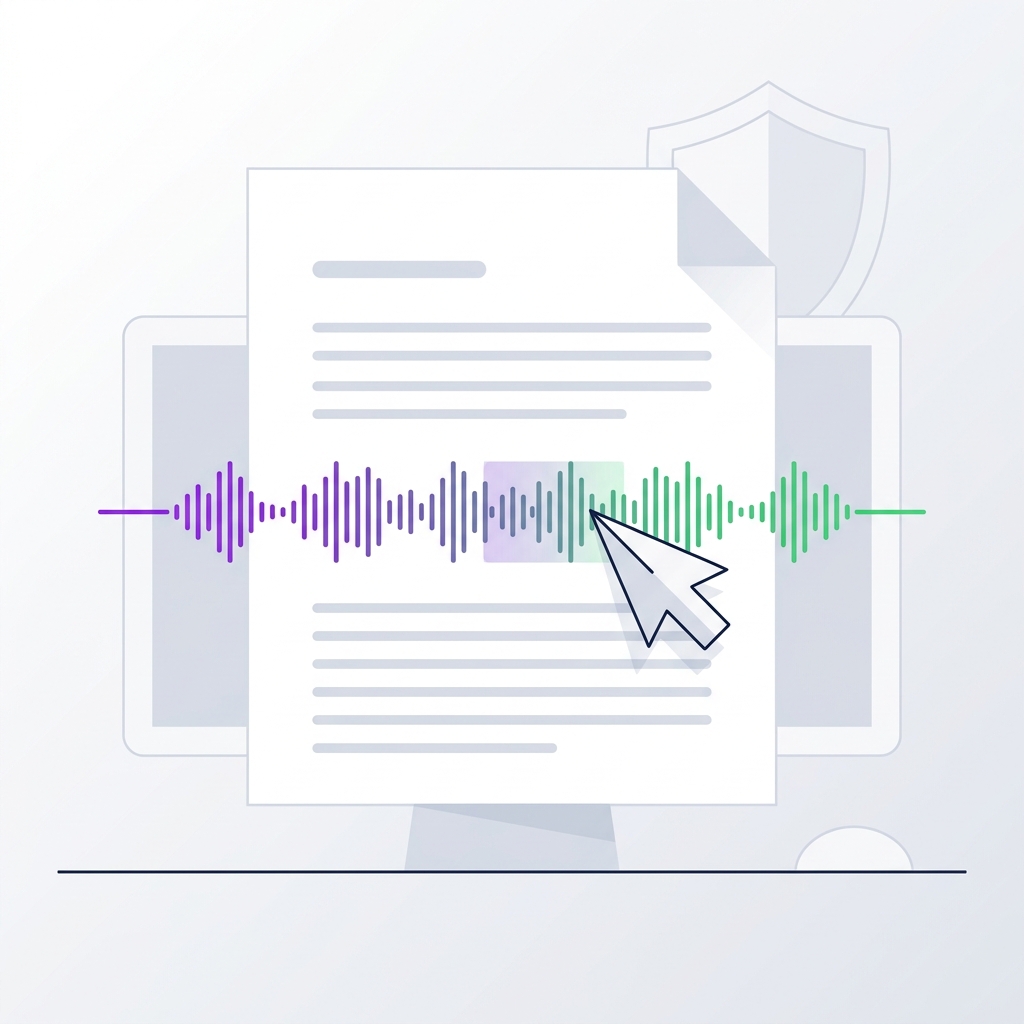
TL;DR: Descript suits podcasters who want one workspace for recording, transcript-based editing and voice correction, rather than a standalone text-to-speech engine. It is not the right fit for anyone who only needs bulk AI voice generation, nor for teams that require EUR/GBP invoicing out of the box.
Overview
Descript is primarily a text-based audio and video editor. Its proprietary text-to-speech feature, Overdub, lets a podcaster type replacement words and have the edit rendered in a cloned version of their own voice, correcting flubs without a re-record. This positions Descript differently from ElevenLabs alternatives for podcasters that focus purely on generating narration from scratch.
Podcasting Workflow
Instead of exporting a script to a separate voice generator, Descript keeps transcription, multi-track timeline editing and Overdub inside one project file. Editing the text transcript moves the matching audio automatically, which suits solo hosts cleaning up interviews or removing filler words across long episodes.
EU Context & Compliance
According to Descript's published security documentation, the vendor offers a standard Data Processing Agreement, which EU studios need under GDPR Article 28 before sending guest audio or employee voice data for processing. Buyers should still confirm current sub-processor and data-residency details directly on that page, since public documentation can change. Pricing, however, is listed in USD on Descript's site; European buyers must factor in bank exchange-rate fees and check whether their invoice can carry a validated VAT number for reverse-charge treatment.
The Good vs The Bad
| The Good | The Bad |
|---|---|
| Multi-track, transcript-driven editing in one timeline | Steeper learning curve for users who only want simple TTS output |
| Built-in transcription alongside audio editing | USD-only billing, adding FX exposure for EUR/GBP buyers |
| Overdub voice cloning for natural-sounding corrections | Overdub is narrower in scope than dedicated multilingual voice libraries |
| Standard DPA available per vendor documentation | EU hosting region specifics require direct confirmation with Descript |
2. Murf AI: Best for Multi-Speaker Studio Production
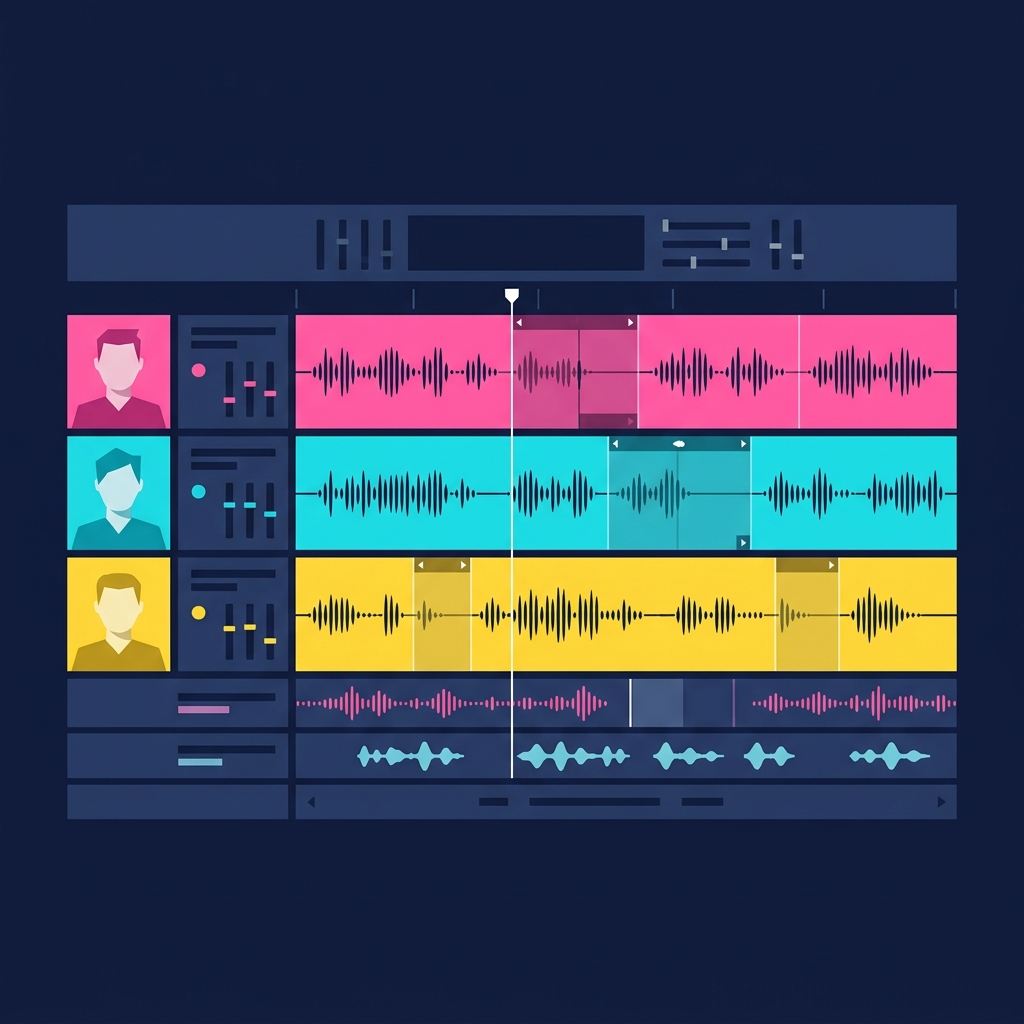
TL;DR: Murf AI suits podcasters producing scripted, multi-character episodes — interview recreations, narrated fiction, or dialogue-driven explainers — who want a visual timeline rather than a prompt box. It is not the best fit for solo hosts wanting one natural conversational voice (consider Descript or Resemble AI instead) or for teams needing unlimited generation on a budget tier.
Overview
Murf AI is built around a studio-style editor where each line of a script can be assigned to a different AI voice. For podcasters who script dialogue between two or more "characters" or hosts, this makes Murf one of the more structured ElevenLabs alternatives for podcasters, since voice-switching is handled per text block rather than through separate single-voice exports.
Podcasting Workflow
According to Murf's product pages, the editor includes a timeline where background music, sound effects and multiple AI voice tracks can be layered and timed against each other, similar to a lightweight audio production suite. This lets producers sync a voice line to a sound cue without leaving the platform.
EU Context & Compliance
Per Murf's privacy policy, a Data Processing Agreement is available to business customers, which is relevant under GDPR Article 28 for any team handling guest names or listener data. Buyers should also verify directly if EU-based data hosting is offered. The platform also lists German, French, Italian and Spanish voices with localised accents, useful for shows producing localised episodes rather than relying on machine-translated scripts.
The Good vs The Bad
| The Good | The Bad |
|---|---|
| Intuitive multi-speaker timeline for dialogue scripts | Lower-tier plans strictly cap voice generation minutes per month, per Murf's pricing page |
| Extensive European language and accent coverage | Heavier editing features may be overkill for simple solo narration |
| Large voice library for casting distinct characters | EUR/GBP buyers should confirm VAT handling and reverse-charge eligibility before committing to annual billing |
3. Resemble AI: Best for GDPR Compliant Voice Cloning
TL;DR: Resemble AI suits podcasters and studios who need enterprise-grade voice cloning with strict consent controls and a usable DPA — think ad networks or agencies cloning a host's voice for programmatic ad insertion. It does not suit hobbyist podcasters on a tight budget who just want quick AI narration; for that, cheaper consumer TTS tools from this list are a better fit.
Overview
Among the ElevenLabs alternatives for podcasters covered here, Resemble AI positions itself toward enterprise and professional creators who prioritise security over price. It is built for teams that need auditable consent and contractual data-processing terms, not just a fast clone.
Podcasting Workflow
Resemble AI is well suited to podcasters who want to clone their own voice for dynamic ad insertion or automated intro/outro segments, letting a show insert personalised sponsor reads or localised announcements without re-recording the host every time.
EU Context & Compliance
Per Resemble's published terms, the platform requires verbal consent verification before a voice can be cloned, a safeguard directly relevant to GDPR's consent and lawful-processing requirements. Resemble also states it does not claim ownership of user-generated audio and offers a Data Processing Agreement, which EU-based podcasters and the businesses they work with need under Article 28 of the GDPR whenever personal voice data is processed on their behalf. As with any vendor, buyers should confirm sub-processor locations and backup regions directly with Resemble before signing.
The Good vs The Bad
| The Good | The Bad |
|---|---|
| Deep neural voice editing tools | Entry pricing sits above consumer-focused TTS tools |
| Strict, documented consent protocols | Overkill for casual or hobbyist podcasters |
| Custom voice cloning capabilities | Enterprise focus means a steeper learning curve |
| DPA available for GDPR-bound EU teams | EUR/GBP vs USD billing should be confirmed at checkout |
4. PlayHT: Best for High-Volume Text-to-Speech Podcasting
TL;DR: PlayHT suits podcasters and audiobook producers who need a very large catalogue of expressive voices and a developer-friendly API for bulk or streaming text-to-speech. It is less suitable for teams wanting an all-in-one podcast editor with built-in hosting, or for anyone who prefers to pay in EUR or GBP without checking an exchange rate first.
Overview
Among ElevenLabs alternatives for podcasters, PlayHT stands out for scale: according to the vendor's marketing pages, it offers one of the largest voice libraries on the market, with ultra-realistic, expressive voices tuned for long-form narration such as podcasts, audiobooks and explainer content. The emphasis is on natural pacing and emotional range rather than conversational agents.
Podcasting Workflow
Per PlayHT's documentation, creators have two main paths: an online editor for tweaking pronunciation, pacing and emphasis on a script before export, or the API for streaming generated audio directly into a custom production pipeline or podcasting dashboard. This API-first option is useful for teams who already run their own publishing stack and simply need a TTS engine to plug in.
EU Context & Compliance
PlayHT's pricing page lists plans in USD, so European buyers should check VIES VAT handling and the reverse-charge mechanism at checkout, and factor in card foreign-exchange fees before comparing cost against EUR- or GBP-billed tools. For data transfers, PlayHT states it supports Standard Contractual Clauses, which is the mechanism required under GDPR when personal data moves outside the EEA. Prospective customers should still request a signed DPA directly, per Article 28 requirements.
The Good vs The Bad
| The Good | The Bad |
|---|---|
| Large library of supported languages and voices for long-form audio | No native podcast hosting or distribution features |
| Robust API suited to streaming and bulk generation workflows | USD-centric billing complicates EUR/GBP budgeting |
| SCCs available for cross-border data transfers | DPA terms need direct confirmation from sales, not just the pricing page |
5. Jellypod: Best for Automated RSS Feed Generation
TL;DR: Jellypod suits solopreneurs and newsletter writers who want text turned into a published podcast with zero manual editing. It does not suit audio-first creators who need ElevenLabs-grade voice control or scene-by-scene editing, which tools like Descript or Resemble AI handle better.
Jellypod is built around a narrow job: converting newsletters, blog posts or plain text documents into a fully hosted podcast episode. Rather than positioning itself as a general voice-AI platform like ElevenLabs, it targets writers who want an audio version of existing content without learning an audio editor.
Podcasting Workflow
According to the vendor's product pages, Jellypod's workflow skips the usual separate steps of generating narration, exporting files, uploading to a host, and submitting an RSS feed. It generates the audio, hosts the resulting files, and produces a podcast RSS feed compatible with Apple Podcasts and Spotify in one pass. This end-to-end automation is the tool's defining feature versus the other alternatives in this guide.
EU Context & Compliance
As a smaller, niche tool, Jellypod does not carry the same compliance documentation weight as larger platforms. European users should check the vendor's current terms for data retention, confirm if EU hosting and a DPA are available before feeding personal data through the service, and verify if checkout supports native EUR/GBP pricing with reverse-charge VAT.
The Good vs The Bad
| The Good | The Bad |
|---|---|
| Single-step text-to-RSS workflow | Limited granular audio editing |
| Saves time versus manual hosting setup | Less control over voice pacing than ElevenLabs |
| Hands-off for solo newsletter writers | Niche scope, not a full voice studio |
6. Coqui (Open-Source): Best Open-Source TTS for Creators
TL;DR: Coqui and its XTTS models suit podcasters with developer resources, in-house DevOps support, or an EU server already running tools like n8n, who want to generate unlimited voice-overs without a recurring subscription. It does not suit anyone wanting a polished, no-code interface, instant results, or vendor-provided support — for that, Descript, Murf AI or Jellypod from this guide are better fits.
Podcasting Workflow
Running Coqui means setting up a Python environment, installing the XTTS model weights, and scripting your own pipeline for chapter breaks, voice cloning and batch rendering. There is no subscription fee and no monthly minute cap as there is with hosted ElevenLabs alternatives — generation volume is limited only by your own hardware, not by a vendor's pricing tier.
EU Context & Compliance
Self-hosting is arguably the cleanest route to GDPR compliance among any option in this guide. If audio is generated and stored entirely on a server you control inside the EU, there is no third-party processor, no sub-processor disclosure, and no need to assess cross-border transfers under the EU VAT Directive's broader compliance logic or Article 28 of Regulation (EU) 2016/679. You are the controller and the processor in one, which removes the usual DPA negotiation entirely.
The Good vs The Bad
| The Good | The Bad |
|---|---|
| Zero subscription cost; no VAT or EUR/GBP billing concerns since nothing is purchased from a vendor | Requires coding knowledge, GPU infrastructure and ongoing maintenance |
| Absolute data privacy — no sub-processors, no DPA needed | No official support channel; updates and bug fixes depend on community contributions |
| Zero vendor lock-in; full control over models and voices | No polished editing UI like Descript or Jellypod |
Example: a technically capable solo podcaster hosting XTTS on a Hetzner server in Germany could generate an entire season's narration without ever sending audio outside EU infrastructure.
7. Deepgram: Best for API-Driven Transcription and TTS
TL;DR: Deepgram suits podcast networks and developers who want to build their own podcast audio editing or transcription tool on top of a fast, scalable API. It does not suit solo podcasters looking for a ready-made app with sliders, buttons and a voice library — there is no consumer-facing studio, so non-technical users should look elsewhere among ElevenLabs alternatives for podcasters.
Overview
Deepgram operates at infrastructure level rather than as a finished product. Its Nova models handle speech-to-text, while its Aura models handle text-to-speech, both exposed as APIs designed for high-throughput, real-time processing rather than manual editing in a browser tab.
Podcasting Workflow
This fits podcast networks or agencies with engineering resources who want to pipe show audio through automated transcription, captioning or voice pipelines at scale, or build custom tooling for episode editing. It is not aimed at someone who wants to upload an MP3 and edit it like a text document.
EU Context & Compliance
According to Deepgram's compliance pages, it offers enterprise-grade DPAs, SOC 2 compliance documentation, and on-premise or private-cloud deployment options that can help satisfy EU data residency requirements. As with any processor under GDPR Article 28, EU buyers should confirm sub-processor locations, backup regions and retention terms directly in the signed agreement before sending audio containing personal data.
The Good vs The Bad
| The Good | The Bad |
|---|---|
| Enterprise-grade processing speed per the vendor's documentation | No graphical interface for non-technical podcasters |
| Scalable, usage-based API pricing | Requires development resources to integrate |
| Robust SOC 2 and DPA documentation | Not a substitute for an editing app like Descript |
Evaluating EU Compliance, VAT, and Pricing for Audio AI
Before committing to any of the seven ElevenLabs alternatives for podcasters covered above, three administrative checks matter as much as voice quality: VAT handling, data processing agreements, and model-training rights over your audio.
Reverse-Charge VAT on Subscriptions
Most tools here — Descript, Murf AI, Resemble AI, PlayHT, Jellypod and Deepgram — bill in USD or EUR from outside your home country. Under the reverse-charge mechanism, a VAT-registered EU business should enter its VAT number at checkout, which the vendor validates via VIES, so no local VAT is added to the invoice. Before subscribing, check whether the vendor's checkout page actually asks for a VAT ID; if it does not, the business account itself for VAT and confirm the invoice shows a full company address. Coqui, run self-hosted, sidesteps this entirely since there is no SaaS invoice.
DPAs Under GDPR Article 28
The moment a guest's recorded voice is uploaded to any cloud transcription or cloning tool, that vendor becomes a data processor under Article 28, and a written DPA is a legal requirement, not an optional extra. Standard Contractual Clauses are additionally needed if the vendor processes data outside the EEA. Podcasters should request each vendor's DPA directly and confirm where backups are stored, since storage in Frankfurt differs materially from storage in US East for transfer-risk purposes.
Model-Training Opt-Outs
GDPR does not ban AI training on audio, so the real safeguard is each vendor's Terms of Service. Before uploading proprietary interviews, check explicitly whether the platform excludes customer content from training public models by default, or whether opting out requires a paid tier or written request.
A DPA confirms how data is protected; it does not automatically confirm your voice won't train a future model — read both documents separately.
Frequently Asked Questions About AI Voice Generators for Podcasts
What is the best free ElevenLabs alternative for podcasters?
Coqui's open-source models are the only genuinely free, self-hosted option among ElevenLabs alternatives for podcasters, though they require technical setup and local compute rather than a polished dashboard. For a no-code free tier, check PlayHT's and Murf AI's free plans directly on their pricing pages — these typically cap monthly minutes or characters and watermark or restrict commercial use, so verify current limits before relying on them for a published episode.
Do I need my podcast guest's permission to clone their voice?
Yes. Cloning a real person's voice processes biometric-adjacent personal data, so under GDPR you need a documented legal basis — explicit consent is the safest route. Resemble AI's documentation describes built-in verbal-consent capture as part of its cloning workflow; other vendors leave consent entirely to the user, so check each tool's terms before cloning any guest.
Can I pay for these text-to-speech tools in Euros?
Some vendors offer localised EUR or GBP pricing on their sites; others, including many US-based tools, bill only in USD. Confirm this on the checkout page, check whether your EU VAT number triggers the reverse-charge mechanism, and use a fee-free business card to avoid extra foreign-exchange charges on recurring USD subscriptions.